 Hispanopedia Wiki
Helsinki [a] [b] es la capital y ciudad más poblada de Finlandia . Está en la costa del Golfo de Finlandia y es la sede de la región de Uusimaa , en el sur de Finlandia . Alrededor de 682.000 personas viven en el municipio, con 1,26 millones en la región de la capital y 1,6 millones en el área metropolitana . Como el área urbana más poblada de Finlandia, es el centro más importante del país para la política, la educación, las finanzas, la cultura y la investigación. Helsinki está a 80 kilómetros (50 millas) al norte de Tallin, Estonia , 360 kilómetros (220 millas) al norte de Riga, Letonia , 400 kilómetros (250 millas) al este de Estocolmo, Suecia , y 300 kilómetros (190 millas) al oeste de San Petersburgo, Rusia . Helsinki tiene importantes conexiones históricas con estas cuatro ciudades.
Junto con las ciudades de Espoo , Vantaa y Kauniainen —y las ciudades dormitorio circundantes, [10] incluyendo el municipio vecino de Sipoo al este [11] — Helsinki forma un área metropolitana . Esta área es considerada a menudo la única metrópolis de Finlandia y es el área metropolitana más septentrional del mundo con más de un millón de habitantes. Además, es la capital más septentrional de un estado miembro de la UE . Helsinki es el tercer municipio más grande de los países nórdicos, después de Estocolmo y Oslo . Su área urbana es la tercera más grande de los países nórdicos, después de Estocolmo y Copenhague. El Aeropuerto de Helsinki , en la vecina ciudad de Vantaa, sirve a la ciudad con vuelos frecuentes a numerosos destinos en Europa, América del Norte y Asia.
Helsinki es un municipio bilingüe , con el finés y el sueco como idiomas oficiales. La población está compuesta por un 75% de hablantes de finés, un 5% de hablantes de sueco y un 20% de hablantes de otros idiomas (lo que está muy por encima de la media nacional).
Helsinki fue sede de los Juegos Olímpicos de Verano de 1952 , la primera Cumbre de la CSCE / OSCE en 1975, el primer Campeonato Mundial de Atletismo en 1983, el 52º Festival de la Canción de Eurovisión en 2007 y fue la Capital Mundial del Diseño en 2012. [12]
Helsinki tiene uno de los estándares de vida urbana más altos del mundo. En 2011, la revista británica Monocle clasificó a Helsinki como la ciudad más habitable del mundo en su índice de ciudades habitables . [13] En la encuesta de habitabilidad de 2016 de la Economist Intelligence Unit , Helsinki ocupó el noveno lugar entre 140 ciudades. [14] En julio de 2021, la revista estadounidense Time nombró a Helsinki uno de los mejores lugares del mundo, una ciudad que "puede convertirse en un nido cultural floreciente en el futuro" y ya es conocida como pionera ambiental . [15] En una encuesta internacional Cities of Choice realizada en 2021 por Boston Consulting Group y el BCG Henderson Institute, Helsinki fue clasificada como la tercera mejor ciudad del mundo para vivir, con Londres y Nueva York en primer y segundo lugar. [16] [17] En los premios Readers' Choice Awards 2023 de la revista Condé Nast Traveler , Helsinki fue clasificada como la cuarta ciudad más amigable de Europa. [18] Helsinki, junto con Rovaniemi en Laponia , es también una de las ciudades turísticas más importantes de Finlandia . [19] Debido a la gran cantidad de pasajeros marítimos, Helsinki está clasificada como una importante ciudad portuaria, [20] y en 2017 fue calificada como el puerto de pasajeros más activo del mundo. [21]
Etimología
Según una teoría presentada en la década de 1630, en el momento de la colonización sueca de la costa finlandesa, los colonos de Hälsingland en el centro de Suecia llegaron a lo que ahora es el río Vantaa y lo llamaron Helsingå ('río Helsinge'), dando lugar a los nombres de la aldea y la iglesia de Helsinge en el siglo XIV. [22] Esta teoría es cuestionable, ya que la investigación dialectal sugiere que los colonos vinieron de Uppland y las áreas circundantes. [23] Otros han sugerido que el nombre deriva de la palabra sueca helsing , una forma arcaica de la palabra hals (' cuello '), que se refiere a la parte más estrecha de un río, los rápidos . [24] Otras ciudades escandinavas en ubicaciones geográficas similares recibieron nombres similares en ese momento, como Helsingør en Dinamarca y Helsingborg en Suecia.
Cuando se fundó una ciudad en el pueblo de Forsby (posteriormente Koskela ) en 1548, se la llamó Helsinge fors , 'rápidos de Helsinge'. El nombre hace referencia a los rápidos Vanhankaupunginkoski en la desembocadura del río. [25] La ciudad era conocida comúnmente como Helsinge o Helsing , de donde se deriva el nombre finlandés moderno. [26]
Los documentos oficiales del gobierno finlandés y los periódicos en idioma finlandés han utilizado el nombre Helsinki desde 1819, cuando el Senado de Finlandia se trasladó a la ciudad desde Turku , la antigua capital de Finlandia. Los decretos emitidos en Helsinki se fechaban con Helsinki como lugar de emisión. Así es como la forma Helsinki llegó a usarse en finés escrito . [27] Cuando Finlandia se convirtió en un Gran Ducado de Finlandia, un estado autónomo bajo el gobierno del Imperio ruso , Helsinki era conocida como Gel'singfors ( Гельсингфорс ) en ruso, porque el idioma principal y oficial del Gran Ducado de Finlandia era el sueco.
En el argot de Helsinki , la ciudad se llama Stadi (de la palabra sueca stad , que significa 'ciudad'). La forma abreviada Hesa es igualmente común, pero su uso se asocia con personas de origen rural ("junantuomat", lit. "traído en tren") y está mal visto por los lugareños. [1] [28] Helsset es el nombre sami del norte para Helsinki. [29]
Historia


Historia temprana
Tras el fin de la Edad de Hielo y el retroceso de la capa de hielo, los primeros colonos llegaron a la zona de Helsinki alrededor del año 5000 a. C. Su presencia ha sido documentada por arqueólogos en Vantaa , Pitäjänmäki y Kaarela . [30] Los asentamientos permanentes no aparecieron hasta principios del primer milenio d. C., durante la Edad de Hierro , cuando la zona estaba habitada por los tavastianos . Utilizaban la zona para pescar y cazar, pero debido a la falta de hallazgos arqueológicos es difícil decir cuán extensos eran sus asentamientos. El análisis de polen ha demostrado que había asentamientos agrícolas en la zona en el siglo X, y los registros históricos supervivientes del siglo XIV describen asentamientos tavastianos en la zona. [31]
El cristianismo no se afianzó de forma significativa en Finlandia hasta el siglo XI. Después de eso, se encontraron en el material arqueológico numerosas cruces y otros objetos relacionados con el cristianismo. Según la opinión tradicional, el Reino de Suecia realizó tres cruzadas a Finlandia, gracias a las cuales la región se incorporó tanto al cristianismo como al Imperio sueco. Investigaciones recientes han demostrado que estas expediciones, en la medida en que fueron tres, no fueron las cruzadas que se habían imaginado. Más tarde, la conquista de Finlandia se justificó en términos de "civilización" y "cristianización", y se desarrolló el mito de las Cruzadas. Es más probable que se tratara de una combinación multidimensional de ambiciones de poder económico, cultural y político. [32]
Los primeros asentamientos fueron saqueados por vikingos hasta 1008, y la Batalla de Herdaler fue una batalla entre el líder vikingo nórdico Olav Haraldsson (más tarde rey Olaf II de Noruega , también conocido como San Olaf) y los finlandeses locales en Herdaler (ahora Ingå ), no lejos de Helsinga, alrededor de 1007-8. [33] La Saga de Olaf Haraldson cuenta cómo Olav atacó las costas de Finlandia y casi murió en batalla. Huyó asustado y después de eso los vikingos no volvieron a atacar las costas de Finlandia. [34] [35]
Más tarde, la zona fue colonizada por cristianos procedentes de Suecia, principalmente de las regiones costeras suecas de Norrland y Hälsingland , y su migración se intensificó alrededor del año 1100. [30] Los suecos colonizaron permanentemente la costa de la región de Helsinki a finales del siglo XIII, después de la exitosa «cruzada» a Finlandia que condujo a la derrota de los tavastianos. [36] [31]
En la Edad Media, la zona de Helsinki era un paisaje de pequeños pueblos. Algunos de los pueblos antiguos de la década de 1240 en el área de la actual Helsinki, como Koskela y Töölö , son ahora distritos de Helsinki, al igual que el resto de los 27 pueblos medievales. La zona se convirtió gradualmente en parte del Reino de Suecia y de la cristiandad. Kuninkaantie , o el "Camino del Rey", atravesaba la zona y aquí se construyeron dos interesantes edificios medievales: el castro de Vartiokylä en la década de 1380 y la Iglesia de San Lorenzo en 1455. En la Edad Media, varios miles de personas vivían en el torreón de Helsinki . [37]
El comercio a través del mar Báltico era muy intenso . La ruta marítima hacia la costa, y especialmente hacia Reval , hizo que a finales de la Edad Media la región de Helsinki se convirtiera en un importante centro comercial para los campesinos ricos , sacerdotes y nobles de Finlandia, después de Vyborg y Pohja . Desde Helsinki se exportaban pieles , madera , alquitrán , pescado y animales, y a la fortaleza se llevaba sal y cereales . Helsinki era también la zona de cría de ganado más importante de Uusimaa. Con la ayuda del comercio, Helsinki se convirtió en una de las ciudades más ricas de Finlandia y de Uusimaa. Gracias al comercio y a los viajes, por ejemplo a Reval, la gente podía hablar varios idiomas, al menos de forma útil. Dependiendo de la situación, en la zona de Helsinki se podía oír finlandés, sueco, latín o bajo alemán. [38]
Las crónicas escritas de 1417 mencionan el pueblo de Koskela cerca de los rápidos en la desembocadura del río Vantaa , donde se fundaría Helsinki. [30]
Fundación de Helsinki

Helsinki fue fundada por el rey Gustavo I de Suecia el 12 de junio de 1550 como una ciudad comercial llamada Helsingfors para rivalizar con la ciudad hanseática de Reval (hoy Tallin ) en la costa sur del golfo de Finlandia . [39] [30] Para poblar la nueva ciudad en la desembocadura del río Vantaa , el rey ordenó a la burguesía de Porvoo , Raseborg , Rauma y Ulvila que se mudaran allí. [40] La poca profundidad de la bahía hizo imposible construir un puerto, y el rey permitió a los colonos abandonar la desafortunada ubicación. En 1640, el conde Per Brahe el Joven , junto con algunos descendientes de los colonos originales, trasladó el centro de la ciudad a la península de Vironniemi junto al mar, el actual distrito de Kruununhaka , donde se encuentran la plaza del Senado y la catedral de Helsinki . [41]
Durante la segunda mitad del siglo XVII, Helsinki, como ciudad de madera, sufrió incendios regulares , y a principios del siglo XVIII la población había caído por debajo de los 1.700 habitantes. Durante mucho tiempo Helsinki fue principalmente una pequeña ciudad administrativa para los gobernadores de Nyland y el condado de Tavastehus , pero su importancia comenzó a crecer en el siglo XVIII cuando se hicieron planes para construir una defensa naval más sólida frente a la ciudad. [40] Sin embargo, estos planes no dieron resultado, ya que Helsinki siguió siendo una pequeña ciudad plagada de pobreza, guerra y enfermedades. La plaga de 1710 mató a la mayoría de la población de Helsinki. [39] Después de que los rusos capturaron Helsinki en mayo de 1713 durante la Gran Guerra del Norte , la administración sueca en retirada prendió fuego a partes de la ciudad. [42] [43] A pesar de esto, la población de la ciudad aumentó a 3.000 a principios del siglo XIX. La construcción de la fortaleza naval de Sveaborg ( Viapori en finlandés, ahora también llamada Suomenlinna ) en el siglo XVIII ayudó a mejorar el estatus de Helsinki. Sin embargo, no fue hasta que Rusia derrotó a Suecia en la Guerra de Finlandia y anexó Finlandia como el Gran Ducado autónomo de Finlandia en 1809 que la ciudad comenzó a desarrollarse como una ciudad importante. Los rusos sitiaron la fortaleza de Sveaborg durante la guerra, y aproximadamente una cuarta parte de la ciudad fue destruida en un incendio en 1808. [44]
El emperador Alejandro I de Rusia trasladó la capital de Finlandia de Turku a Helsinki el 8 de abril de 1812 para reducir la influencia sueca en Finlandia y acercar la capital a San Petersburgo . [45] [46] [47] Después del Gran Incendio de Turku en 1827, la Real Academia de Turku , la única universidad del país en ese momento, también se trasladó a Helsinki y finalmente se convirtió en la moderna Universidad de Helsinki. El traslado consolidó el nuevo papel de la ciudad y ayudó a ponerla en un camino de crecimiento continuo. Esta transformación es más evidente en el centro de la ciudad, que fue reconstruido en estilo neoclásico para parecerse a San Petersburgo, en gran parte según un plan del arquitecto nacido en Alemania CL Engel . Como en otros lugares, los avances tecnológicos como el ferrocarril y la industrialización fueron factores clave en el crecimiento de la ciudad.
Siglo XX
En la década de 1910, la población de Helsinki ya superaba los 100.000 habitantes y, a pesar de la turbulencia de la historia finlandesa en la primera mitad del siglo XX, Helsinki siguió creciendo de forma constante. Esto incluyó la Guerra Civil Finlandesa y la Guerra de Invierno , que dejaron su huella en la ciudad. A principios del siglo XX, había aproximadamente el mismo número de hablantes de finlandés y sueco en Helsinki; la mayoría de los trabajadores hablaban finés. La jerga local de Helsinki (o stadin slangi ) se desarrolló entre los niños y jóvenes finlandeses a partir de la década de 1890 como una lengua mixta finlandesa-sueca, con influencias del alemán y el ruso , y a partir de la década de 1950 la jerga comenzó a volverse más finlandesa. [48] Un acontecimiento histórico fueron los Juegos Olímpicos de 1952 , que se celebraron en Helsinki. La rápida urbanización de Finlandia en la década de 1970, que se produjo tardíamente en comparación con el resto de Europa, triplicó la población del área metropolitana y se construyó el sistema de metro de Helsinki .

Geografía

Conocida como la «Hija del Báltico» [2] o la «Perla del Báltico», [3] [49] Helsinki está situada en la punta de una península y sobre 315 islas. El centro de la ciudad está situado en una península meridional, Helsinginniemi («Cabo de Helsinki»), a la que rara vez se hace referencia por su nombre real, Vironniemi («Cabo de Estonia»). La densidad de población es comparativamente alta en ciertas partes del centro de Helsinki, alcanzando los 16.494 habitantes por kilómetro cuadrado (42.720/mi²) en el distrito de Kallio ; la densidad de población general de Helsinki es de 3.147 por kilómetro cuadrado. Fuera del centro de la ciudad, gran parte de Helsinki consiste en suburbios de posguerra separados por parches de bosque. Un estrecho Parque Central de Helsinki de 10 kilómetros (6,2 millas) de largo , que se extiende desde el centro de la ciudad hasta la frontera norte de Helsinki, es una importante zona recreativa para los residentes. La ciudad de Helsinki cuenta con unos 11.000 amarres para embarcaciones y más de 14.000 hectáreas (35.000 acres; 54 millas cuadradas) de aguas pesqueras marinas adyacentes a la región de la capital. En esta zona se encuentran unas 60 especies de peces y la pesca recreativa es popular.
Las principales islas de Helsinki son Seurasaari , Lauttasaari y Korkeasaari ; esta última alberga el zoológico más grande de Finlandia, el zoológico de Korkeasaari . Las antiguas islas militares de Vallisaari e Isosaari ahora están abiertas al público, pero Santahamina todavía se utiliza con fines militares. La isla más histórica y notable es la fortaleza de Suomenlinna (Sveaborg). [50] La isla de Pihlajasaari es un popular destino de verano, comparable a Fire Island en la ciudad de Nueva York .
En Helsinki hay 60 reservas naturales con una superficie total de 38.640 ha (95.480 acres). De la superficie total, 19.500 ha (48.190 acres) son zonas acuáticas y 19.140 ha (47.290 acres) son zonas terrestres. La ciudad también tiene siete reservas naturales en Espoo , Sipoo , Hanko e Ingå . La reserva natural más grande es la Vanhankaupunginselkä , con una superficie de 12.400 ha (30.600 acres). La primera reserva natural de la ciudad, Tiiraluoto de Lauttasaari, se estableció en 1948. [51]
La planta oficial de Helsinki es el arce noruego y su animal oficial es la ardilla roja . [52]
Área metropolitana


La región de la capital de Helsinki ( en finés : Pääkaupunkiseutu ; en sueco : Huvudstadsregionen ) comprende cuatro municipios: Helsinki, Espoo , Vantaa y Kauniainen . [53] El área urbana de Helsinki se considera la única metrópolis de Finlandia . [54] Tiene una población de aproximadamente 1,26 millones y es la zona más densamente poblada de Finlandia . La región de la capital se extiende sobre una superficie de 770 kilómetros cuadrados (300 millas cuadradas) y tiene una densidad de población de 1.619 por km². Con más del 20 por ciento de la población del país en solo el 0,2 por ciento de su superficie, la densidad de viviendas del área es alta para los estándares finlandeses.
El área metropolitana de Helsinki o Gran Helsinki está formada por las ciudades de la región capitalina y diez municipios circundantes: Hyvinkää , Järvenpää , Kerava , Kirkkonummi , Nurmijärvi , Sipoo , Tuusula , Pornainen , Mäntsälä y Vihti . [55] El área metropolitana cubre 3.697 kilómetros cuadrados (1.427 millas cuadradas) y tiene una población de alrededor de 1,6 millones, o aproximadamente una cuarta parte de la población total de Finlandia. El área metropolitana tiene una alta concentración de empleo: aproximadamente 750.000 puestos de trabajo. [56] A pesar de la intensidad del uso del suelo, la región también tiene grandes áreas recreativas y espacios verdes. El área metropolitana de Helsinki es el área urbana más septentrional del mundo con una población de más de un millón de personas, y la capital más septentrional de la UE.
El área urbana de Helsinki es una zona urbana oficialmente reconocida en Finlandia , definida por su densidad de población. El área se extiende a lo largo de 11 municipios y es la zona de este tipo más grande de Finlandia, con una superficie de 669,31 kilómetros cuadrados (258,42 millas cuadradas) y aproximadamente 1,36 millones de habitantes.
Clima
Helsinki tiene un clima continental húmedo ( Köppen : Dfb ). [57] Debido a la influencia moderadora del mar Báltico y la corriente del Atlántico Norte (véase también Ciclón extratropical ), las temperaturas invernales son más altas de lo que sugeriría la ubicación norte, con un promedio de −4 °C (25 °F) en enero y febrero. [58]
Los inviernos en Helsinki son significativamente más cálidos que en el norte de Finlandia, y la temporada de nieve en la capital es mucho más corta debido a su ubicación en el extremo sur de Finlandia y al efecto de isla de calor urbana . Las temperaturas por debajo de los -20 °C (-4 °F) ocurren solo unas pocas veces al año. Sin embargo, debido a la latitud, los días alrededor del solsticio de invierno duran 5 horas y 48 minutos, con el sol muy bajo (al mediodía el sol está a poco más de 6 grados en el cielo), y el clima nublado en esta época del año exacerba la oscuridad. Por el contrario, Helsinki disfruta de días largos en verano, con 18 horas y 57 minutos de luz diurna alrededor del solsticio de verano . [59]
La temperatura máxima promedio de junio a agosto es de alrededor de 19 a 22 °C (66 a 72 °F). Debido al efecto del mar, especialmente en los días calurosos de verano, las temperaturas diurnas son ligeramente más frescas y las nocturnas más altas que en el interior. La temperatura más alta registrada en la ciudad fue de 33,2 °C (91,8 °F) el 28 de julio de 2019 en la estación meteorológica de Kaisaniemi , [60] rompiendo el récord anterior de 33,1 °C (91,6 °F) establecido en julio de 1945 en la estación meteorológica de Ilmala . [61] La temperatura más baja registrada en la ciudad fue de -34,3 °C (-29,7 °F) el 10 de enero de 1987, aunque se registró una temperatura mínima no oficial de -35 °C (-31 °F) en diciembre de 1876. [62] El aeropuerto de Helsinki (en Vantaa, a 17 km al norte del centro de la ciudad de Helsinki) registró una temperatura máxima de 33,7 °C (92,7 °F) el 29 de julio de 2010 y una mínima de -35,9 °C (-33 °F) el 9 de enero de 1987. Las precipitaciones provienen de frentes y tormentas eléctricas. Las tormentas eléctricas son más comunes en verano.
Barrios y otras subdivisiones
Helsinki se divide en tres áreas principales: Centro de Helsinki ( en finés : Helsingin kantakaupunki , en sueco : Helsingfors innerstad ), Norte de Helsinki ( en finés : Pohjois-Helsinki , en sueco : Norra Helsingfors ) y Este de Helsinki ( en finés : Itä-Helsinki , en sueco : Östra Helsingfors ). De estas, Centro de Helsinki significa el área central indefinida de la capital, a diferencia de los suburbios . Las designaciones centro de negocios y centro de la ciudad generalmente se refieren a Kluuvi , Kamppi y Punavuori . [68] [69] Otros centros subdivisionalizados fuera del área del centro incluyen Malmi ( en sueco : Malm ), [70] [71] ubicado en la parte noreste de la ciudad, e Itäkeskus ( en sueco : Östra centrum ), [72] en la parte este de la ciudad.
Paisaje urbano
Tendencia nacionalista neoclásica y romántica


Carl Ludwig Engel , designado para planificar un nuevo centro de la ciudad por su cuenta, diseñó varios edificios neoclásicos en Helsinki. El punto focal del plan de la ciudad de Engel era la Plaza del Senado . Está rodeada por el Palacio de Gobierno (al este), el edificio principal de la Universidad de Helsinki (al oeste) y (al norte) la gran Catedral de Helsinki , que se terminó en 1852, doce años después de la muerte de Engel. El epíteto de Helsinki , "La ciudad blanca del norte", deriva de esta era de construcción. La mayoría de los edificios más antiguos de Helsinki se construyeron después del incendio de 1808; antes de esa fecha, el edificio más antiguo que sobrevive en el centro de Helsinki es la Casa Sederholm (1757) en la intersección de la Plaza del Senado y la calle Katariinankatu. [41] Suomenlinna también tiene edificios terminados en el siglo XVIII, incluido el Kuninkaanportti en la isla Kustaanmiekka (1753-1754). [73] La iglesia más antigua de Helsinki es la iglesia Östersundom, construida en 1754. [74]
Helsinki también alberga numerosos edificios de influencia Art Nouveau ( Jugend en finlandés) pertenecientes a la tendencia Kansallisromantiikka ( nacionalismo romántico ), diseñados a principios del siglo XX y fuertemente influenciados por Kalevala , que era un tema común de la época. El estilo Art Nouveau de Helsinki también se presenta en los distritos residenciales centrales, como Katajanokka y Ullanlinna . [75] Un arquitecto importante del estilo Art Nouveau finlandés fue Eliel Saarinen , cuya obra maestra arquitectónica fue la Estación Central de Helsinki . Frente al edificio del Banco de Finlandia se encuentra la Casa de los Estados (1891), de estilo renacentista . [76]
Los únicos edificios públicos visibles de la arquitectura neogótica en Helsinki son la Iglesia de San Juan (1891) en Ullanlinna, que es la iglesia de piedra más grande de Finlandia, y sus torres gemelas se elevan a 74 metros y tienen 2.600 asientos. [77] Otros ejemplos de neogótico incluyen la Casa de la Nobleza en Kruununhaka y la Catedral Católica de San Enrique . [78] [79]
Además de otras ciudades del norte de Europa que no estaban bajo la Unión Soviética , como Estocolmo , Suecia, los edificios neoclásicos de Helsinki también ganaron popularidad como telón de fondo para escenas destinadas a representar a la Unión Soviética en numerosas películas de Hollywood durante la era de la Guerra Fría , cuando no era posible filmar dentro de la URSS real. Algunas de ellas, incluidas La carta del Kremlin (1970), Rojos (1981) y Parque Gorki (1983). [80] fue posible debido a que ciudades rusas como Leningrado y Moscú también tenían una arquitectura neoclásica similar. Al mismo tiempo, debido a la Guerra Fría y las relaciones finlandesas con la URSS, el gobierno ordenó en secreto a los funcionarios finlandeses que no brindaran asistencia a tales proyectos cinematográficos. [81] Hay algunas películas en las que Helsinki ha sido representada por sí sola en películas, sobre todo el thriller de espionaje británico-estadounidense de 1967 Billion Dollar Brain , protagonizado por Michael Caine . [82] [83] La ciudad tiene grandes cantidades de áreas subterráneas como refugios y túneles, muchos de ellos utilizados diariamente como piscina, iglesia, gestión del agua, entretenimiento, etc. [84] [85] [86]
Funcionalismo y arquitectura moderna


Helsinki también cuenta con varios edificios del arquitecto finlandés Alvar Aalto , [50] reconocido como uno de los pioneros del funcionalismo arquitectónico . Sin embargo, algunas de sus obras, como la sede de la empresa papelera Stora Enso y la sala de conciertos Finlandia Hall , han sido objeto de opiniones divididas por parte de los ciudadanos. [87] [88] [89]
Entre los edificios funcionalistas de Helsinki construidos por otros arquitectos se incluyen el Estadio Olímpico , el Palacio de Tenis , el Estadio de Remo , el Estadio de Natación , el Velódromo , el Palacio de Cristal , el Pabellón Deportivo Töölö y el Aeropuerto de Helsinki-Malmi . Los recintos deportivos se construyeron para los Juegos Olímpicos de Helsinki de 1940; los juegos se cancelaron inicialmente debido a la Segunda Guerra Mundial , pero los recintos cumplieron su propósito en los Juegos Olímpicos de 1952. Muchos de ellos están catalogados por DoCoMoMo como ejemplos significativos de arquitectura moderna. El Estadio Olímpico y el Aeropuerto de Helsinki-Malmi también están catalogados por la Agencia de Patrimonio Finlandés como entornos histórico-culturales de importancia nacional. [90] [91]

Cuando Finlandia se urbanizó fuertemente en los años 1960 y 1970, por ejemplo, se construyó en Helsinki el distrito de Pihlajamäki para los nuevos residentes, donde por primera vez en Finlandia se utilizó hormigón prefabricado a gran escala. Pikku Huopalahti , construido en los años 1980 y 1990, ha tratado de deshacerse de un patrón de cuadrícula de talla única, lo que significa que su aspecto es muy orgánico y sus calles no se repiten de la misma manera. Itäkeskus en el este de Helsinki fue el primer centro regional en la década de 1980. [92] También se han hecho esfuerzos para proteger Helsinki a finales del siglo XX, y se han renovado muchos edificios antiguos. [92] La arquitectura moderna está representada, por ejemplo, por el Museo de Arte Contemporáneo Kiasma , [50] que consta de dos partes de paredes rectas y curvas, aunque este estilo dividió fuertemente las opiniones de los ciudadanos. [89] Junto a Kiasma se encuentra Sanomatalo (1999) , con sus paredes de cristal .
Ha habido muchos planes para construir edificios de gran altura en Helsinki desde la década de 1920, cuando el arquitecto Eliel Saarinen propuso el Kalevalatalo de 85 metros de altura en 1921, pero pocos edificios altos se construyeron hasta el siglo XXI. [93] En 1924, Oiva Kallio ganó el concurso Etu-Töölö con su plan (varios edificios de 14 a 16 pisos). [94] También se propuso un ayuntamiento de 32 pisos. [95] Otros planes de la década de 1930 incluyeron el palacio "Kino" de 18 pisos, un edificio de apartamentos de 17 pisos y un edificio Stockmann de 30 pisos. [96] Se propusieron el edificio Stockmann, pero solo se construyó el Hotel Torni de 14 pisos y 70 metros de altura . [97] (El Hotel Torni fue el rascacielos más alto de Finlandia hasta 1976, cuando se completó la sede de Neste de 83 metros de altura en Espoo; Helsinki había rechazado la torre. [98] ) Se propusieron edificios gemelos de 30 pisos en Pasila en la década de 1970, pero fueron rechazados. [96] En 1990, una torre planificada de 104 metros de altura [99] [100] para la empresa Kone también fue cancelada.
La construcción de rascacielos no comenzó hasta principios del siglo XXI, cuando la ciudad decidió permitir la construcción de rascacielos. Los primeros rascacielos se construyeron en Kalasatama , un distrito principalmente residencial construido sobre un antiguo puerto de contenedores . A partir de 2024, se han completado cuatro torres residenciales: Majakka , de 35 pisos y 282 apartamentos, de 134 metros de altura (440 pies) en 2019 (que es el edificio más alto de Finlandia ); Loisto , de 32 pisos y 124 metros en 2021; Lumo One , de 31 pisos y 120 metros en 2022; y Visio, de 24 pisos y 98 metros en 2023. El edificio de oficinas Horisontti, de 26 pisos y 111 metros de altura, se completará en 2025, y se construirán tres torres más en el complejo. [101] [102] [103] También se han construido altas torres residenciales en el distrito oriental de Vuosaari : el Cirrus de 87 metros y 26 pisos se completó en 2006, el Hyperion de 24 pisos y 85 metros de altura se completó en 2023 y el Atlas de 33 pisos, 288 apartamentos y 120 metros de altura se completará a fines de 2024. [104]
También se han planeado rascacielos en el área de Pasila, con un puñado de torres de más de 100 metros de altura en varias etapas de planificación o construcción temprana a partir de 2024. [105] [106] [107] [108] [109] En Jätkäsaari , se han aprobado un hotel de 113 metros de altura y una torre residencial de 24 pisos. [110] Se planea construir edificios de oficinas de 121 y 93 metros de altura en Ruoholahti . [111] Se construirán más de 200 edificios de gran altura en Helsinki en la década de 2020. [112] [ verificación fallida ]
Estatuas y esculturas

Entre las estatuas y monumentos más conocidos que forman parte del paisaje urbano de Helsinki se incluyen la Keisarinnankivi ("Piedra de la Emperatriz", 1835), la estatua del emperador ruso Alejandro II (1894), la escultura de la fuente Havis Amanda (1908), la estatua de Paavo Nurmi (1925), la estatua de los Tres Herreros (1932), el monumento conmemorativo de Aleksis Kivi (1939), la estatua de Eino Leino (1953), la estatua ecuestre del mariscal Mannerheim (1960) y el monumento a Sibelius (1967). [114]
Gobierno

Como ocurre en todos los municipios finlandeses , el ayuntamiento de Helsinki es el principal órgano de toma de decisiones en materia de política local y se ocupa de cuestiones como la planificación urbana , las escuelas, la atención sanitaria y el transporte público . El ayuntamiento se elige en las elecciones municipales celebradas a nivel nacional , que se celebran cada cuatro años.
El Ayuntamiento de Helsinki está formado por ochenta y cinco miembros. Tras las últimas elecciones municipales de 2017, los tres partidos más importantes son el Partido de Coalición Nacional (25), la Liga Verde (21) y el Partido Socialdemócrata (12). [115]
El alcalde de Helsinki es Juhana Vartiainen .
Demografía
Población

The city of Helsinki has 681,802 inhabitants, making it the most populous municipality in Finland and the third in the Nordics. The Helsinki region is the largest urbanised area in Finland with 1,598,667 inhabitants. The city of Helsinki is home to 12% of Finland's population. 19.9% of the population has a foreign background, which is twice above the national average. However, it is lower than in the major Finnish cities of Espoo or Vantaa.[117]
At 53 percent of the population, women form a greater proportion of Helsinki residents than the national average of 51 percent. Helsinki's population density of 3,147 people per square kilometre makes Helsinki the most densely-populated city in Finland. The life expectancy for men and women is slightly below the national averages: 75.1 years for men as compared to 75.7 years, 81.7 years for women as compared to 82.5 years.[118][119]
Helsinki has experienced strong growth since the 1810s, when it replaced Turku as the capital of the Grand Duchy of Finland, which later became the sovereign Republic of Finland. The city continued its growth from that time on, with an exception during the Finnish Civil War. From the end of World War II up until the 1970s there was a massive exodus of people from the countryside to the cities of Finland, in particular Helsinki. Between 1944 and 1969 the population of the city nearly doubled from 275,000[120] to 525,600.[121]
In the 1960s, the population growth of Helsinki began to decrease, mainly due to a lack of housing.[122] Some residents began to move to the neighbouring cities of Espoo and Vantaa, resulting in increased population growth in both municipalities. Espoo's population increased ninefold in sixty years, from 22,874 people in 1950 to 244,353 in 2009.[123] Vantaa saw an even more dramatic change in the same time span: from 14,976 in 1950 to 197,663 in 2009, a thirteenfold increase. These population changes prompted the municipalities of metropolitan area into more intense cooperation in areas such as public transportation[124] – resulting in the foundation of HSL – and waste management.[125] The increasing scarcity of housing and the higher costs of living in the capital region have pushed many daily commuters to find housing in formerly rural areas, and even further, to cities such as Lohja, Hämeenlinna, Lahti, and Porvoo.
Language
Population by mother tongue (2023)[117]
The city of Helsinki is officially bilingual, with both Finnish and Swedish as official languages. In 2023, the majority of the population, 75%, spoke Finnish as their mother tongue. There were 36,844 Swedish speakers, or 5.5% of the population. The number of people who speak Sámi, Finland's third official language, is only 68 inhabitants. In Helsinki, 19.6% of the population speak a mother tongue other than Finnish or Swedish.[117] As English and Swedish are compulsory school subjects, functional bilingualism or trilingualism acquired through language studies is not uncommon.
Although few people speak the Sámi languages as their mother tongue, there are 527 people of Sami origin.[126] There are 93 Tatar speakers in Helsinki, almost half of the total number of Tatar speakers in Finland.
Helsinki slang is a regional dialect of the city. Historically, it was a combination of Finnish and Swedish, with influences from Russian and German. Nowadays it has a strong English influence. Today, however, Finnish is the common language of communication between Finnish speakers, Swedish speakers and speakers of other languages (New Finns) in everyday public life between strangers.[127][128]
The city of Helsinki and the national authorities have specifically targeted Swedish speakers. Knowledge of Finnish is essential in business and is usually a basic requirement in the labour market.[129] Swedish speakers are most concentrated in the southern parts of the city. The district with the most Swedish speakers is Ullanlinna/Ulrikasborg with 2,098 (19.6%), while Byholmen is the only district where Swedish is the majority language (at 82.8%). The number of Swedish speakers decreased every year until 2008, and has increased every year since then. Since 2007, the number of Swedish speakers has increased by 2,351.[130] In 1890, Finnish speakers overtook Swedish speakers to become the majority of the city's population.[131] At that time, the population of Helsinki was 61,530.[132]
The number of people with a foreign mother tongue is expected to reach 196,500 in 2035, representing 26% of the population. 114,000 will speak non-European languages, or 15% of the population.[133] Today, at least 160 different languages are spoken in Helsinki. The most common foreign languages are Russian (3.1%), Somali (2.1%), Arabic (1.5%), English (1.5%) and Estonian (1.4%).[117]
Immigration
As of 2023[update], there were 134,084 people with an immigrant background living in Helsinki, or 20% of the population.[c] There were 118,128 residents who were born abroad, or 17.5% of the population. The number of foreign citizens in Helsinki was 79,992.[117]
The relative share of immigrants in Helsinki's population is twice the national average, and the city's new residents are increasingly of foreign origin.[117] This will increase the proportion of foreign residents in the coming years. As a crossroads of many international ports and Finland's largest airport, Helsinki is the global gateway to and from Finland.
Most foreign-born citizens come from the former Soviet Union, Estonia, Somalia, Iraq, and Russia.[117]
Religion
In 2023, the Evangelical Lutheran Church was the largest religious group with 46.1% of the Helsinki population. Other religious groups made up 4.5% of the population. 49.4% of the population had no religious affiliation.[135]
The most important churches in Helsinki are Helsinki Cathedral (1852), Uspenski Cathedral (1868), St. John's Church (1891), Kallio Church (1912) and Temppeliaukio Church (1969).
There are 21 Lutheran congregations in Helsinki, 18 of which are Finnish-speaking and 3 are Swedish-speaking. These form Helsinki's congregationgroup. Outside that there is Finland's German congregation with 3,000 members and Rikssvenska Olaus Petri-församlingen for Swedish-citizens with 1,000 members.[136]
The largest Orthodox congregation is the Orthodox Church of Helsinki. It has 20,000 members. Its main church is the Uspenski Cathedral.[137] The two largest Catholic congregations are the Cathedral of Saint Henry, with 4,552 members, established in 1860 and St Mary's Catholic Parish, with 4,107 members, established in 1954.[138]

There are around 30 mosques in the Helsinki region. Many linguistic and ethnic groups such as Bangladeshis, Kosovars, Kurds and Bosniaks have established their own mosques.[139] The largest congregation in both Helsinki and Finland is the Helsinki Islamic Center, established in 1995. It has over 2,800 members as of 2017[update], and it received €24,131 in government assistance.[140]
In 2015, imam Anas Hajar estimated that on big celebrations around 10,000 Muslims visit mosques.[141] In 2004, it was estimated that there were 8,000 Muslims in Helsinki, 1.5% of the population at the time.[142] The number of people in Helsinki with a background from Muslim majority countries was nearly 41,000 as of 2021, representing over 6% of the population.
The main synagogue of Helsinki is the Helsinki Synagogue from 1906, located in Kamppi. It has over 1,200 members, out of the 1,800 Jews in Finland, and it is the older of the two buildings in Finland originally built as a synagogue, followed by the Turku Synagogue in 1912.[143] The congregation includes a synagogue, Jewish kindergarten, school, library, Jewish meat shop, two Jewish cemeteries and an retirement home. Many Jewish organizations and societies are based there, and the synagogue publishes the main Jewish magazine in Finland, HaKehila.[144]
Economy
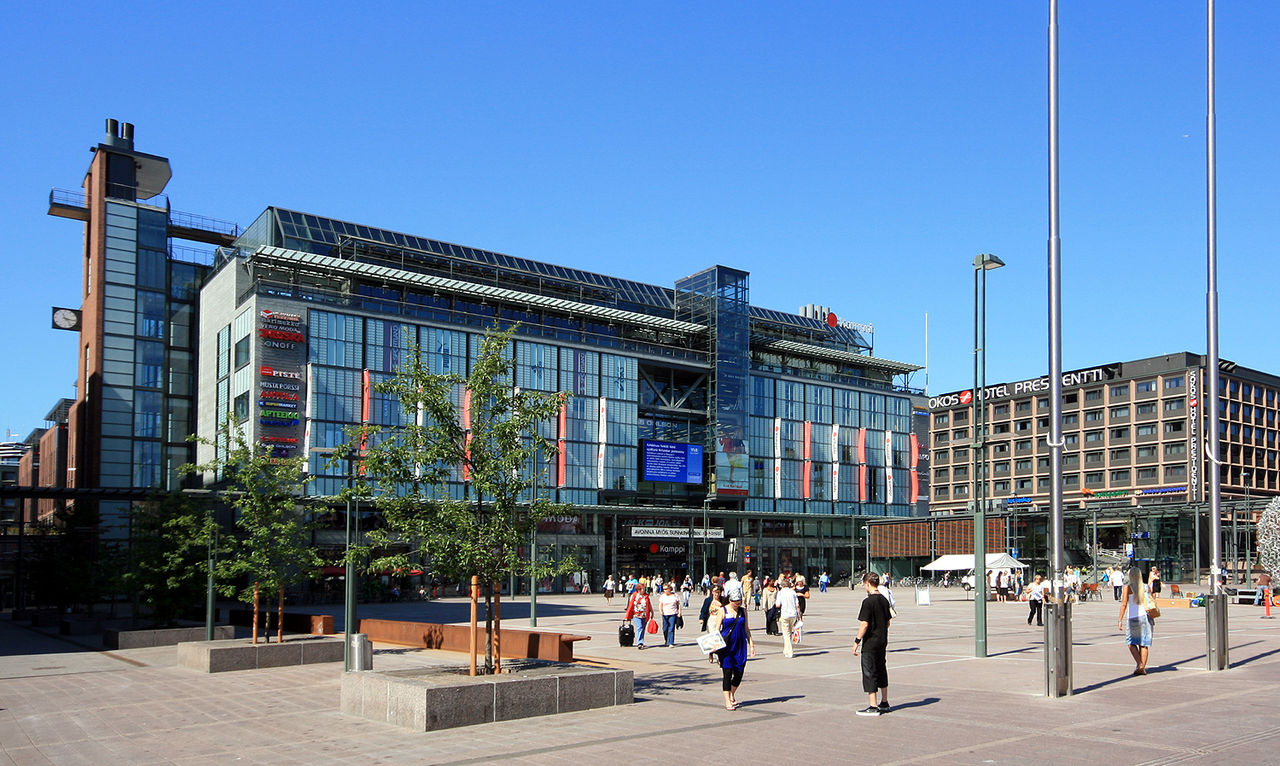
Helsinki metropolitan area generates approximately one third of Finland's GDP. GDP per capita is roughly 1.3 times the national average.[145] Helsinki profits on serviced-related IT and public sectors. Having moved from heavy industrial works, shipping companies also employ a substantial number of people.[146]
The metropolitan area's gross value added per capita is 200% of the mean of 27 European metropolitan areas, equalling those of Stockholm and Paris. The gross value added annual growth has been around 4%.[147]
83 of the 100 largest Finnish companies have their headquarters in the metropolitan area. Two-thirds of the 200 highest-paid Finnish executives live in the metropolitan area and 42% in Helsinki. The average income of the top 50 earners was 1.65 million euro.[148]
The tap water is of excellent quality and it is supplied by the 120 km (75 mi) Päijänne Water Tunnel, one of the world's longest continuous rock tunnels.[149]
Education
.jpg/1280px-University_of_Helsinki,_Main_Building_(52890870759).jpg)
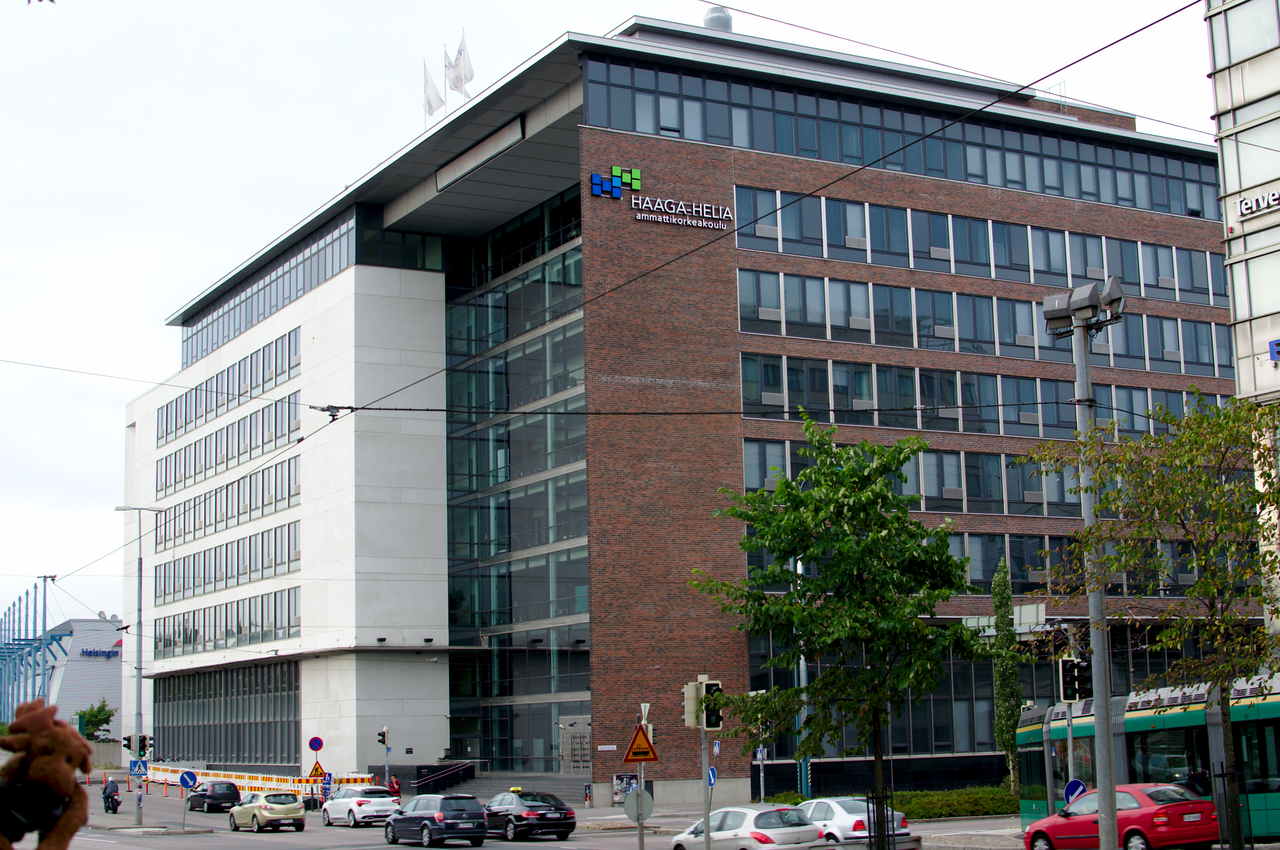
Helsinki has 190 comprehensive schools, 41 upper secondary schools, and 15 vocational institutes. Half of the 41 upper secondary schools are private or state-owned, the other half municipal. There are two major research universities in Helsinki, the University of Helsinki and Aalto University, and a number of other higher level institutions and polytechnics which focus on higher-level professional education.
Research universities
Other institutions of higher education
- Hanken School of Economics
- University of the Arts Helsinki
- National Defence University
- Haaga-Helia University of Applied Sciences
- Laurea University of Applied Sciences
- Helsinki Metropolia University of Applied Sciences
- Arcada University of Applied Sciences
- Diaconia University of Applied Sciences
- HUMAK University of Applied Sciences
Helsinki is one of the co-location centres of the Knowledge and Innovation Community (Future information and communication society) of The European Institute of Innovation and Technology (EIT).[150]
Culture
Museums
The biggest historical museum in Helsinki is the National Museum of Finland, which displays a vast collection from prehistoric times to the 21st century. The museum building itself, a national romantic-style neomedieval castle, is a tourist attraction. Another major historical museum is the Helsinki City Museum, which introduces visitors to Helsinki's 500-year history. The University of Helsinki also has many significant museums, including the Helsinki University Museum "Arppeanum" and the Finnish Museum of Natural History.
The Finnish National Gallery consists of three museums: Ateneum Art Museum for classical Finnish art, Sinebrychoff Art Museum for classical European art, and Kiasma Art Museum for modern art, in a building by architect Steven Holl. The old Ateneum, a neo-Renaissance palace from the 19th century, is one of the city's major historical buildings. All three museum buildings are state-owned through Senate Properties.
The city of Helsinki hosts its own art collection in the Helsinki Art Museum (HAM), primarily located in its Tennispalatsi gallery. Around 200 pieces of public art lie outside. The art is all city property.
Helsinki Art Museum will in 2020 launch the Helsinki Biennial, which will bring art to maritime Helsinki – in its first year to the island of Vallisaari.[151]
The Design Museum is devoted to the exhibition of both Finnish and foreign design, including industrial design, fashion, and graphic design. Other museums in Helsinki include the Military Museum of Finland, Didrichsen Art Museum, Amos Rex Art Museum, and the Tram Museum.
- Museums in Helsinki
-
 Sinebrychoff Art Museum (1842)
 -
 Helsinki University Museum "Arppeanum" (1869)
 -
 The Cygnaeus Gallery Museum (1870)
 -
 The Mannerheim Museum (1874; 1957 as museum)
 -
 The Military Museum of Finland (1881)
 -
 Classical art museum Ateneum (1887)
 -
 The Design Museum (1894)
 -
![Tram Museum [fi] (Ratikkamuseo) (1900)](https://images.hispanopedia.wiki/wikipedia/commons/thumb/9/96/Tram_museum_in_Helsinki-7152.jpg/500px-Tram_museum_in_Helsinki-7152.jpg) Tram Museum (Ratikkamuseo) (1900)
Tram Museum (Ratikkamuseo) (1900) -
 The National Museum of Finland (1910)
 -
 The Helsinki City Museum (1911)
 -
 The Finnish Museum of Natural History (1913)
 -
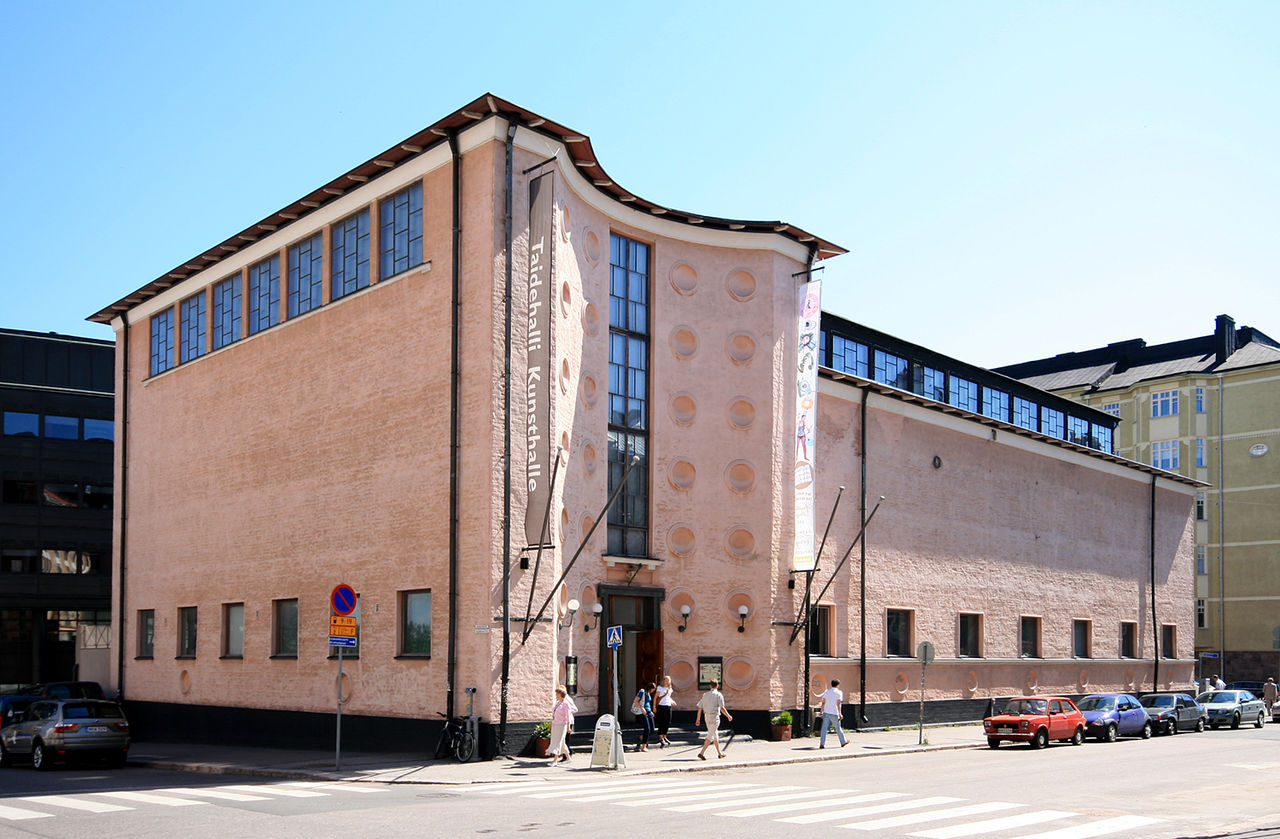
 Kunsthalle Helsinki art venue (1928)
 -
 Didrichsen Art Museum (1964)
 -
 Helsinki Art Museum (1968)
 -
 Kiasma museum of contemporary art (1998)
 -
 Amos Rex art museum (2018)


![Tram Museum [fi] (Ratikkamuseo) (1900)](http://upload.wikimedia.org/wikipedia/commons/thumb/9/96/Tram_museum_in_Helsinki-7152.jpg/1280px-Tram_museum_in_Helsinki-7152.jpg)




Theatres

Helsinki has three major theatres: The Finnish National Theatre, the Helsinki City Theatre, and the Swedish Theatre (Svenska Teatern). Other notable theatres in the city include the Alexander Theatre, Q-teatteri, Savoy Theatre, KOM-theatre, and Teatteri Jurkka.
Music
Helsinki is home to two full-size symphony orchestras, the Helsinki Philharmonic Orchestra and the Finnish Radio Symphony Orchestra, both of which perform at the Helsinki Music Centre concert hall. Acclaimed contemporary composers Kaija Saariaho, Magnus Lindberg, Esa-Pekka Salonen, and Einojuhani Rautavaara, among others, were born and raised in Helsinki, and studied at the Sibelius Academy. The Finnish National Opera, the only full-time, professional opera company in Finland, is located in Helsinki. The opera singer Martti Wallén, one of the company's long-time soloists, was born and raised in Helsinki, as was mezzo-soprano Monica Groop.
Many widely renowned and acclaimed bands have originated in Helsinki, including Nightwish, Children of Bodom, Hanoi Rocks, HIM, Stratovarius, The 69 Eyes, Finntroll, Ensiferum, Wintersun, The Rasmus, Poets of the Fall, and Apocalyptica. The most significant of the metal music events in Helsinki is the Tuska Open Air Metal Festival in Suvilahti, Sörnäinen.[152]
The city's main musical venues are the Finnish National Opera, the Finlandia concert hall, and the Helsinki Music Centre. The Music Centre also houses a part of the Sibelius Academy. Bigger concerts and events are usually held at one of the city's two big ice hockey arenas: the Helsinki Halli or the Helsinki Ice Hall. Helsinki has Finland's largest fairgrounds, the Messukeskus Helsinki, which is attended by more than a million visitors a year.[153]
Helsinki Arena hosted the Eurovision Song Contest 2007, the first Eurovision Song Contest arranged in Finland, following Lordi's win in 2006.[154]
Art
_(2744386193).jpg/1280px-%22Havis_Amanda%22,_la_statue_de_la_fontaine_de_Vallgren_(Helsinki)_(2744386193).jpg)
Helsinki Day (Helsinki-päivä) will be celebrated every 12 June, with numerous entertainment events culminating in an open-air concert.[155][156] Also, the Helsinki Festival is an arts and culture festival that takes place every August (including the Night of the Arts).[157]
At the Senate Square in fall 2010, Finland's largest open-air art exhibition to date took place: About 1.4 million people saw the international exhibition of United Buddy Bears.[158]
Helsinki was the 2012 World Design Capital, in recognition of the use of design as an effective tool for social, cultural, and economic development in the city. In choosing Helsinki, the World Design Capital selection jury highlighted Helsinki's use of 'Embedded Design', which has tied design in the city to innovation, "creating global brands, such as Nokia, Kone, and Marimekko, popular events, like the annual Helsinki Design Week, outstanding education and research institutions, such as the Aalto University School of Arts, Design and Architecture, and exemplary architects and designers such as Eliel Saarinen and Alvar Aalto".[12]
Helsinki hosts many film festivals. Most of them are small venues, while some have generated interest internationally. The most prolific of these is the Helsinki International Film Festival – Love & Anarchy film festival, also known as Helsinki International Film Festival, which features films on a wide spectrum. Night Visions, on the other hand, focuses on genre cinema, screening horror, fantasy, and science fiction films in very popular movie marathons that last the entire night. Another popular film festival is DocPoint, a festival that focuses solely on documentary cinema.[159][160][161]
Media

Today,[when?] there are around 200 newspapers, 320 popular magazines, 2,100 professional magazines, 67 commercial radio stations, three digital radio channels, and one nationwide and five national public service radio channels.[citation needed]
Sanoma publishes Finland's journal of record, Helsingin Sanomat, the tabloid Ilta-Sanomat, the commerce-oriented Taloussanomat, and the television channel Nelonen. Another Helsinki-based media house, Alma Media, publishes over thirty magazines, including the tabloid Iltalehti, and the commerce-oriented Kauppalehti.
Finland's national public-broadcasting institution Yle operates five television channels and thirteen radio channels in both national languages. Yle is headquartered in the neighbourhood of Pasila. All TV channels are broadcast digitally, both terrestrially and on cable. Yle's studio area houses the 146-metre (479 ft) high television and radio tower, Yle Transmission Tower (Pasilan linkkitorni),[162] which is the third tallest structure in Helsinki and one of Helsinki's most famous landmarks, from the top of which, in good weather, can be seen even as far as Tallinn over the Gulf of Finland.[163]
The commercial television channel MTV3 and commercial radio channel Radio Nova are owned by Nordic Broadcasting (Bonnier and Proventus).
Food

Helsinki was already known in the 18th century for its abundant number of inns and pubs, where both locals and those who landed in the harbor were offered plenty of alcoholic beverages.[164] At that time, taxes on the sale of alcohol were a very significant source of income for Helsinki, and one of the most important sellers of alcohol was Johan Sederholm (1722–1805), a trade councilor who attracted rural merchants with alcohol and made good deals.[164] Gradually, a new kind of beverage culture began to grow in the next century, and as early as 1852, the first café of Finland, Café Ekberg,[165][166] was established by confectioner Fredrik Ekberg (1825–1891) after attending his studies in St. Petersburg. Ekberg has also been said to have created Finland's "national pastry tradition".[167] At first, café culture was only a prerogative of sophisticated elite, when it recently began to take shape as the right of every man.[168] Today, there are several hundred cafés in Helsinki, the most notable of which is Cafe Regatta, which is very popular with foreign tourists.[169][170][171]

As an important port city on the Baltic Sea, Helsinki has long been known for its fish food, and it has recently started to become one of the leading fish food capitals in Northern Europe.[172] Helsinki's Market Square is especially known for its traditional herring market, which has been organized since 1743.[173][174][175][176] Salmon is also a typical Helsinki fish dish, both fried and souped.[177] The most prestigious restaurants specializing in seafood include Restaurant Fisken på Disken.[178][179]

Helsinki is currently experiencing a period of booming food culture, and it has developed into an internationally acclaimed food city, receiving recognition for promoting food culture.[176][180][181] The local food culture is made up of cuisines from around the world and the fusions they form. Various Asian restaurants such as Chinese, Thai, Indian and Nepalese are particularly prominent in Helsinki's cityscape, but over the past couple of years, restaurants serving Vietnamese food have been very popular.[172] Sushi restaurant buffets have also made their way into the city's restaurant offerings in one fell swoop.[172] The third prominent trend is restaurants serving pure local food, many of which specialize primarily in serving pure Nordic flavors.[172] In past years Middle Eastern food culture rose in its popularity. Especially Helsinki's eastern part offers many different options for Middle Eastern cuisine lovers.[182] There is also some touches of Russian cuisine, one of which is the Finnish version of blinis, a thick pancakes that are usually fried in a cast-iron pan.[183] One of the most significant food culture venues in Helsinki is the general public area known as Teurastamo in the Hermanni district, which operated as the city's slaughterhouse between 1933 and 1992, to which the name of the place also refers.[176][184][185]
A nationwide food carnival called Restaurant Day (Ravintolapäivä) has begun in Helsinki and has traditionally been celebrated since May 2011.[186] The purpose of the day is to have fun, share new food experiences and enjoy the common environment with the group.[176]
Other
Vappu is an annual carnival for students and workers on 1 May. The last week of June marks the Helsinki Pride human rights event, which was attended by 100,000 marchers in 2018.[187]
Sports


Helsinki has a long tradition of sports: the city gained much of its initial international recognition during the 1952 Summer Olympics, and the city has arranged sporting events such as the first World Championships in Athletics 1983 and 2005, and the European Championships in Athletics 1971, 1994, and 2012. Helsinki hosts successful local teams in both of the most popular team sports in Finland: football and ice hockey. Helsinki houses HJK Helsinki, Finland's largest and most successful football club, and IFK Helsingfors, their local rivals with 7 championship titles. The fixtures between the two are commonly known as Stadin derby. Helsinki's track and field club Helsingin Kisa-Veikot is also dominant within Finland. Ice hockey is popular among many Helsinki residents, who usually support either of the local clubs IFK Helsingfors (HIFK) or Jokerit. HIFK, with 14 Finnish championships titles, also plays in the highest bandy division,[188] along with Botnia-69. The Olympic stadium hosted the first Bandy World Championship in 1957.[189]
Helsinki was elected host-city of the 1940 Summer Olympics, but due to World War II they were canceled. Instead Helsinki was the host of the 1952 Summer Olympics. The Olympics were a landmark event symbolically and economically for Helsinki and Finland as a whole that was recovering from the winter war and the continuation war fought with the Soviet Union. Helsinki was also in 1983 the first city to host the World Championships in Athletics. Helsinki also hosted the event in 2005, thus also becoming the first city to host the Championships for a second time. The Helsinki City Marathon has been held in the city every year since 1981, usually in August.[190] A Formula 3000 race through the city streets was held on 25 May 1997. In 2009 Helsinki was host of the European Figure Skating Championships, and in 2017 it hosted World Figure Skating Championships. The city will host the 2021 FIBA Under-19 Basketball World Cup. American football and the Vaahteraliiga has a strong tradition in the city dating back to the early 1980's.
Most of Helsinki's sports venues are under the responsibility of the city's sports office, such as 70 sports halls and about 350 sports fields. There are nine ice rinks, three of which are managed by the Helsinki Sports Agency (Helsingin liikuntavirasto).[191] In winter, there are seven artificial ice rinks. People can swim in Helsinki in 14 swimming pools, the largest of which is the Mäkelänrinne Swimming Centre,[192] two inland swimming pools and more than 20 beaches, of which Hietaniemi Beach is probably the most famous.[193]
Transport
Roads

The backbone of Helsinki's motorway network consists of three semicircular beltways, Ring I, Ring II, and Ring III, which connect expressways heading to other parts of Finland, and the western and eastern arteries of Länsiväylä and Itäväylä respectively. While variants of a Keskustatunneli tunnel under the city centre have been repeatedly proposed, as of 2017[update] the plan remains on the drawing board.
Many important Finnish highways leave Helsinki for various parts of Finland; most of them in the form of motorways, but a few of these exceptions include Vihdintie. The most significant highways are:
- Finnish national road 1/E18 (to Lohja, Salo and Turku)
- Finnish national road 3/E12 (to Hämeenlinna, Tampere and Vaasa)
- Finnish national road 4/E75 (to Lahti, Jyväskylä, Oulu and Rovaniemi)
- Finnish national road 7/E18 (to Porvoo and Kotka).
Helsinki has some 390 cars per 1000 inhabitants.[194] This is less than in cities of similar population and construction density, such as Brussels' 483 per 1000, Stockholm's 401, and Oslo's 413.[195][196]
Intercity rail

Helsinki Central Railway Station is the main terminus of the rail network in Finland. Two rail corridors lead out of Helsinki, the Main Line to the north (to Tampere, Oulu, Rovaniemi), and the Coastal Line to the west (to Turku). The Main Line (päärata), which is the first railway line in Finland, was officially opened on 17 March 1862, between cities of Helsinki and Hämeenlinna.[197] The railway connection to the east branches from the Main Line outside of Helsinki at Kerava, and leads via Lahti to eastern parts of Finland.
A majority of intercity passenger services in Finland originate or terminate at the Helsinki Central Railway Station. All major cities in Finland are connected to Helsinki by rail service, with departures several times a day. The most frequent service is to Tampere, with more than 25 intercity departures per day as of 2017[update].
Until 2022 there also was an international services from Helsinki to Saint Petersburg and Moscow. The Saint Petersburg to Helsinki route was operated by Allegro high-speed trains.
A Helsinki to Tallinn Tunnel has been proposed[198] and agreed upon by representatives of the cities.[199] The rail tunnel would connect Helsinki to the Estonian capital Tallinn, further linking Helsinki to the rest of continental Europe by Rail Baltica.
Aviation
Air traffic is handled primarily from Helsinki Airport, located approximately 17 kilometres (11 mi) north of Helsinki's downtown area, in the neighbouring city of Vantaa. Helsinki's own airport, Helsinki-Malmi Airport, is mainly used for general and private aviation. Charter flights are available from Hernesaari Heliport.
Sea transport
.jpg/1280px-Helsinki_(23883925315).jpg)
Like many other cities, Helsinki was deliberately founded at a location on the sea in order to take advantage of shipping. The freezing of the sea imposed limitations on sea traffic up to the end of the 19th century. But for the last hundred years, the routes leading to Helsinki have been kept open even in winter with the aid of icebreakers, many of them built in the Helsinki Hietalahti shipyard. The arrival and departure of ships has also been a part of everyday life in Helsinki. Regular route traffic from Helsinki to Stockholm, Tallinn, and Saint Petersburg began as far back as 1837. Over 300 cruise ships and 360,000 cruise passengers visit Helsinki annually. There are international cruise ship docks in South Harbour, Katajanokka, West Harbour, and Hernesaari. In terms of combined liner and cruise passengers, the Port of Helsinki overtook the Port of Dover in 2017 to become the busiest passenger port in the world.[200]
Ferry connections to Tallinn, Mariehamn, and Stockholm are serviced by various companies; very popular MS J. L. Runeberg ferry connection to Finland's second oldest city, medieval old town of Porvoo, is also available for tourists.[201] Finnlines passenger-freight ferries to Gdynia, Poland; Travemünde, Germany; and Rostock, Germany are also available. St. Peter Line offers passenger ferry service to Saint Petersburg several times a week.
Urban transport

In the Helsinki metropolitan area, public transportation is managed by the Helsinki Regional Transport Authority, the metropolitan area transportation authority. The diverse public transport system consists of trams, commuter rail, the metro, bus lines, two ferry lines and a public bike system.
Helsinki's tram system dates back to 1891 when the first horse-drawn trams were introduced; the system was electrified in 1900.[202] As of January 2024[update], the system consists of 14 routes covering the inner part of the city center and one newer light rail style line connecting Keilaniemi in Espoo with Itäkeskus in eastern Helsinki. The length of the network is planned to more than double during the 2020s and 2030s compared to 2021, with major projects including Vantaa light rail, the Crown Bridges link to the island of Laajasalo and the West Helsinki light rail project connecting Kannelmäki to the city center.[203] Construction work on the new tram as the number line 13 (Nihti–Kalasatama–Vallilanlaakso–Pasila) has begun in May 2020, and the line is scheduled for completion in 2024.[204]
The commuter rail system includes purpose-built double track for local services in two rail corridors along intercity railways, and the Ring Rail Line, an urban double-track railway with a station at the Helsinki Airport in Vantaa. Electric operation of commuter trains was first begun in 1969, and the system has been gradually expanded since. 15 different services are operated as of 2017[update], some extending outside of the Helsinki region. The frequent services run at a 10-minute headway in peak traffic.
International relations
Twin towns and sister cities
Helsinki has no official sister cities except Beijing, China. On July 14, 2006, Beijing and Helsinki officially became sister cities. In October 2019, the two cities signed the Work Plan for Promoting the Cooperation between Beijing and Helsinki (19-2023).[205][206][207][208] In addition, the city has a special partnership relation with:

Until 2022, Helsinki also had an international partnership with the Russian cities of Moscow and Saint Petersburg, which was suspended after Russian invasion of Ukraine.[209]
Notable people
Born before 1900


- Peter Forsskål (1732–1763), Swedish-Finnish naturalist and orientalist
- Axel Hampus Dalström (1829–1882), architect
- Maria Tschetschulin (1850–1917), clerk
- Augusta Krook (1853–1941), politician and teacher
- Agnes Tschetschulin (1859–1942), composer and violinist
- Jakob Sederholm (1863–1934), petrologist
- Karl Fazer (1866–1932), baker, confectioner, chocolatier, entrepreneur, and sport shooter
- Emil Lindh (1867–1937), sailor
- Oskar Merikanto (1868–1924), composer
- Signe Lagerborg-Stenius (1870–1968), architect and member the Helsinki City Council
- Maggie Gripenberg (1881–1976), dancer
- Gunnar Nordström (1881–1923), theoretical physicist
- Väinö Tanner (1881–1966), politician
- Walter Jakobsson (1882–1957), figure-skater
- Mauritz Stiller (1883–1928), Finnish-Swedish director and screenwriter
- Karl Wiik (1883–1946), Social Democratic politician
- Lennart Lindroos (1886–1921), swimmer, Olympic games 1912
- Erkki Karu (1887–1935), film director and producer
- Kai Donner (1888–1935), linguist, anthropologist and politician
- Gustaf Molander (1888–1973), Swedish director and screenwriter
- Johan Helo (1889–1966), lawyer and politician
- Minna Craucher (1891–1932), socialite and spy
- Artturi Ilmari Virtanen (1895–1973), chemist (Nobel Prize, 1945)
- Rolf Nevanlinna (1895–1980), mathematician, university teacher and writer
- Elmer Diktonius (1896–1961), Finnish-Swedish writer and composer
- Yrjö Leino (1897–1961), communist politician
- Toivo Wiherheimo (1898–1970), economist and politician
Born after 1900


- Aku Ahjolinna (born 1946), ballet dancer and choreographer
- Lars Ahlfors (1907–1996), mathematician, Fields medalist
- Laura Åkerlund (born 1987), opera stage director
- Ella Eronen (1900–1987), actress and poetic recite
- Tuomas Holopainen (born 1976), songwriter, multi-instrumentalist and record producer
- Helena Anhava (1925–2018), poet, author and translator
- Paavo Berglund (1929–2012), conductor
- Laci Boldemann (1921–1969), composer
- Irja Agnes Browallius (1901–1968), Swedish writer
- Bo Carpelan (1926–2011), Finland-Swedish writer, literary critic and translator
- Tarja Cronberg (born 1943), politician
- Jörn Donner (1933–2020), writer, film director and politician
- George Gaynes (1917–2016), American television and film actor
- Ragnar Granit (1900–1991), Finnish-Swedish neurophysiologist and Nobel laureate
- Mika Waltari (1908–1979), writer
- Elina Haavio-Mannila (born 1933), social scientist and professor
- Tarja Halonen (born 1943), 11th President of Finland
- Reino Helismaa (1913–1965), writer, film actor and singer
- Kim Hirschovits (born 1982), ice hockey player
- Bengt Holmström (born 1949), Professor of Economics, Nobel laureate
- Shawn Huff (born 1984), basketball player
- Ville Husso (born 1995), ice hockey goaltender
- Kirsti Ilvessalo (1920–2019), textile artist
- Tove Jansson (1914–2001), Finland-Swedish writer, painter, illustrator, comic writer, graphic designer
- Kaapo Kähkönen (born 1996), ice hockey goaltender
- Aki Kaurismäki (born 1957), director, screenwriter and producer
- Emma Kimiläinen (born 1989), racing driver
- Kiti Kokkonen (born 1974), Finnish actress and writer
- Petteri Koponen, basketball player
- Lennart Koskinen (born 1944), Swedish, Lutheran bishop
- Sam Lake (born 1970), writer and actor; the creative director at Remedy Entertainment
- Olli Lehto (1925–2020), mathematician
- Samuel Lehtonen (1921–2010), bishop of the Evangelical Lutheran Church of Finland
- Juha Leiviskä (born 1936), architect
- Magnus Lindberg (born 1958), composer and pianist
- Esa Lindell (born 1994), professional ice hockey player
- Lill Lindfors (born 1940), Finland-Swedish singer and TV presenter
- Jari Mäenpää (born 1977), founder, former lead guitarist and current lead singer in melodic death metal band Wintersun, former lead singer and guitarist of folk metal band Ensiferum
- Klaus Mäkelä (born 1996), cellist and conductor
- Susanna Mälkki (born 1969), conductor
- Georg Malmstén (1902–1981), singer, musician, composer, orchestra director and actor
- Tauno Marttinen (1912–2008), composer
- Vesa-Matti Loiri (1945–2022), actor, comedian, singer
- Abdirahim Hussein Mohamed (born 1978), Finnish-Somalian media personality and politician
- Hanno Möttölä, Finnish basketball player
- Väinö Myllyrinne (1909–1963), acromegalic giant and at time (1940–1963) the world's tallest living person
- Peter Nygård (born 1941), businessman, arrested in December 2020 for sex crimes
- Markku Peltola (1956–2007), actor and musician
- Kimmo Pikkarainen (born 1976), professional ice hockey player
- Anne Marie Pohtamo (born 1955), actress, model, Miss Suomi 1975 and Miss Universe 1975
- Elisabeth Rehn (born 1935), politician
- Einojuhani Rautavaara (1928–2016), composer
- Susanne Ringell (born 1955), writer and actress
- Miron Ruina (born 1998), Finnish-Israeli basketball player
- Kaija Saariaho (1952-2023), composer
- Riitta Salin (born 1950), athlete
- Sasu Salin, Finnish basketball player
- Esa-Pekka Salonen (born 1958), composer and conductor
- Asko Sarkola (born 1945), actor
- Heikki Sarmanto (born 1939), jazz pianist and composer
- Teemu Selänne (born 1970), Hall of Fame ice hockey player
- Ann Selin (born 1960), trade union leader
- Birgit Sergelius (1907–1979), stage and film actress
- Alexander Stubb (born 1968), 13th President of Finland
- Teuvo Teräväinen (born 1994), professional ice hockey player
- Märta Tikkanen (born 1935), Finland-Swedish writer and philosophy teacher
- Linus Torvalds (born 1969), software engineer, creator of Linux
- Elin Törnudd (1924–2008), Finnish chief librarian and professor
- Klaus Törnudd (born 1931), diplomat and political scientist
- Sirkka Turkka (1939–2021), poet
- Jarno Tuunainen (born 1977), footballer
- Ville Valo (born 1976), lead singer of the rock band HIM
- Ulla Vuorela (1945–2011), professor of social anthropology
- Lauri Ylönen (born 1979), lead singer of the rock band The Rasmus
See also

.svg/1280px-Europe_(orthographic_projection).svg.png)


- Timeline of Helsinki § Bibliography
- Helsinki metropolitan area
- Helsinki urban area
- Subdivisions of Helsinki
- Helsinki Parish Village
- Underground Helsinki
Notes
- ^ /ˈhɛlsɪŋki/ HEL-sink-ee or /hɛlˈsɪŋki/ hel-SINK-ee "Helsinki". The American Heritage Dictionary of the English Language (5th ed.). HarperCollins. "Helsinki". Collins English Dictionary. HarperCollins.
- ^ Finnish: [ˈhelsiŋki] Swedish: Helsingfors, Finland Swedish: [helsiŋˈforːs]
- ^ Statistics Finland classifies a person as having a "foreign background" if both parents or the only known parent were born abroad.[134]
References
- ^ a b Ainiala, Terhi (2009). "Place Names in the Construction of Social Identities: The Uses of Names of Helsinki". Research Institute for the Languages of Finland. Retrieved 22 September 2011.
- ^ a b [1] [permanent dead link]
- ^ a b "Helsinki, Pearl of the Baltic Sea". Myhelsinki.fi. Retrieved 16 December 2021.
- ^ "Area of Finnish Municipalities 1.1.2018" (PDF). National Land Survey of Finland. Retrieved 30 January 2018.
- ^ "Helsinki elevation". elevation.city.fi. Archived from the original on 2 November 2023. Retrieved 2 November 2023.
- ^ "Finland's preliminary population figure was 5,625,011 at the end of August 2024". Population structure. Statistics Finland. 24 September 2024. ISSN 1797-5395. Retrieved 25 September 2024.
- ^ "Population growth biggest in nearly 70 years". Population structure. Statistics Finland. 26 April 2024. ISSN 1797-5395. Retrieved 29 April 2024.
- ^ "Population according to age (1-year) and sex by area and the regional division of each statistical reference year, 2003–2020". StatFin. Statistics Finland. Retrieved 2 May 2021.
- ^ a b "Luettelo kuntien ja seurakuntien tuloveroprosenteista vuonna 2023". Tax Administration of Finland. 14 November 2022. Retrieved 7 May 2023.
- ^ "Cities of Finland". Eurostat. Archived from the original on 18 May 2013. Retrieved 10 February 2013.
- ^ "Sipoo - kahden keskuksen kunta Helsingin tuntumassa". ta.fi. Retrieved 9 November 2021.
- ^ a b "Past capital: Helsinki". Worlddesigncapital.com. Retrieved 19 May 2015.
- ^ "Most liveable city: Helsinki — Monocle Film / Affairs". Monocle.com. Retrieved 12 March 2013.
- ^ "Global Liveability Ranking 2016". www.eiu.com.
- ^ "Helsinki: The World's 100 Greatest Places of 2021". Time.com. Retrieved 16 December 2021.
- ^ "Helsinki comes in third in ranking of world's best cities to live". Helsinki Times. 14 July 2021. Retrieved 15 August 2021.
- ^ Ghouri, Farah (4 August 2021). "London hailed as world's 'city of choice' in quality of life report". City A.M. Retrieved 15 August 2021.
- ^ "The friendliest cities in Europe: 2023 Readers' Choice Awards". Condé Nast Traveler. 3 October 2023. Retrieved 21 October 2023.
- ^ Lapin Kansa: Rovaniemen ja Helsingin johtajat saivat ministeriltä tehtävän miettiä, miten matkailu nousee korona-ajan mentyä ohi – Rahaa on luvassa EU:n elpymispaketista (in Finnish)
- ^ Roberts, Toby; Williams, Ian; Preston, John (2021). "The Southampton system: A new universal standard approach for port-city classification". Maritime Policy & Management. 48 (4): 530–542. doi:10.1080/03088839.2020.1802785. S2CID 225502755.
- ^ "Helsinki becomes world's busiest passenger port". clickittefaq. Retrieved 11 February 2024.
- ^ Salminen, Tapio (2013). Vantaan ja Helsingin pitäjän keskiaika [The Middle-age in Vantaa and Helsinki] (in Finnish). Vantaa: Vantaan kaupunki. ISBN 978-952-443-455-3.
- ^ Hellman, Sonja (7 June 2015). "Historiska fel upprättas i ny bok" [Historical misinformation corrected in new book]. Hufvudstadsbladet (in Swedish).
- ^ "Utbildning & Vetenskap: Svenskfinland". Veta.yle.fi. Archived from the original on 12 May 2008. Retrieved 8 July 2009.
- ^ "Onko kosken alkuperäinen nimi Helsinginkoski vai Vanhankaupunginkoski?". Helsinginkoski. Archived from the original on 5 March 2016. Retrieved 26 February 2016.
- ^ Jäppinen, Jere (2007). "Helsingin nimi" (PDF). www.helsinginkaupunginmuseo.fi. Helsingin kaupunginmuseo. Retrieved 26 February 2016.
- ^ Jäppinen, Jere (15 November 2011). "Mistä Helsingin nimi on peräisin?". Helsingin Sanomat: D2. Archived from the original on 29 November 2014. Retrieved 29 November 2013.
- ^ Ristkari, Maiju: Heinäsorsat Helsingissä. Aku Ankka #44/2013, introduction on page 2.
- ^ "Sami Grammar". uta.fi. Archived from the original on 21 December 2014. Retrieved 2 January 2015.
- ^ a b c d Kent, Neil (2004). Helsinki: A cultural and literary history. Oxford: Signal Books.
- ^ a b V.-P. Suhonen and Janne Heinonen. "Helsingin keskiaikaiset ja uuden ajan alun kylänpaikat 2011, Inventointiraportti. Museovirasto, Arkeologiset kenttäpalvelut" (PDF).
- ^ "Keskiaikainen Helsingin pitäjä | Historia Helsinki". historia.hel.fi (in Finnish). 4 March 2022. Retrieved 21 February 2024.
- ^ Väätäinen, Erika (4 March 2022). "Were There Ever Vikings In Finland Or Finnish Vikings?". Scandification. Retrieved 24 February 2024.
- ^ "The Battle of Herdaler".
Saga of Olaf Haraldson. See chapter 8: The Third Battle.
- ^ Talvio, Tuukka (2002). Suomen museo 2002. Vammala: Suomen Muinaismuistoyhdistys. ISBN 951-9057-47-1.
- ^ Tarkiainen, Kari (2010). Ruotsin itämaa. Helsinki: Svenska litteratussällskapet i Finland. pp. 122–125.
- ^ "Keskiaikainen Helsingin pitäjä | Historia Helsinki". historia.hel.fi (in Finnish). 4 March 2022. Retrieved 13 February 2024.
- ^ "Keskiaikaista arkea Helsingin pitäjässä | Historia Helsinki". historia.hel.fi (in Finnish). 16 November 2023. Retrieved 15 February 2024.
- ^ a b "Ruttopuisto – Plague Park". Tabblo.com. Archived from the original on 11 April 2008. Retrieved 3 November 2008.
- ^ a b "Helsingin historia". Helsingin kaupunki (in Finnish).
- ^ a b "Helsinki – Suomi". Matkaoppaat.com (in Finnish). Retrieved 29 December 2020.
- ^ "Suuri Pohjan sota ja Helsingin tuho" (in Finnish). City of Helsinki. 21 January 2022. Retrieved 10 May 2023.
- ^ Aalto, Seppo (2015). Kruununkaupunki – Vironniemen Helsinki 1640–1721 (in Finnish). Helsinki: Finnish Literature Society. ISBN 978-952-222-675-4.
- ^ Niukkanen, Marianna; Heikkinen, Markku. "Vuoden 1808 suurpalo". Kurkistuksia Helsingin kujille (in Finnish). National Board of Antiquities. Archived from the original on 14 December 2017. Retrieved 14 July 2013.
- ^ "8 April 1812 Emperor Alexander I promotes Helsinki to the capital of the Grand Duchy. - Helsinki 200 years as capital". Archived from the original on 10 August 2017. Retrieved 21 January 2016.
- ^ "Bicentennial of Helsinki as Finnish capital". Yle News. 8 April 2012. Retrieved 8 April 2022.
- ^ "Lobbying for Helsinki 200 years ago". Helsinki Times. 19 April 2012. Retrieved 8 April 2022.
- ^ Marjo Vilkko (2014). "Stadin slangi". Suomi on ruotsalainen (in Finnish). Helsinki: Schildts & Söderströms. pp. 216–219. ISBN 978-951-52-3419-3.
- ^ "The White Pearl of the Baltic Sea – Helsinki Deals with Snow". Hooniverse.com. 3 January 2013. Retrieved 16 December 2021.
- ^ a b c d Williams, Ingrid K. (8 August 2024). "36 Hours in Helsinki". The New York Times. Retrieved 12 August 2024.
- ^ Kotka, Tiina (14 May 2020). "Stadilla on 60 luonnonsuojelualuetta" (PDF). Helsinki-lehti (in Finnish). No. 2/2020. City of Helsinki. p. 27. Retrieved 30 December 2020.
- ^ "Mitkä ovat Helsingin nimikkoeläin ja nimikkokasvi?". Kysy kirjastonhoitajalta (in Finnish). Helsinki City Library. 30 August 2001. Retrieved 30 December 2020.
- ^ "Aluejaot". Tietopalvelu (in Finnish). Uudenmaan liitto. Archived from the original on 29 May 2014. Retrieved 29 May 2014.
- ^ "Uudenmaan maakuntakaava selostus" (PDF) (in Finnish). Helsinki-Uusimaa Region. Archived from the original (PDF) on 13 August 2011. Retrieved 17 February 2014.
- ^ "Pääkaupunkiseutu, Suur-Helsinki ja Helsingin seutu". Kotus (in Finnish). Retrieved 30 December 2020.
- ^ "Helsingin seutu tiivistetysti". Kaupunkitieto (in Finnish). Helsinginseutu.fi. 19 December 2022.
- ^ "Climate Helsinki: Temperature, Climograph, Climate table for Helsinki - Climate-Data.org". en.climate-data.org. Retrieved 17 January 2018.
- ^ "Climatological statistics for the normal period 1971–2000". Fmi.fi. Retrieved 13 April 2010.
- ^ Tukiainen, Matti. "Helsinki, Finland – Sunrise, sunset, dawn and dusk times around the World!". Gaisma. Retrieved 11 February 2011.
- ^ "Taulukkotilasto: Helsinki Kaisaniemi". kilotavu.com. Finnish Meteorological Institute. 28 July 2019. Retrieved 28 July 2019.
- ^ Kersalo, Juha; Pirinen, Pentti, eds. (2009). "Suomen Makkuntien Ilmasto" (PDF). Helsinki: Finnish Meteorological Institute. Retrieved 11 August 2021.
- ^ "Helsinki Kaisaniemi - Taulukkotilasto". kilotavu.com.
- ^ a b "FMI normals 1991-2020". fmi.fi. Retrieved 7 October 2021.
- ^ "FMI data". FMI. Retrieved 25 September 2020.
- ^ "Helsinki, Finland - Monthly weather forecast and Climate data". Weather Atlas. Retrieved 22 May 2023.
- ^ "Weatheronline.co.uk".
- ^ "FMI open data". FMI. Retrieved 8 October 2021.
- ^ "Kamppi, Kluuvi ja Punavuori". City of Helsinki (in Finnish). Retrieved 30 December 2020.
- ^ "Millainen hotelli Helsingissä kannattaa valita ja miltä alueelta". Pieni matkaopas (in Finnish). Retrieved 30 December 2020.
- ^ Malmi, Uuttahelsinkiä.fi, (in Finnish)
- ^ Malmin keskustan suunnitteluperiaatteet päätöksentekoon – STT Info (in Finnish)
- ^ Tässä on tuleva Itä-Helsingin keskus: Itäväylän päälle rakentuu taloja ja tilaa kaikille, Stoan Puhoksen ja Puotilan metroaseman alueen monikulttuurisuutta halutaan rikastaa – Yle (in Finnish)
- ^ "Kuninkaanportti". Suomenlinna (in Finnish). Retrieved 29 December 2020.
- ^ "Vuonna 1754 rakennettu Östersundomin kirkko on Helsingin vanhin kirkko". Helsingin seurakunnat (in Finnish). Retrieved 12 February 2024.
- ^ Colston, Penelope (24 January 2013). "In Helsinki, Modern Units to Art Nouveau Gems". The New York Times. Retrieved 22 October 2021.
- ^ "Säätytalo". Virtual Helsinki (in Finnish). Archived from the original on 14 September 2012. Retrieved 29 December 2020.
- ^ "Johanneksenkirkko". Helsingin kirkot (in Finnish). Archived from the original on 4 August 2017. Retrieved 29 December 2020.
- ^ "Ritarihuone". Helsingin kaupunginmuseo (in Finnish). Archived from the original on 19 March 2021. Retrieved 29 December 2020.
- ^ "Katedraalit ja tuomiokirkot". Discovering finland (in Finnish). Retrieved 29 December 2020.
- ^ Willis, David K. (4 August 1983). "When it comes to films on Russia, they've seen enough". Christian Science Monitor.
- ^ Ministry for Foreign Affairs of Finland, Political Department: "Memo 56 of 20 January 1982 (labelled highly confidential in 1982)" (PDF). Archived from the original (PDF) on 15 June 2007. Retrieved 16 January 2007. (1.37 MB)
- ^ "Billion Dollar Brain - Film Locations". Retrieved 15 July 2020.
- ^ "YLE: Tehtävä Suomessa, Michael Caine! - YLE Teema" (in Finnish). 18 February 2020. Retrieved 15 July 2020.
- ^ Morris, Kieran (6 May 2020). "Deeper Underground: How Helsinki is Building its Future Beneath the City Surface". Culture Trip.
- ^ "Underground Master Plan". Helsingin kaupunki. Archived from the original on 19 March 2021. Retrieved 31 August 2020.
- ^ "My Helsinki". www.myhelsinki.fi. Archived from the original on 19 March 2021. Retrieved 31 August 2020.
- ^ "Stora Enson pääkonttori, Kanavaranta 1". "Helsingin Aallot" blog (in Finnish). 25 February 2007. Retrieved 5 February 2011.
- ^ "Kohtaako Enson konttori voittajansa?". Helsingin Sanomat (in Finnish). 14 June 2008. Lead editorial. Archived from the original on 19 November 2011. Retrieved 5 February 2011.
- ^ a b Penttilä, Vappu. "Kiasma nousi inhokkien ykköseksi". Verkkoliite (in Finnish). Helsingin Sanomat. Archived from the original on 29 June 2011. Retrieved 5 February 2011.
- ^ "Olympiarakennukset" [Olympic Buildings]. Finnish Heritage Agency List of Nationally Significant Built Cultural Environments (RKY). 22 December 2009. Retrieved 26 June 2022.
- ^ "Malmin Lentoasema" [Malmi Airport]. Finnish Heritage Agency List of Nationally Significant Built Cultural Environments (RKY). 22 December 2009. Retrieved 26 June 2022.
- ^ a b Ilonen, Arvi: Helsinki, Espoo, Kauniainen, Vantaa – arkkitehtuuriopas. Helsinki: Otava, 2009. ISBN 978-951-1-23193-6.
- ^ Saarinen, Eliel. Kalevalatalo, Munkkiniemi, Helsinki, ulkoperspektiivipiirustus, 1921.
- ^ "26.11.1927 Hakkapeliitta no 48, s. 11". digi.kansalliskirjasto.fi (in Finnish). Retrieved 13 February 2024.
- ^ "Pilvilinnoja – pöydälle jääneitä suunnitelmia". Arkkitehtuurimuseo (in Finnish). Retrieved 13 February 2024.
- ^ a b Pentti.murole@gmail.com (7 April 2021). "Pentti Murole blogi: Uskallanko kirjoittaa korkeasta rakentamisesta?". Pentti Murole blogi. Retrieved 8 March 2024.
- ^ "Etusivu - UTUPub". www.utupub.fi. Retrieved 11 February 2024.
- ^ Törmänen, Eeva (17 December 2022). "Suomen ensimmäinen pilvenpiirtäjä rakennettiin Espooseen 1976, koska Helsinki kieltäytyi – Raaden Hampaan rakentamiseen liittyi erikoinen vaatimus". Tekniikka&Talous (in Finnish). Retrieved 25 February 2024.
- ^ Esko, Pasanen (8 November 1990). "Koneen tornikaavailut hämmästyttävät Elmua". Helsingin Sanomat (in Finnish). Retrieved 11 February 2024.
- ^ Esko, Pasanen (19 December 1990). "Kiinteistövirasto: Koneen korkea torni sopii Elmun tontille". Helsingin Sanomat (in Finnish). Retrieved 11 February 2024.
- ^ "Eteläiseen Helsinkiin nousee jälleen uusi tornitalo, 111-metrinen toimistopilvenpiirtäjä". Yle Uutiset (in Finnish). 3 March 2023. Retrieved 25 February 2024.
- ^ "Kalasataman harmaaksi haukutun Majakan viereen nousee kaksi valkoista tornitaloa – Poliitikot haluavat nähdä omin silmin, miltä talojen julkisivu näyttää". Helsingin Sanomat (in Finnish). 15 December 2018. Retrieved 25 February 2024.
- ^ "Kalasatama". Helsingin kaupunki (in Finnish). 13 September 2022. Retrieved 25 February 2024.
- ^ "Atlas ja Hyperion kurkottelevat pilviin". www.skanska.fi (in Finnish). Retrieved 10 February 2024.
- ^ "Senaatti-kiinteistöt, Helsingin kaupunki ja Skanska allekirjoittivat sopimuksen Pasilan Länsitornialueen toteuttamisesta | Skanska Oy". www.sttinfo.fi (in Finnish). Retrieved 9 February 2024.
- ^ Siippainen, Aapo (1 March 2024). "130-metrisen tornitalon rakentaminen alkaa Pasilassa – vilkas pyöräbaana jää alle". Helsingin Uutiset (in Finnish). Retrieved 1 March 2024.
- ^ "Pilvenpiirtäjät | Helsingin Pasilaa odottaa mullistus: Kuvissa uudet tornit". Helsingin Sanomat (in Finnish). 12 April 2023. Retrieved 13 February 2024.
- ^ "Rakentaminen | Helsingin Messukeskus on saamassa uuden sisääntulohallin ja 33-kerroksisen hotellitornin". Helsingin Sanomat (in Finnish). 18 August 2020. Retrieved 10 February 2024.
- ^ "Hotelli Tornitalo".
- ^ HS, Milka Valtanen (19 June 2019). "Jätkäsaareen nousemassa lähes 40 metriä Clarionia korkeampi tornihotelli". Helsingin Sanomat (in Finnish). Retrieved 10 February 2024.
- ^ "Kaupunkisuunnittelu | Helsinkiin halutaan uusi "tunnistettava maamerkki": 29-kerroksinen torni Ruoholahteen". Helsingin Sanomat (in Finnish). 6 February 2024. Retrieved 10 February 2024.
- ^ "Kaavat, kartat ja avustukset rakentamiseen". Helsingin kaupunki (in Finnish). 26 April 2022. Retrieved 11 February 2024.
- ^ YLE: The statue of the Russian emperor arouses wonder among tourists – Why is it still in the middle of Helsinki? - Venäjän keisarin patsas herättää turisteissa ihmetystä – Miksi se on yhä keskellä Helsinkiä? (in Finnish)
- ^ "Veistokset". HAM Helsinki (in Finnish). Helsinki Art Museum. Archived from the original on 19 March 2021. Retrieved 27 January 2021.
- ^ "Helsingin vaalipiiri — Tulospalvelu — Kuntavaalit 2012". Vaalikone.fi. Archived from the original on 1 January 2013. Retrieved 12 March 2013.
- ^ "Statistical Yearbook of Helsinki 2012" (PDF). City of Helsinki Urban Facts. 2012. Retrieved 19 September 2023.
- ^ a b c d e f g h i "Population growth biggest in nearly 70 years". Population structure. Statistics Finland. 26 April 2024. ISSN 1797-5395. Retrieved 29 April 2024.
- ^ Tapani Valkonen ym. (17 December 2007). "Tutkimuksia 10/2007: Elinajanodotteen kehitys Helsingissä ja sen väestönosaryhmissä 1991–2005" (PDF). Helsingin kaupunki, tietokeskus. Archived from the original (PDF) on 8 March 2022. Retrieved 30 December 2007.
- ^ Tilastolaitoksen historiaa. "Tilasto". Stat.fi. Archived from the original on 24 April 2010. Retrieved 13 April 2010.
- ^ "Helsingin historia". Hel.fi. Archived from the original on 23 May 2010. Retrieved 13 April 2010.
- ^ "Maan alle". Aatos.fi. 30 December 1972. Retrieved 13 April 2010.
- ^ Butzin, Bernhard (1991). "Helsinki — aspects of urban development and planning". GeoJournal. 2 (1). Springer, Netherlands: 11–26. doi:10.1007/BF00212573. ISSN 0343-2521. S2CID 155038338.
- ^ "Espoo population exceeds 250 000". espoo.fi. Archived from the original on 19 March 2021. Retrieved 1 September 2020.
- ^ "HSL Helsingin seudun liikenne – About HSL". Hsl.fi. 1 January 2010. Archived from the original on 19 January 2010. Retrieved 13 April 2010.
- ^ "HSY – Default". Hsy.fi. Archived from the original on 25 March 2010. Retrieved 13 April 2010.
- ^ "Oulusta tullut Suomen suurin saamelaiskylä – Helsinki on viides | Tieto&trendit" (in Finnish). Stat.fi. Retrieved 5 May 2022.
- ^ "Immigrants Learning Swedish over Finnish Run into Problems". 4 November 2010.
- ^ "Helsingfors blir allt mer flerspråkigt: "Svårt att klara sig på svenska"".
- ^ "Immigrants Learning Swedish over Finnish Run into Problems | News | YLE Uutiset". yle.fi. 4 November 2010. Retrieved 16 September 2011.
- ^ "Här bor de svenskspråkiga i Helsingfors – Se hur det ser ut i ditt område". Hbl.fi. 20 May 2018. Retrieved 5 May 2022.
- ^ "Helsingin nimistön vaiheita". Kotimaisten kielten tutkimuskeskus. Retrieved 13 April 2010.
- ^ "Kysy.fi | Helsingin kaupunginkirjasto" (in Finnish). Igs.kirjastot.fi. Archived from the original on 4 May 2012. Retrieved 17 February 2014.
- ^ "Vuonna 2035 yli neljännes helsinkiläisistä vieraskielisiä | Ulkomaalaistaustaiset Helsingissä". ulkomaalaistaustaisethelsingissa.fi.
- ^ "Persons with foreign background". Statistics Finland. Archived from the original on 5 January 2021. Retrieved 18 September 2023.
- ^ Key figures on population by region, 1990-2023 Statistics Finland
- ^ "Ota yhteyttä". Evl.fi. Retrieved 16 December 2021.
- ^ "Tietoa seurakunnasta". Hos.fi. Retrieved 16 December 2021.
- ^ "Tilastotietoja". Katolinen kirkko Suomessa.
- ^ "Kielimoskeija: Kallion moskeijassa lapsista kasvatetaan pakistanilaisia". Yle Uutiset. 28 October 2015.
- ^ "OKM - Avustukset rekisteröityjen uskonnollisten yhdyskuntien toimintaan v. 2018" (PDF). Minedu.fi. Retrieved 16 December 2021.
- ^ "Vaikuttajaimaami: "Pääkaupunkiseudulle tarvitaan jopa viisi suurmoskeijaa"". Yle Uutiset. 28 October 2015.
- ^ "Tietokulma | Islam Helsingissä". Helsingin Sanomat. 19 February 2004.
- ^ "Helsingin synagoga". RKY (in Finnish). Museovirasto. Retrieved 30 December 2020.
- ^ "Helsingin synagoga". Jchelsinki.fi. Retrieved 16 December 2021.
- ^ "Helsinki Region Statistics". Helsinginseutu.fi. Archived from the original on 22 April 2016. Retrieved 17 February 2014.
- ^ "Economy of Helsinki, Finland | Helsinki.com". www.helsinki.com. Retrieved 15 November 2018.
- ^ "Kansilehti2.vp" (PDF). Retrieved 13 April 2010.
- ^ "Helsingin Sanomat – International Edition – Metro". Hs.fi. 9 November 2005. Archived from the original on 19 November 2011. Retrieved 8 July 2009.
- ^ [2] Archived 11 October 2009 at the Wayback Machine
- ^ "European Institute of Innovation and Technology: Home". Eit.europa.eu. Archived from the original on 28 March 2010. Retrieved 13 April 2010.
- ^ "Front page". Helsinki Biennial. Retrieved 9 November 2021.
- ^ "Tuska". Tuska.fi. Retrieved 16 December 2021.
- ^ "Messukeskus" (in Finnish). VLP-Palvelut. Retrieved 29 January 2022.
- ^ "Eurovision Song Contest 2007 Final". eurovision.tv. Retrieved 8 November 2016.
- ^ "Radio Aallon Helsinki-päivän konsertti". Stadissa (in Finnish). Retrieved 27 January 2021.
- ^ "Helsinki-päivä 12.6". helsinkipaiva.fi (in Finnish). Retrieved 11 August 2021.
- ^ "Helsinki Festival". Retrieved 8 November 2016.
- ^ "United Buddy Bears in Helsinki". Archived from the original on 19 March 2021. Retrieved 1 April 2019.
- ^ "Helsinki International Film Festival". hiff.fi. Retrieved 21 January 2015.
- ^ "DocPoint". docpoint.info. Archived from the original on 19 March 2021. Retrieved 21 January 2015.
- ^ "Night Visions Film Festival". Nightvisions.info. Retrieved 21 January 2015.
- ^ "Pasilan linkkitorni – SkyscraperPage.com". Retrieved 29 January 2022.
- ^ "Pasilan linkkitorni tyhjeni, mihin katosivat maankuulun maamerkin lautasantennit?". Yle (in Finnish). 10 November 2015. Retrieved 29 January 2022.
- ^ a b Väliaho, Tuomo (26 January 2022). "1700-luvun Helsingissä ryypättiin tilanteissa, joita nykyihmisen on vaikea käsittää" [In 18th-century Helsinki, drinking was done in situations that are difficult for modern man to comprehend]. Helsingin Sanomat (in Finnish). Retrieved 29 January 2022.
- ^ "Home page". Ekberg.fi. Retrieved 29 January 2022.
- ^ Karjalainen, Marketta (26 November 2016). "Tässä ovat Helsingin kahvilakisan voittaja ja yli sata muuta suosikkia". Helsingin Uutiset (in Finnish). Retrieved 29 January 2022.
- ^ "Ekberg, Fredrik (1825 - 1891)" (in Finnish). The National Biography of Finland. Retrieved 29 January 2022.
- ^ "Maakuntien ruokaperinteitä". Ruokatieto (in Finnish). Retrieved 29 January 2022.
- ^ "Quirky cafés that the locals love". My Helsinki. Retrieved 29 January 2022.
- ^ "Cafe Regatta". Tripadvisor (in Finnish). Retrieved 29 January 2022.
- ^ "Cityn Suuri Ravintolaäänestys 2014: Helsinki". City (in Finnish). 7 June 2014. Retrieved 29 January 2022.
- ^ a b c d "Helsingin ruokakulttuuri elää voimakasta nousukautta". Ravintola Kosmos (in Finnish). Retrieved 29 January 2022.
- ^ "Stadin Silakkamarkkinat". Silakkamarkkinat.fi (in Finnish). Retrieved 29 January 2022.
- ^ "Stadin Silakkamarkkinat". Stadissa.fi (in Finnish). Retrieved 29 January 2022.
- ^ Paljakka, Anna (30 October 2019). "Kala maistuisi yhä useammalle, mutta kalaravintolat ovat Helsingissä harvassa – kriitikko söi niistä kolmessa". Helsingin Sanomat (in Finnish). Retrieved 29 January 2022.
- ^ a b c d "Herkuttele Helsingissä" (in Finnish). City of Helsinki. Archived from the original on 29 January 2022. Retrieved 29 January 2022.
- ^ Yildirim, Arda (4 October 2021). "Perinteistä lohikeittoa tarjoillaan ravintoloissa ympäri Suomen, mutta valmistuksessa ontuu yksi vaihe – HS testasi kolmen ravintolan keiton ja löysi erinomaisen". Helsingin Sanomat (in Finnish). Retrieved 29 January 2022.
- ^ "Seafood bar and restaurant". Fisken på Disken. Retrieved 29 January 2022.
- ^ Nupponen, Sakari (29 September 2021). "Tässä ovat kaupungin parhaat kala-ravintolat – Katso asiantuntijoiden vinkit". Helsingin Uutiset (in Finnish). Retrieved 29 January 2022.
- ^ Tikkanen, Johanna (3 November 2014). "Helsingin ruokakulttuuri palkittiin". Helsingin Sanomat (in Finnish). Retrieved 29 January 2022.
- ^ Rantanen, Tiia (20 June 2017). "Syömään! Ruokakulttuurin asiantuntija Milla Visuri: "Helsingissä kaikki on mahdollista"". City (in Finnish). Retrieved 29 January 2022.
- ^ "Journey to East Helsinki to discover Middle Eastern and Caucasian food" (in Finnish). My Helsinki. Retrieved 31 January 2023.
- ^ "Top Russian restaurants in Helsinki" (in Finnish). My Helsinki. Archived from the original on 11 February 2023. Retrieved 11 February 2022.
- ^ "Home - Teurastamo". Teurastamo.com. Retrieved 29 January 2022.
- ^ "Teurastamo". My Helsinki. Retrieved 29 January 2022.
- ^ "Ravintolapäivän avainsana on vapaus". Kansan Uutiset (in Finnish). 18 May 2012. Retrieved 29 January 2022.
- ^ "Helsingin Pride-kulkueessa jopa 100 000 ihmistä – seurasimme hetki hetkeltä". YLE (in Finnish). 30 July 2018. Retrieved 27 January 2021.
- ^ Video from the Finnish final 2009 against OLS from Oulu: Youtube.com
- ^ "The Finnish Bandy Federation". Retrieved 2 April 2016.
- ^ HELSINKI CITY MARATON 40-VUOTIS JUHLAMITALI – Helsinki City Running Day (in Finnish)
- ^ "Liikuntaviraston esittely | Helsingin kaupunki". Archived from the original on 24 June 2021.
- ^ "Mäkelänrinne Swimming Centre - Official Site". Urheiluhallit.fi. Archived from the original on 26 February 2021. Retrieved 16 December 2021.
- ^ Liikuntaviraston liikuntapaikat Archived 2 May 2017 at the Wayback Machine (in Finnish)
- ^ [3] Archived 11 December 2011 at the Wayback Machine
- ^ "Runge" (PDF). European Academy of the Urban Environment. Archived from the original (PDF) on 25 June 2008. Retrieved 17 February 2014.
- ^ "Tietokeskus: suunnatframe". Hel2.fi. Retrieved 8 July 2009.
- ^ Neil Kent: Helsinki: A Cultural History, p. 18. Interlink Books, 2014. ISBN 978-1-56656-544-8.
- ^ "Helsinki-Tallinn tunnel proposals look to bring cities closer than ever". The Guardian. 6 January 2016.
- ^ Feargus O'Sullivan (7 January 2016). "Helsinki and Tallinn Agree to Build the World's Longest Underwater Rail Tunnel". CityLab.
- ^ "Maritime ports freight and passenger statistics" (PDF). Eurostat. Retrieved 18 June 2020.
- ^ Helsinki–Porvoo cruise - MS J. L. Runeberg
- ^ "Raitioliikenne". Otavan suuri ensyklopedia, 7. osa (Optiikka–Revontulet) (in Finnish). Otava. 1973. p. 5563. ISBN 951-1-02232-6.
- ^ Salomaa, Marja (29 May 2021). "Helsingin ratikkavallankumous nostaa asuntojen hintoja lukuisilla alueilla, asuntosijoittaja vinkkaa sijoituskohteesta – "Hymyilyttää"". Helsingin Sanomat (in Finnish). Retrieved 2 August 2023.
- ^ "Ratikka kulkee Nihdistä Pasilaan vuonna 2024". Helsingin Uutiset (in Finnish). 25 August 2020. Retrieved 30 December 2020.
- ^ "City Profile". wb.beijing.gov.cn. Retrieved 25 February 2024.
- ^ a b c d "International Relations". Hel.fi. City of Helsinki. Archived from the original on 26 September 2017. Retrieved 11 June 2017.
Helsinki's main bilateral city partners are St. Petersburg, Tallinn, Stockholm and Berlin. In addition, Helsinki maintains special long-term partnerships with Beijing and Moscow. Helsinki has no official sister cities. Helsinki primarily works with other capitals.
- ^ Yan, Yangtze (14 July 2006). "Beijing, Helsinki forge sister city relationship". Gov.cn. Chinese Government. Archived from the original on 9 October 2019. Retrieved 5 August 2013.
- ^ "Sister Cities". Beijing Municipal Government. Archived from the original on 16 February 2010. Retrieved 23 June 2009.
- ^ "Helsinki varautuu Ukrainan sodan vaikutuksiin". Helsingin kaupunki. 10 October 2022.
External links
- Hel.fi: Official City of Helsinki website
- My Helsinki: Your local guide to Helsinki
- Visit Finland: Discover Helsinki
