 Hispanopedia Wiki
La esclavitud es la posesión de una persona como propiedad , especialmente en lo que respecta a su trabajo. [1] La esclavitud generalmente implica trabajo obligatorio, y el lugar de trabajo y la residencia del esclavo están determinados por la parte que lo mantiene en servidumbre. La esclavitud es la colocación de una persona en esclavitud, y a la persona se la llama esclavo o persona esclavizada (véase § Terminología).
Muchos casos históricos de esclavitud ocurrieron como resultado de quebrantar la ley, endeudarse, sufrir una derrota militar o explotación por mano de obra más barata; otras formas de esclavitud se instituyeron siguiendo líneas demográficas como la raza o el sexo . Los esclavos pueden ser mantenidos en cautiverio de por vida, o por un período de tiempo fijo después del cual se les concedería la libertad . [2] Aunque la esclavitud suele ser involuntaria e implica coerción, también hay casos en los que las personas entran voluntariamente en la esclavitud para pagar una deuda o ganar dinero debido a la pobreza . En el curso de la historia humana , la esclavitud fue una característica típica de la civilización , [3] y era legal en la mayoría de las sociedades, pero ahora está prohibida en la mayoría de los países del mundo, excepto como castigo por un delito . [4] [5]
En la esclavitud , el esclavo se convierte legalmente en propiedad personal (bien mueble) del dueño del esclavo. En economía, el término esclavitud de facto describe las condiciones de trabajo no libre y trabajo forzado que soportan la mayoría de los esclavos. [6]

Mauritania fue el último país del mundo en prohibir oficialmente la esclavitud, en 1981, [7] y el procesamiento legal de los propietarios de esclavos se estableció en 2007. [8] Sin embargo, en 2019, aproximadamente 40 millones de personas, de las cuales el 26% eran niños, todavía estaban esclavizadas en todo el mundo a pesar de que la esclavitud era ilegal. En el mundo moderno, más del 50% de los esclavos proporcionan trabajo forzado , generalmente en las fábricas y talleres clandestinos del sector privado de la economía de un país. [9] En los países industrializados, la trata de personas es una variedad moderna de esclavitud; en los países no industrializados, la servidumbre por deudas es una forma común de esclavitud, [6] como los sirvientes domésticos cautivos , las personas en matrimonios forzados y los niños soldados . [10]
Etimología
La palabra esclavo fue tomada prestada del inglés medio a través del francés antiguo esclave , que en última instancia deriva del griego bizantino σκλάβος ( sklábos ) o εσκλαβήνος ( ésklabḗnos ).
Según la opinión generalizada, conocida desde el siglo XVIII, el bizantino Σκλάβινοι ( Sklábinoi ), Έσκλαβηνοί ( Ésklabēnoí ), tomado de un nombre propio de una tribu eslava *Slověne, se convirtió en σκλάβος , εσκλαβήνος ( latín tardío sclāvus) en el sentido de 'esclavo prisionero de guerra', 'esclavo' en el siglo VIII/IX, porque a menudo eran capturados y esclavizados. [11] [12] [13] [14] Sin embargo, esta versión ha sido discutida desde el siglo XIX. [15] [16]
Una hipótesis contemporánea alternativa afirma que el latín medieval sclāvus vía * scylāvus deriva del bizantino σκυλάω ( skūláō , skyláō ) o σκυλεύω ( skūleúō , skyleúō ) con el significado de "despojar al enemigo (muerto en una batalla)" o "hacer botín / extraer despojos de guerra". [17] [18] [19] [20] Esta versión también ha sido criticada. [21]
Terminología
Existe una disputa entre los historiadores sobre si se deben utilizar términos como " trabajador no libre " o "persona esclavizada", en lugar de "esclavo", para describir a las víctimas de la esclavitud. Según quienes proponen un cambio en la terminología, esclavo perpetúa el crimen de la esclavitud en el lenguaje al reducir a sus víctimas a un sustantivo no humano en lugar de "llevarlas adelante como personas, no como la propiedad que eran" (véase también Lenguaje que prioriza a las personas ). Otros historiadores prefieren esclavo porque el término es familiar y más corto, o porque refleja con precisión la inhumanidad de la esclavitud, ya que persona implica un grado de autonomía que la esclavitud no permite. [22]
Esclavitud


Como institución social, la esclavitud clasifica a los esclavos como bienes muebles ( propiedad personal ) propiedad del esclavista; como el ganado, pueden comprarse y venderse a voluntad. [23] La esclavitud por bienes muebles fue históricamente la forma normal de esclavitud y se practicó en lugares como el Imperio Romano y la Grecia clásica , donde se consideró una piedra angular de la sociedad. [24] [25] [26] Otros lugares donde se practicó ampliamente incluyen el Egipto medieval , [27] África subsahariana, [ ¿dónde? ] [ ¿cuándo? ] [28] Brasil, [ ¿cuándo? ] los Estados Unidos [ ¿cuándo? ] y partes del Caribe como Cuba y Haití. [ ¿cuándo? ] [29] [30] Los iroqueses esclavizaban a otros de formas que "se parecían mucho a la esclavitud por bienes muebles". [31]
A partir del siglo XVIII, una serie de movimientos abolicionistas vieron la esclavitud como una violación de los derechos de los esclavos como personas (" todos los hombres son creados iguales "), y buscaron abolirla. El abolicionismo encontró una resistencia extrema, pero finalmente tuvo éxito. Varios de los estados de los Estados Unidos comenzaron a abolir la esclavitud durante la Guerra de la Independencia de los Estados Unidos. La Revolución Francesa intentó abolir la esclavitud en 1794, pero no se produjo una abolición permanente hasta 1848. En gran parte del Imperio británico, la esclavitud fue objeto de abolición en 1833, en todo Estados Unidos fue abolida en 1865 y en Cuba en 1886. El último país de las Américas en abolir la esclavitud fue Brasil, en 1888. [ 32]
La esclavitud sobrevivió por más tiempo en Oriente Medio . Después de que se suprimiera el comercio transatlántico de esclavos , el antiguo comercio transsahariano de esclavos , el comercio de esclavos del océano Índico y el comercio de esclavos del mar Rojo continuaron traficando esclavos desde el continente africano hasta Oriente Medio. Durante el siglo XX, la cuestión de la esclavitud fue abordada e investigada globalmente por organismos internacionales creados por la Sociedad de Naciones y las Naciones Unidas, como la Comisión Temporal de Esclavitud en 1924-1926, el Comité de Expertos sobre Esclavitud en 1932 y el Comité Asesor de Expertos sobre Esclavitud en 1934-1939. [33] En el momento del Comité Especial de la ONU sobre la Esclavitud en 1950-1951, la esclavitud legal todavía existía solo en la Península Arábiga: en Omán , en Qatar , en Arabia Saudita , en los Estados de la Tregua y en Yemen . [33] La esclavitud legal fue finalmente abolida en la Península Arábiga en la década de 1960: Arabia Saudita y Yemen en 1962, en Dubai en 1963 y Omán como último país en 1970. [33]
El último país en abolir la esclavitud, Mauritania , lo hizo en 1981. La prohibición de la esclavitud de 1981 no se aplicó en la práctica, ya que no existían mecanismos legales para procesar a quienes utilizaban esclavos; estos recién llegaron en 2007. [7] [34]
Trabajo en régimen de servidumbre
La servidumbre por deudas, también conocida como trabajo en régimen de servidumbre o servidumbre por deudas, es una forma de trabajo no libre en la que una persona trabaja para pagar una deuda comprometiéndose a sí misma como garantía. Los servicios necesarios para pagar la deuda, y su duración, pueden ser indefinidos. La servidumbre por deudas puede transmitirse de generación en generación, y los hijos deben pagar la deuda de sus progenitores. [35] Es la forma de esclavitud más extendida en la actualidad. [36] La servidumbre por deudas es más frecuente en el sur de Asia. [35] El matrimonio por dinero se refiere a un matrimonio en el que una niña, por lo general, se casa con un hombre para saldar las deudas de sus padres. [37] El sistema Chukri es un sistema de servidumbre por deudas que se encuentra en algunas partes de Bengala , en el que se puede obligar a una mujer a prostituirse para pagar deudas. [38]
Dependientes
La palabra esclavitud también se ha utilizado para referirse a un estado legal de dependencia de otra persona. [39] [40] Por ejemplo, en Persia , las situaciones y vidas de estos esclavos podían ser mejores que las de los ciudadanos comunes. [41]

Trabajo forzoso
El término trabajo forzoso o trabajo no libre se utiliza a veces para describir a una persona obligada a trabajar contra su propia voluntad, bajo amenaza de violencia u otro castigo. También puede incluir instituciones que no suelen clasificarse como esclavitud, como la servidumbre , el reclutamiento y el trabajo penitenciario . Como la esclavitud ha sido ilegalizada legalmente en todos los países, el trabajo forzoso en la actualidad (con frecuencia denominado " esclavitud moderna ") gira en torno al control ilegal.
La trata de personas involucra principalmente a mujeres y niños obligados a prostituirse y es la forma de trabajo forzoso de más rápido crecimiento; Tailandia, Camboya, India, Brasil y México han sido identificados como los principales focos de explotación sexual comercial de niños . [42] [43]
Niños soldados y trabajo infantil
En 2007, Human Rights Watch estimó que entre 200.000 y 300.000 niños sirvieron como soldados en los conflictos que entonces se desarrollaban. [44] Más niñas menores de 16 años trabajan como trabajadoras domésticas que en cualquier otra categoría de trabajo infantil, a menudo enviadas a las ciudades por padres que viven en la pobreza rural, como en el caso de los restaveks haitianos . [45]
Matrimonio forzado
Los matrimonios forzados o los matrimonios precoces suelen considerarse formas de esclavitud. El matrimonio forzado sigue practicándose en algunas partes del mundo, incluidas algunas partes de Asia y África, y en comunidades inmigrantes en Occidente. [46] [47] [48] [49] El matrimonio por rapto se produce en muchos lugares del mundo hoy en día; un estudio de 2003 determinó que en Etiopía el 69% de los matrimonios se realizan por rapto. [50]
Otros usos del término
La palabra esclavitud se utiliza a menudo de forma peyorativa para describir cualquier actividad que se realiza bajo coacción. Algunos sostienen que el reclutamiento militar y otras formas de trabajo forzado por parte del gobierno constituyen una “esclavitud operada por el Estado”. [51] [52] Algunos libertarios y anarcocapitalistas consideran que los impuestos gubernamentales son una forma de esclavitud. [53]
Algunos defensores de la antipsiquiatría han utilizado el término “esclavitud” para definir a los pacientes psiquiátricos involuntarios, afirmando que no existen pruebas físicas imparciales para detectar enfermedades mentales y que, sin embargo, el paciente psiquiátrico debe seguir las órdenes del psiquiatra. Afirman que, en lugar de cadenas para controlar al esclavo, el psiquiatra utiliza drogas para controlar la mente. [54] La drapetomanía era un diagnóstico psiquiátrico pseudocientífico para un esclavo que deseaba la libertad; los “síntomas” incluían la pereza y la tendencia a huir del cautiverio. [55] [56]
Algunos defensores de los derechos de los animales han aplicado el término esclavitud a la condición de algunos o todos los animales propiedad de humanos, argumentando que su estatus es comparable al de los esclavos humanos. [57]
El mercado laboral, tal como se institucionaliza en los sistemas capitalistas contemporáneos, ha sido criticado por los socialistas tradicionales y por los anarcosindicalistas , que utilizan el término esclavitud asalariada como un término peyorativo o disfemismo para referirse al trabajo asalariado . [58] [59] [60] Los socialistas trazan paralelos entre el comercio del trabajo como mercancía y la esclavitud. Se sabe que Cicerón también sugirió dichos paralelos. [61]
Características
Ciencias económicas
Los economistas han modelado las circunstancias bajo las cuales la esclavitud (y variantes como la servidumbre ) aparecen y desaparecen. Un modelo teórico es que la esclavitud se vuelve más deseable para los terratenientes donde la tierra es abundante, pero la mano de obra es escasa, de modo que la renta se deprime y los trabajadores asalariados pueden exigir salarios altos. Si ocurre lo contrario, entonces es más costoso para los terratenientes proteger a los esclavos que emplear trabajadores asalariados que solo pueden exigir salarios bajos debido al grado de competencia. [62] Así, primero la esclavitud y luego la servidumbre disminuyeron gradualmente en Europa a medida que crecía la población. Se reintrodujeron en las Américas y en Rusia a medida que se hicieron disponibles grandes áreas de tierra con pocos habitantes. [63]
La esclavitud es más común cuando las tareas son relativamente simples y, por lo tanto, fáciles de supervisar, como en los monocultivos a gran escala, como la caña de azúcar y el algodón , en los que la producción dependía de las economías de escala . Esto permite que los sistemas de trabajo, como el sistema de cuadrillas en los Estados Unidos, se vuelvan prominentes en las grandes plantaciones donde los trabajadores del campo trabajaban con precisión industrial. Entonces, cada cuadrilla de trabajo se basaba en una división interna del trabajo que asignaba a cada miembro de la cuadrilla una tarea y hacía que el desempeño de cada trabajador dependiera de las acciones de los demás. Los esclavos cortaban las malas hierbas que rodeaban las plantas de algodón, así como los brotes sobrantes. Las cuadrillas de arado seguían detrás, removiendo la tierra cerca de las plantas y arrojándola alrededor de ellas. Por lo tanto, el sistema de cuadrillas funcionaba como una línea de montaje . [64]
Desde el siglo XVIII, los críticos han sostenido que la esclavitud obstaculiza el avance tecnológico porque el objetivo es aumentar el número de esclavos que realizan tareas sencillas en lugar de mejorar su eficiencia. Por ejemplo, a veces se sostiene que, debido a este enfoque limitado, la tecnología en Grecia –y más tarde en Roma– no se aplicó para facilitar el trabajo físico o mejorar la manufactura. [65] [66]

El economista escocés Adam Smith afirmó que el trabajo libre era económicamente mejor que el trabajo esclavo, y que era casi imposible acabar con la esclavitud en una forma de gobierno libre, democrática o republicana, ya que muchos de sus legisladores o figuras políticas eran dueños de esclavos y no se castigarían a sí mismos. Afirmó además que los esclavos estarían en mejores condiciones de obtener su libertad bajo un gobierno centralizado, o una autoridad central como un rey o una iglesia. [67] [68] Argumentos similares aparecieron más tarde en las obras de Auguste Comte , especialmente dada la creencia de Smith en la separación de poderes , o lo que Comte llamó la "separación de lo espiritual y lo temporal" durante la Edad Media y el fin de la esclavitud, y la crítica de Smith a los amos, pasados y presentes. Como afirmó Smith en las Lecciones sobre jurisprudencia : "El gran poder del clero, en concurrencia con el del rey, puso en libertad a los esclavos. Pero era absolutamente necesario que tanto la autoridad del rey como la del clero fueran grandes. Dondequiera que faltara cualquiera de estos, la esclavitud aún continuaba..." [69]

Incluso después de que la esclavitud se convirtiera en un delito penal, los propietarios de esclavos podían obtener grandes beneficios. Según el investigador Siddharth Kara , las ganancias generadas en todo el mundo por todas las formas de esclavitud en 2007 fueron de 91.200 millones de dólares. Esta cifra sólo superada por el tráfico de drogas, en términos de empresas criminales globales. En ese momento, el precio de venta global promedio ponderado de un esclavo se estimaba en aproximadamente 340 dólares, con un máximo de 1.895 dólares para el esclavo sexual promedio objeto de trata, y un mínimo de 40 a 50 dólares para los esclavos en servidumbre por deudas en parte de Asia y África. Las ganancias anuales promedio ponderadas generadas por un esclavo en 2007 fueron de 3.175 dólares, con un mínimo de un promedio de 950 dólares para el trabajo en servidumbre y de 29.210 dólares para un esclavo sexual objeto de trata. Aproximadamente el 40% de las ganancias de los esclavos cada año fueron generadas por esclavos sexuales objeto de trata, lo que representa un poco más del 4% de los 29 millones de esclavos del mundo. [70]
Identificación
_-_men_and_women_eminent_in_the_evolution_of_the_American_of_African_descent_(1914)_(14597416438).jpg/1280px-The_Negro_in_American_history_(microform)_-_men_and_women_eminent_in_the_evolution_of_the_American_of_African_descent_(1914)_(14597416438).jpg)


Una práctica muy extendida era la de marcar a fuego , ya sea para marcar explícitamente a los esclavos como propiedad o como castigo.
Aspectos legales
Esclavos privados versus esclavos estatales
Los esclavos han sido propiedad privada de individuos, pero también han estado bajo propiedad estatal. Por ejemplo, las kisaeng eran mujeres de castas bajas en la Corea premoderna, que eran propiedad del estado bajo funcionarios gubernamentales conocidos como hojang y estaban obligadas a proporcionar entretenimiento a la aristocracia. En la década de 2020, en Corea del Norte , las Kippumjo ("Brigadas del Placer") están formadas por mujeres seleccionadas de la población general para servir como artistas y como concubinas de los gobernantes de Corea del Norte. [71] [72] El "trabajo de tributo" es trabajo obligatorio para el estado y se ha utilizado en varias iteraciones como corvée , mit'a y repartimiento . Los campos de internamiento de regímenes totalitarios como los nazis y la Unión Soviética dieron cada vez más importancia al trabajo proporcionado en esos campos, lo que llevó a una tendencia creciente entre los historiadores a designar dichos sistemas como esclavitud. [73]
Una combinación de estos incluye la encomienda donde la Corona española otorgaba a individuos privados el derecho al trabajo gratuito de un número específico de nativos en un área dada. [74] En el "Sistema del Caucho Rojo" tanto del Estado Libre del Congo como de Ubangi-Shari gobernado por los franceses , [75] se exigía trabajo como impuesto; a las empresas privadas se les concedían áreas dentro de las cuales se les permitía usar cualquier medida para aumentar la producción de caucho. [76] El arrendamiento de convictos era común en el sur de los Estados Unidos, donde el estado arrendaba prisioneros a las empresas para su trabajo gratuito.
Derechos legales
Dependiendo de la época y el país, los esclavos a veces tenían un conjunto limitado de derechos legales. Por ejemplo, en la provincia de Nueva York , las personas que mataban deliberadamente a esclavos eran castigadas según una ley de 1686. [77] Y, como ya se mencionó, ciertos derechos legales se aplicaban a los nobi en Corea, a los esclavos en varias sociedades africanas y a las esclavas negras en la colonia francesa de Luisiana . Otorgar derechos legales a los esclavos a veces ha sido una cuestión de moralidad, pero también a veces una cuestión de interés propio. Por ejemplo, en la antigua Atenas , proteger a los esclavos del maltrato protegía simultáneamente a las personas que podían ser confundidas con esclavos, y dar a los esclavos derechos de propiedad limitados incentivaba a los esclavos a trabajar más duro para obtener más propiedades. [78] En el sur de los Estados Unidos, antes de la extirpación de la esclavitud en 1865 , un tratado legal a favor de la esclavitud informó que los esclavos acusados de delitos generalmente tenían derecho legal a un abogado, a no ser sometidos a doble enjuiciamiento , a un juicio por jurado en casos más graves y a una acusación formal por un gran jurado, pero carecían de muchos otros derechos, como la capacidad de los adultos blancos de controlar sus propias vidas. [79]
Historia

La esclavitud es anterior a los registros escritos y ha existido en muchas culturas. [3] La esclavitud es poco común entre las poblaciones de cazadores-recolectores porque requiere excedentes económicos y una densidad de población sustancial. Por lo tanto, aunque ha existido entre cazadores-recolectores inusualmente ricos en recursos, como los pueblos indígenas americanos de los ríos ricos en salmón de la costa noroeste del Pacífico , la esclavitud se generalizó solo con la invención de la agricultura durante la Revolución Neolítica hace unos 11.000 años. [80] La esclavitud se practicaba en casi todas las civilizaciones antiguas. [3] Tales instituciones incluían la servidumbre por deudas, el castigo por el crimen, la esclavitud de prisioneros de guerra , el abandono de niños y la esclavitud de la descendencia de los esclavos. [81]
África
La esclavitud estaba muy extendida en África, donde se practicaba el comercio interno y externo de esclavos. [82] En la región de Senegambia , entre 1300 y 1900, cerca de un tercio de la población estaba esclavizada. En los primeros estados islámicos del Sahel occidental , incluidos Ghana , Malí , Segú y Songhai , aproximadamente un tercio de la población estaba esclavizada. [83]
En la sociedad cortesana europea y la aristocracia europea, los esclavos negros africanos y sus hijos se hicieron visibles a finales del siglo XIV y principios del XV. A partir de Federico II, emperador del Sacro Imperio Romano Germánico , los africanos negros fueron incluidos en el séquito . En 1402, una embajada etíope llegó a Venecia . En la década de 1470, los africanos negros fueron pintados como asistentes de la corte en pinturas murales que se exhibieron en Mantua y Ferrara . En la década de 1490, los africanos negros fueron incluidos en el emblema del duque de Milán . [84]

Durante el comercio transahariano de esclavos , los esclavos de África occidental fueron transportados a través del desierto del Sahara hasta el norte de África para ser vendidos a civilizaciones del Mediterráneo y Oriente Medio . Durante el comercio de esclavos del Mar Rojo , los esclavos fueron transportados desde África a través del Mar Rojo hasta la Península Arábiga. El comercio de esclavos del Océano Índico , a veces conocido como el comercio de esclavos de África oriental, fue multidireccional. Los africanos fueron enviados como esclavos a la Península Arábiga , a las islas del Océano Índico (incluida Madagascar ), al subcontinente indio y más tarde a las Américas. Estos comerciantes capturaron a los pueblos bantúes ( Zanj ) del interior en la actual Kenia , Mozambique y Tanzania y los llevaron a la costa. [86] [87] Allí, los esclavos se asimilaron gradualmente en las áreas rurales, particularmente en las islas Unguja y Pemba . [88]
Algunos historiadores afirman que hasta 17 millones de personas fueron vendidas como esclavas en la costa del Océano Índico, Oriente Medio y el norte de África, y aproximadamente 5 millones de esclavos africanos fueron comprados por traficantes de esclavos musulmanes y llevados desde África a través del Mar Rojo, el Océano Índico y el desierto del Sahara entre 1500 y 1900. [89] Los cautivos fueron vendidos en todo el Medio Oriente. Este comercio se aceleró a medida que los barcos superiores llevaron a más comercio y mayor demanda de mano de obra en las plantaciones de la región. Finalmente, se capturaban decenas de miles de cautivos cada año. [88] [90] [91] El comercio de esclavos del Océano Índico fue multidireccional y cambió con el tiempo. Para satisfacer la demanda de mano de obra servil, los esclavos bantúes comprados por traficantes de esclavos de África oriental del sudeste de África se vendieron en cantidades acumulativamente grandes a lo largo de los siglos a clientes en Egipto, Arabia, el Golfo Pérsico, India, colonias europeas en el Lejano Oriente, las islas del Océano Índico , Etiopía y Somalia. [92]
Según la Enciclopedia de Historia Africana , "se estima que en la década de 1890 la mayor población de esclavos del mundo, alrededor de 2 millones de personas, estaba concentrada en los territorios del Califato de Sokoto . El uso de mano de obra esclava era extenso, especialmente en la agricultura". [93] [94] La Sociedad Antiesclavista estimó que había 2 millones de esclavos en Etiopía a principios de la década de 1930 de una población estimada de 8 a 16 millones. [95]
La mano de obra esclava en África Oriental provenía de los Zanj , pueblos bantúes que vivían a lo largo de la costa este de África. [87] [96] Los Zanj fueron enviados durante siglos como esclavos por comerciantes árabes a todos los países que bordeaban el Océano Índico durante el comercio de esclavos del Océano Índico . Los califas omeyas y abasíes reclutaron a muchos esclavos zanj como soldados y, ya en 696, hubo revueltas de esclavos de los zanj contra sus esclavizadores árabes durante su esclavitud en el Califato Omeya en Irak. Se cree que la Rebelión Zanj , una serie de levantamientos que tuvieron lugar entre 869 y 883 cerca de Basora (también conocida como Basara), contra la esclavitud en el Califato Abasí situado en el actual Irak, involucró a zanj esclavizados que originalmente habían sido capturados en la región de los Grandes Lagos africanos y áreas más al sur en África Oriental . [97] Llegó a involucrar a más de 500.000 esclavos y hombres libres que fueron importados de todo el imperio musulmán y se cobraron "decenas de miles de vidas en el bajo Irak". [98]
Los zanj que fueron llevados como esclavos a Oriente Medio fueron utilizados a menudo en trabajos agrícolas extenuantes. [99] A medida que la economía de las plantaciones floreció y los árabes se hicieron más ricos, la agricultura y otros trabajos manuales se consideraron degradantes. La escasez de mano de obra resultante condujo a un aumento del mercado de esclavos.

En Argel , la capital de Argelia, los cristianos y los europeos capturados fueron obligados a convertirse en esclavos. En 1650 aproximadamente, había unos 35.000 esclavos cristianos en Argel. [100] Según una estimación, las incursiones de los traficantes de esclavos berberiscos en pueblos costeros y barcos que se extendían desde Italia hasta Islandia esclavizaron a un estimado de 1 a 1,25 millones de europeos entre los siglos XVI y XIX. [101] [102] [103] Sin embargo, esta estimación es el resultado de una extrapolación que supone que el número de esclavos europeos capturados por piratas berberiscos fue constante durante un período de 250 años:
No hay registros de cuántos hombres, mujeres y niños fueron esclavizados, pero es posible calcular aproximadamente el número de nuevos cautivos que habrían sido necesarios para mantener estable la población y reemplazar a los esclavos que murieron, escaparon, fueron rescatados o se convirtieron al Islam. Sobre esta base, se cree que se necesitaron alrededor de 8.500 nuevos esclavos anualmente para reponer las cifras: alrededor de 850.000 cautivos durante el siglo de 1580 a 1680. Por extensión, durante los 250 años entre 1530 y 1780, la cifra podría haber sido fácilmente tan alta como 1.250.000. [104]
Las cifras de Davis han sido refutadas por otros historiadores, como David Earle, quien advierte que la verdadera imagen de los esclavos europeos está nublada por el hecho de que los corsarios también capturaron a blancos no cristianos de Europa del Este. [104] Además, el número de esclavos comercializados fue hiperactivo, [ aclaración necesaria ] con estimaciones exageradas que se basaban en años pico para calcular promedios para siglos enteros o milenios. Por lo tanto, hubo amplias fluctuaciones de un año a otro, particularmente en los siglos XVIII y XIX, dadas las importaciones de esclavos, y también dado el hecho de que, antes de la década de 1840, no hay registros consistentes. El experto en Oriente Medio, John Wright, advierte que las estimaciones modernas se basan en cálculos retrospectivos de la observación humana. [105] Estas observaciones, realizadas a finales del siglo XVI y principios del XVII, dan cuenta de unos 35.000 esclavos cristianos europeos retenidos durante este período en la costa de Berbería, en Trípoli, Túnez, pero sobre todo en Argel. La mayoría eran marineros (en particular los ingleses) capturados con sus barcos, pero otros eran pescadores y habitantes de las aldeas costeras. Sin embargo, la mayoría de estos cautivos eran personas procedentes de tierras cercanas a África, en particular España e Italia. [34] Esto finalmente llevó al bombardeo de Argel por una flota angloholandesa en 1816. [106] [107]

Bajo los árabes omaníes, Zanzíbar se convirtió en el principal puerto de esclavos de África Oriental , con hasta 50.000 esclavos africanos pasando por allí cada año durante el siglo XIX. [108] [109] Algunos historiadores estiman que entre 11 y 18 millones de esclavos africanos cruzaron el Mar Rojo, el Océano Índico y el Desierto del Sahara desde 650 hasta 1900 d. C. [3] [ verificación fallida ] [110] Eduard Rüppell describió las pérdidas de esclavos sudaneses transportados a pie a Egipto: "después de la campaña de 1822 del bey Daftardar en las montañas del sur de Nuba, casi 40.000 esclavos fueron capturados. Sin embargo, debido al maltrato, las enfermedades y los viajes por el desierto, apenas 5.000 llegaron a Egipto". [111] WA Veenhoven escribió: "El médico alemán Gustav Nachtigal , un testigo ocular, creía que por cada esclavo que llegaba a un mercado, tres o cuatro morían en el camino... Keltie ( The Partition of Africa , Londres, 1920) cree que por cada esclavo que los árabes trajeron a la costa, al menos seis morían en el camino o durante las incursiones de los esclavistas. Livingstone eleva la cifra a diez a uno." [112]
Los sistemas de servidumbre y esclavitud eran comunes en algunas partes de África, como lo fueron en gran parte del mundo antiguo . En muchas sociedades africanas donde prevalecía la esclavitud, los esclavos no eran tratados como esclavos y se les otorgaban ciertos derechos en un sistema similar a la servidumbre por contrato en otras partes del mundo. Las formas de esclavitud en África estaban estrechamente relacionadas con las estructuras de parentesco . En muchas comunidades africanas, donde la tierra no podía ser propiedad, la esclavitud de individuos se utilizó como un medio para aumentar la influencia que tenía una persona y expandir las conexiones. [113] Esto hizo que los esclavos fueran una parte permanente del linaje de un amo y los hijos de los esclavos podían conectarse estrechamente con los lazos familiares más amplios. [114] Los hijos de esclavos nacidos en familias podían integrarse en el grupo de parentesco del amo y ascender a posiciones prominentes dentro de la sociedad, incluso al nivel de jefe en algunos casos. Sin embargo, el estigma a menudo permanecía asociado y podía haber separaciones estrictas entre los miembros esclavos de un grupo de parentesco y aquellos relacionados con el amo. [113] La esclavitud se practicaba en muchas formas diferentes: esclavitud por deudas, esclavitud de cautivos de guerra, esclavitud militar y esclavitud criminal, todas ellas practicadas en varias partes de África. [115] La esclavitud para fines domésticos y judiciales estaba muy extendida en toda África.
.jpg/1280px-Kenneth_Lu_-_Slave_ship_model_(_(4811223749).jpg)
Cuando comenzó el comercio de esclavos en el Atlántico , muchos de los sistemas esclavistas locales comenzaron a suministrar cautivos para los mercados de esclavos fuera de África. Aunque el comercio de esclavos en el Atlántico no fue el único comercio de esclavos procedente de África, fue el más grande en volumen e intensidad. Como escribió Elikia M'bokolo en Le Monde diplomatique :
El continente africano fue despojado de sus recursos humanos por todas las vías posibles: por el Sahara, por el Mar Rojo, por los puertos del Océano Índico y por el Atlántico. Al menos diez siglos de esclavitud en beneficio de los países musulmanes (del siglo IX al XIX)... Cuatro millones de esclavos exportados por el Mar Rojo , otros cuatro millones por los puertos suajilis del Océano Índico, quizá hasta nueve millones por la ruta de las caravanas transsaharianas , y entre once y veinte millones (según el autor) por el Océano Atlántico. [116]
El comercio transatlántico de esclavos alcanzó su apogeo a finales del siglo XVIII, cuando el mayor número de esclavos fueron capturados en expediciones de incursión al interior de África occidental.
Estas expediciones eran llevadas a cabo típicamente por reinos africanos , como el Imperio Oyo ( Yoruba ), el Imperio Ashanti , [117] el reino de Dahomey , [118] y la Confederación Aro . [119] Se estima que alrededor del 15 por ciento de los esclavos murieron durante el viaje , con tasas de mortalidad considerablemente más altas en la propia África en el proceso de captura y transporte de los pueblos indígenas a los barcos. [120] [121]
Américas
La esclavitud en México se remonta a los aztecas . [122] Otros amerindios , como los incas de los Andes, los tupinambá de Brasil, los creek de Georgia y los comanches de Texas, también practicaron la esclavitud. [3]
La esclavitud en Canadá fue practicada por las Primeras Naciones y por los colonos europeos . [123] Los pueblos esclavistas de lo que se convirtió en Canadá eran, por ejemplo, las sociedades pesqueras, como los yurok , que vivían a lo largo de la costa del Pacífico desde Alaska hasta California, [124] en lo que a veces se describe como la costa del Pacífico o la costa noroeste del norte. Algunos de los pueblos indígenas de la costa noroeste del Pacífico , como los haida y los tlingit , eran conocidos tradicionalmente como guerreros feroces y traficantes de esclavos, que incursionaban hasta California. La esclavitud era hereditaria, los esclavos eran prisioneros de guerra y sus descendientes eran esclavos. [125] Algunas naciones de la Columbia Británica continuaron segregando y condenando al ostracismo a los descendientes de esclavos hasta la década de 1970. [126]
La esclavitud en Estados Unidos sigue siendo un tema polémico y jugó un papel importante en la historia y evolución de algunos países, desencadenando una revolución , una guerra civil y numerosas rebeliones.
Los países que controlaban la mayor parte del mercado transatlántico de esclavos en términos de número de esclavos transportados eran el Reino Unido, Portugal y Francia.

Para establecerse como un imperio americano, España tuvo que luchar contra las civilizaciones relativamente poderosas del Nuevo Mundo . La conquista española de los pueblos indígenas en las Américas incluyó el uso de los nativos como mano de obra forzada. Las colonias españolas fueron las primeras europeas en utilizar esclavos africanos en el Nuevo Mundo en islas como Cuba y La Española . [127] Algunos escritores contemporáneos argumentaron que era intrínsecamente inmoral. [128] [129] [130] Bartolomé de las Casas , un fraile dominico del siglo XVI e historiador español, participó en campañas en Cuba (en Bayamo y Camagüey ) y estuvo presente en la masacre de Hatuey ; su observación de esa masacre lo llevó a luchar por un movimiento social que se alejara del uso de nativos como esclavos. Además, el alarmante declive de la población nativa había impulsado las primeras leyes reales que protegían a la población nativa . Los primeros esclavos africanos llegaron a La Española en 1501. [131] En esta época se produjo un aumento de la esclavitud basada en la raza. [132] Inglaterra desempeñó un papel destacado en el comercio de esclavos en el Atlántico. El " triángulo de los esclavos " fue iniciado por Francis Drake y sus asociados, aunque el comercio de esclavos inglés no despegó hasta mediados del siglo XVII.
Muchos blancos que llegaron a Norteamérica durante los siglos XVII y XVIII llegaron bajo contrato como sirvientes contratados. [133] La transformación de la servidumbre por contrato a la esclavitud fue un proceso gradual en Virginia. La documentación legal más antigua de tal cambio fue en 1640, cuando un hombre negro, John Punch , fue sentenciado a esclavitud de por vida, lo que lo obligó a servir a su amo, Hugh Gwyn , por el resto de su vida, por intentar huir. Este caso fue significativo porque estableció la disparidad entre su sentencia como hombre negro y la de los dos sirvientes blancos contratados que escaparon con él (uno descrito como holandés y otro como escocés). Es el primer caso documentado de un hombre negro sentenciado a servidumbre de por vida y se considera uno de los primeros casos legales en hacer una distinción racial entre sirvientes negros y blancos contratados. [134] [135]
Después de 1640, los plantadores comenzaron a ignorar la expiración de los contratos de servidumbre y a mantener a sus sirvientes como esclavos de por vida. Esto quedó demostrado en el caso Johnson v. Parker de 1655 , donde el tribunal dictaminó que a un hombre negro, Anthony Johnson de Virginia, se le concedió la propiedad de otro hombre negro, John Casor , como resultado de un caso civil. [136] Esta fue la primera instancia de una determinación judicial en las Trece Colonias que sostenía que una persona que no había cometido ningún delito podía ser mantenida en servidumbre de por vida. [137] [138]
América colonial española
En 1519, Hernán Cortés trajo el primer esclavo moderno a la zona. [139] A mediados del siglo XVI, las Nuevas Leyes españolas prohibieron la esclavitud de los pueblos indígenas, incluidos los aztecas . Se produjo una escasez de mano de obra. Esto llevó a que se importaran esclavos africanos, ya que no eran susceptibles a la viruela. A cambio, a muchos africanos se les brindó la oportunidad de comprar su libertad, mientras que finalmente a otros sus amos les concedieron la libertad. [139] En Jamaica, los españoles esclavizaron a muchos de los taínos ; algunos escaparon, pero la mayoría murió por enfermedades europeas y exceso de trabajo. Los españoles también introdujeron a los primeros esclavos africanos. [140]
España prácticamente no comerció con esclavos hasta 1810, tras las rebeliones e independencias de sus territorios americanos o virreinatos. Tras las invasiones napoleónicas, España había perdido su industria y sus territorios americanos, salvo en Cuba y Puerto Rico, donde a partir de 1810 se inició de forma masiva el tráfico de esclavos africanos hacia Cuba, iniciado por plantadores franceses exiliados de la colonia francesa perdida de Saint Domingue (Haití) que se establecieron en la zona oriental de Cuba.
En 1789, la Corona española lideró un esfuerzo para reformar la esclavitud, ya que la demanda de mano de obra esclava en Cuba estaba creciendo. La Corona emitió un decreto, Código Negro Español , que especificaba las disposiciones de alimentación y vestimenta, ponía límites al número de horas de trabajo , limitaba los castigos, exigía instrucción religiosa y protegía los matrimonios, prohibiendo la venta de niños pequeños lejos de sus madres. Los británicos realizaron otros cambios en la institución de la esclavitud en Cuba. Sin embargo, los plantadores a menudo burlaban las leyes y protestaban contra ellas, considerándolas una amenaza a su autoridad y una intrusión en sus vidas personales. [141]
Caribe inglés y holandés
,_plate_III_-_BL.jpg/1280px-Slaves_working_on_a_plantation_-_Ten_Views_in_the_Island_of_Antigua_(1823),_plate_III_-_BL.jpg)

A principios del siglo XVII, la mayor parte de la mano de obra en Barbados era proporcionada por sirvientes europeos contratados, principalmente ingleses , irlandeses y escoceses , mientras que los esclavos africanos y nativos americanos proporcionaban poca fuerza de trabajo. La introducción de la caña de azúcar en 1640 transformó por completo la sociedad y la economía. Barbados llegó a tener una de las industrias azucareras más grandes del mundo. [142] La plantación de azúcar viable requería una gran inversión y una gran cantidad de mano de obra pesada. Al principio, los comerciantes holandeses proporcionaban el equipo, la financiación y los esclavos africanos, además de transportar la mayor parte del azúcar a Europa. En 1644, la población de Barbados se estimaba en 30.000, de los cuales unos 800 eran de ascendencia africana, y el resto principalmente de ascendencia inglesa. En 1700, había 15.000 blancos libres y 50.000 africanos esclavizados. En Jamaica, aunque la población de esclavos africanos en las décadas de 1670 y 1680 nunca superó los 10.000, en 1800 había aumentado a más de 300.000. La creciente aplicación de códigos de esclavos o códigos negros, que crearon un trato diferenciado entre los africanos y los trabajadores blancos y la clase dominante de los plantadores. En respuesta a estos códigos, se intentaron o planearon varias rebeliones de esclavos durante esta época, pero ninguna tuvo éxito.

Los plantadores de la colonia holandesa de Surinam dependían en gran medida de esclavos africanos para cultivar, cosechar y procesar los cultivos básicos de café, cacao, caña de azúcar y plantaciones de algodón. [143] Los Países Bajos abolieron la esclavitud en Surinam en 1863.
Muchos esclavos escaparon de las plantaciones. Con la ayuda de los nativos sudamericanos que vivían en las selvas tropicales adyacentes, estos esclavos fugitivos establecieron una cultura nueva y única en el interior que tuvo mucho éxito por derecho propio. Se los conocía colectivamente en inglés como Maroons , en francés como Nèg'Marrons (que literalmente significa "negros morenos", es decir "negros de piel pálida"), y en holandés como Marrons . Los Maroons desarrollaron gradualmente varias tribus independientes a través de un proceso de etnogénesis , ya que estaban formadas por esclavos de diferentes etnias africanas. Estas tribus incluyen a los Saramaka , Paramaka, Ndyuka o Aukan, Kwinti , Aluku o Boni y Matawai. Los Maroons a menudo asaltaban las plantaciones para reclutar nuevos miembros de entre los esclavos y capturar mujeres, así como para adquirir armas, alimentos y suministros. A veces mataban a los plantadores y sus familias en las incursiones. [144] Los colonos también organizaron campañas armadas contra los cimarrones, que generalmente escapaban a través de la selva tropical, que conocían mucho mejor que los colonos. Para poner fin a las hostilidades, en el siglo XVIII las autoridades coloniales europeas firmaron varios tratados de paz con diferentes tribus. Concedieron a los cimarrones estatus soberano y derechos comerciales en sus territorios interiores, otorgándoles autonomía.
Brasil


La esclavitud en Brasil comenzó mucho antes de que se estableciera el primer asentamiento portugués en 1532, cuando los miembros de una tribu esclavizaban a los miembros capturados de otra. [145]
Más tarde, los colonos portugueses dependieron en gran medida de la mano de obra indígena durante las fases iniciales de asentamiento para mantener la economía de subsistencia, y los nativos fueron capturados a menudo por expediciones llamadas bandeiras . La importación de esclavos africanos comenzó a mediados del siglo XVI, pero la esclavización de los pueblos indígenas continuó hasta bien entrados los siglos XVII y XVIII.
Durante la era del comercio de esclavos en el Atlántico, Brasil importó más esclavos africanos que cualquier otro país. Casi 5 millones de esclavos fueron traídos de África a Brasil durante el período de 1501 a 1866. [146] Hasta principios de la década de 1850, la mayoría de los esclavos africanos que llegaban a las costas brasileñas eran obligados a embarcarse en puertos de África central occidental, especialmente en Luanda (en la actual Angola). Hoy, con la excepción de Nigeria, el país con la mayor población de ascendencia africana es Brasil. [147]
El trabajo esclavo fue la fuerza impulsora del crecimiento de la economía azucarera en Brasil, y el azúcar fue el principal producto de exportación de la colonia entre 1600 y 1650. En 1690 se descubrieron yacimientos de oro y diamantes en Brasil, lo que provocó un aumento de la importación de esclavos africanos para impulsar este nuevo y rentable mercado. Se desarrollaron sistemas de transporte para la infraestructura minera y la población creció gracias a los inmigrantes que buscaban participar en la minería de oro y diamantes. La demanda de esclavos africanos no disminuyó tras el declive de la industria minera en la segunda mitad del siglo XVIII. La ganadería y la producción de alimentos proliferaron tras el crecimiento demográfico, ambas actividades que dependían en gran medida del trabajo esclavo. Entre 1700 y 1800 se importaron a Brasil 1,7 millones de esclavos procedentes de África, y el auge del café en la década de 1830 alentó aún más la expansión del comercio de esclavos.
Brasil fue el último país del mundo occidental en abolir la esclavitud. Del total de esclavos traídos a América, el 40% fue enviado a Brasil. Como referencia, Estados Unidos recibió el 10%. A pesar de la abolición, en el siglo XXI todavía hay personas que trabajan en condiciones similares a la esclavitud en Brasil.
Haití
La esclavitud en Haití comenzó con la llegada de Cristóbal Colón a la isla en 1492. La práctica fue devastadora para la población nativa. [148] Después de la casi aniquilación de los indígenas taínos por el trabajo forzado, las enfermedades y la guerra, los españoles, bajo el asesoramiento del sacerdote católico Bartolomé de las Casas , y con la bendición de la iglesia católica, que también deseaba proteger a los indígenas, comenzaron a participar seriamente en el uso de esclavos africanos. [ aclaración necesaria ] Durante el período colonial francés que comenzó en 1625, la economía de Haití (entonces conocida como Saint-Domingue ) se basaba en la esclavitud, y la práctica allí se consideraba la más brutal del mundo.


Tras el Tratado de Ryswick de 1697, La Española quedó dividida entre Francia y España . Francia recibió el tercio occidental y posteriormente lo llamó Saint-Domingue. Para desarrollarlo en plantaciones de caña de azúcar, los franceses importaron miles de esclavos de África. El azúcar fue un cultivo comercial lucrativo durante todo el siglo XVIII. En 1789, aproximadamente 40.000 colonos blancos vivían en Saint-Domingue. Los blancos eran ampliamente superados en número por las decenas de miles de esclavos africanos que habían importado para trabajar en sus plantaciones, que se dedicaban principalmente a la producción de caña de azúcar. En el norte de la isla, los esclavos pudieron conservar muchos vínculos con las culturas, la religión y el idioma africanos; estos vínculos se renovaban continuamente con los africanos recién importados. Los negros superaban en número a los blancos en aproximadamente diez a uno.
El Código Negro , promulgado en Francia y preparado por Jean-Baptiste Colbert y ratificado por Luis XIV , había establecido reglas sobre el tratamiento de los esclavos y las libertades permitidas. Saint-Domingue ha sido descrita como una de las colonias esclavistas más brutalmente eficientes; un tercio de los africanos recién importados moría en pocos años. [149] Muchos esclavos morían de enfermedades como la viruela y la fiebre tifoidea . [150] Tenían tasas de natalidad de alrededor del 3 por ciento, y hay evidencia de que algunas mujeres abortaban fetos o cometían infanticidio , en lugar de permitir que sus hijos vivieran dentro de los lazos de la esclavitud. [151] [152]
Al igual que en su colonia de Luisiana , el gobierno colonial francés permitió algunos derechos a las personas libres de color : los descendientes de raza mixta de colonos blancos y esclavas negras (y más tarde, mujeres de raza mixta). Con el tiempo, muchos fueron liberados de la esclavitud. Establecieron una clase social separada. Los padres blancos criollos franceses con frecuencia enviaban a sus hijos mestizos a Francia para su educación. Algunos hombres de color fueron admitidos en el ejército. Más personas libres de color vivían en el sur de la isla, cerca de Puerto Príncipe , y muchos se casaron con personas de su comunidad. Con frecuencia trabajaban como artesanos y comerciantes, y comenzaron a poseer algunas propiedades. Algunos se convirtieron en propietarios de esclavos. Las personas libres de color solicitaron al gobierno colonial que ampliara sus derechos.
Los esclavos que llegaron a Haití tras el viaje transatlántico y los esclavos nacidos en Haití fueron documentados por primera vez en los archivos de Haití y transferidos al Ministerio de Defensa y al Ministerio de Asuntos Exteriores de Francia. A partir de 2015 [update], estos registros se encuentran en los Archivos Nacionales de Francia. Según el censo de 1788, la población de Haití estaba compuesta por casi 40.000 blancos, 30.000 negros libres y 450.000 esclavos. [153]
La Revolución Haitiana de 1804, la única revuelta de esclavos exitosa en la historia de la humanidad, precipitó el fin de la esclavitud en todas las colonias francesas, que se produjo en 1848 .
Estados Unidos

La esclavitud en los Estados Unidos fue la institución legal de esclavitud humana, principalmente de africanos y afroamericanos , que existió en los Estados Unidos de América en los siglos XVIII y XIX, después de que obtuvo la independencia de los británicos y antes del final de la Guerra Civil estadounidense . La esclavitud se había practicado en la América británica desde los primeros días coloniales y era legal en las Trece Colonias , en el momento de la Declaración de Independencia en 1776. En el momento de la Revolución estadounidense , el estado de esclavo se había institucionalizado como una casta racial asociada con la ascendencia africana. [154] Estados Unidos se polarizó sobre el tema de la esclavitud, representado por los estados esclavistas y libres divididos por la línea Mason-Dixon , que separaba a Pensilvania libre de Maryland y Delaware esclavistas.
El Congreso, durante la administración de Jefferson , prohibió la importación de esclavos , a partir de 1808, aunque el contrabando (importación ilegal) no era inusual. [155] Sin embargo, el comercio interno de esclavos continuó a un ritmo rápido, impulsado por las demandas laborales del desarrollo de las plantaciones de algodón en el sur profundo . Esos estados intentaron extender la esclavitud a los nuevos territorios occidentales para mantener su parte del poder político en la nación. Tales leyes propuestas al Congreso para continuar la expansión de la esclavitud en los estados recientemente ratificados incluyen la Ley Kansas-Nebraska .
El trato que recibían los esclavos en los Estados Unidos variaba mucho según las condiciones, la época y el lugar. Las relaciones de poder de la esclavitud corrompieron a muchos blancos que tenían autoridad sobre los esclavos, y los niños mostraban su propia crueldad. Los amos y los capataces recurrían a los castigos físicos para imponer su voluntad. Los esclavos eran castigados con azotes, grilletes, ahorcamientos , palizas, quemas, mutilaciones, marcas y encarcelamientos. El castigo se aplicaba con mayor frecuencia en respuesta a la desobediencia o a infracciones percibidas, pero a veces se cometían abusos para reafirmar el dominio del amo o del capataz del esclavo. [156] El trato era generalmente más duro en las grandes plantaciones, que a menudo estaban gestionadas por capataces y eran propiedad de esclavistas ausentes.
William Wells Brown , que escapó a la libertad, informó que en una plantación, los hombres esclavos debían recoger 80 libras (36 kg) de algodón por día, mientras que las mujeres debían recoger 70 libras (32 kg) por día; si algún esclavo no alcanzaba su cuota, estaba sujeto a latigazos por cada libra que le faltara. El poste de azotes estaba al lado de las balanzas de algodón. [157] Un hombre de Nueva York que asistió a una subasta de esclavos a mediados del siglo XIX informó que al menos tres cuartas partes de los esclavos varones que vio en la venta tenían cicatrices en la espalda por los azotes. [158] Por el contrario, las pequeñas familias propietarias de esclavos tenían relaciones más estrechas entre los propietarios y los esclavos; esto a veces daba como resultado un entorno más humano, pero no era un hecho. [156]
Más de un millón de esclavos fueron vendidos desde el Alto Sur , que tenía un excedente de mano de obra, y llevados al Sur Profundo en una migración forzada, dividiendo a muchas familias. Nuevas comunidades de cultura afroamericana se desarrollaron en el Sur Profundo, y la población total de esclavos en el Sur finalmente alcanzó los 4 millones antes de la liberación. [159] [160] En el siglo XIX, los defensores de la esclavitud a menudo defendían la institución como un "mal necesario". Los blancos de esa época temían que la emancipación de los esclavos negros tuviera consecuencias sociales y económicas más dañinas que la continuación de la esclavitud. El escritor y viajero francés Alexis de Tocqueville , en La democracia en América (1835), expresó su oposición a la esclavitud al observar sus efectos en la sociedad estadounidense. Sentía que una sociedad multirracial sin esclavitud era insostenible, ya que creía que el prejuicio contra los negros aumentaba a medida que se les otorgaban más derechos. Otros, como James Henry Hammond, argumentaron que la esclavitud era un "bien positivo" afirmando: "Esa clase debe ser la que existe, o no existiría esa otra clase que lidera el progreso, la civilización y el refinamiento".
Los gobiernos estatales del Sur querían mantener un equilibrio entre el número de estados esclavistas y libres para mantener un equilibrio político de poder en el Congreso . Los nuevos territorios adquiridos de Gran Bretaña , Francia y México fueron objeto de importantes compromisos políticos. En 1850, el recientemente rico Sur, productor de algodón, amenazaba con separarse de la Unión y las tensiones seguían aumentando. Muchos cristianos blancos del Sur, incluidos ministros de la iglesia, intentaron justificar su apoyo a la esclavitud modificada por el paternalismo cristiano. [161] Las denominaciones más grandes, las iglesias bautista, metodista y presbiteriana, se dividieron por la cuestión de la esclavitud en organizaciones regionales del Norte y el Sur.

Cuando Abraham Lincoln ganó las elecciones de 1860 con la promesa de detener la expansión de la esclavitud, según el censo estadounidense de 1860 , aproximadamente 400 000 personas, lo que representaba el 8 % de todas las familias estadounidenses, poseían casi 4 000 000 de esclavos. [162] Un tercio de las familias sureñas poseían esclavos. [163] El Sur estaba fuertemente comprometido con la esclavitud. Como tal, tras la elección de Lincoln, siete estados se separaron para formar los Estados Confederados de América . Los primeros seis estados en separarse tenían el mayor número de esclavos en el Sur. Poco después, debido a la cuestión de la esclavitud, Estados Unidos estalló en una Guerra Civil total , y la esclavitud cesó legalmente como institución después de la guerra en diciembre de 1865.
En 1865, Estados Unidos ratificó la 13.ª Enmienda a la Constitución de los Estados Unidos , que prohibía la esclavitud y la servidumbre involuntaria "excepto como castigo por un delito del que la parte haya sido debidamente condenada", proporcionando una base legal para que el trabajo forzoso continuara en el país. Esto condujo al sistema de arrendamiento de convictos , que afectó principalmente a los afroamericanos. La Prison Policy Initiative , un grupo de expertos estadounidense en justicia penal, cita la población carcelaria estadounidense de 2020 como 2,3 millones, y casi todos los reclusos sanos trabajan de alguna manera. En Texas , Georgia , Alabama y Arkansas , los presos no reciben ningún pago por su trabajo. En otros estados, a los presos se les paga entre 0,12 y 1,15 dólares por hora. Federal Prison Industries pagó a los reclusos un promedio de 0,90 dólares por hora en 2017. Los reclusos que se niegan a trabajar pueden ser enviados a régimen de aislamiento indefinidamente o se les puede revocar la visita familiar. De 2010 a 2015 y nuevamente en 2016 y en 2018 , algunos prisioneros en los EE. UU. se negaron a trabajar , protestando por mejores salarios, mejores condiciones y por el fin del trabajo forzado. Los líderes de la huelga fueron castigados con confinamiento solitario indefinido. El trabajo penitenciario forzado ocurre tanto en prisiones administradas por el gobierno como en prisiones privadas . CoreCivic y GEO Group constituyen la mitad de la participación de mercado de las prisiones privadas, y obtuvieron un ingreso combinado de $ 3.5 mil millones en 2015. Se estima que el valor de todo el trabajo de los reclusos en los Estados Unidos es de miles de millones. En California , 2.500 trabajadores encarcelados lucharon contra incendios forestales por solo $ 1 por hora a través del Programa de Campamentos de Conservación del CDCR , que ahorra al estado hasta $ 100 millones al año. [164]
Asia-Pacífico
Asia oriental

La esclavitud existía en la antigua China desde la dinastía Shang . [165] La esclavitud fue empleada en gran medida por los gobiernos como un medio para mantener una fuerza laboral pública. [166] [167] Hasta la dinastía Han , los esclavos a veces eran discriminados, pero su estatus legal estaba garantizado. Como se puede ver en algunos registros históricos como "Duansheng, marqués de Shouxiang, tuvo su territorio confiscado porque mató a una esclava" ( registros de la dinastía Han en DongGuan ), " El hijo de Wang Mang , Wang Huo, asesinó a un esclavo, Wang Mang lo criticó severamente y lo obligó a suicidarse" ( Libro de Han : Biografía de Wang Mang ), el asesinato contra esclavos era tan tabú como el asesinato contra personas libres, y los perpetradores siempre eran severamente castigados. Se puede decir que la dinastía Han es muy distintiva en comparación con otros países del mismo período (en la mayoría de los casos, los señores eran libres de matar a sus esclavos) en términos de derechos humanos de los esclavos .
Después de las dinastías del Sur y del Norte , debido a años de malas cosechas, la afluencia de tribus extranjeras y las guerras resultantes, el número de esclavos se disparó. Se convirtieron en una clase y fueron llamados "jianmin ( chino : 贱民)", la palabra significa literalmente "persona inferior". Como se afirma en El comentario del Código Tang : "Los esclavos y las personas inferiores son legalmente equivalentes a los productos ganaderos ", Siempre tuvieron un estatus social bajo, e incluso si fueron asesinados deliberadamente, los perpetradores recibieron solo un año de prisión, y fueron castigados incluso cuando denunciaron los crímenes de sus señores. [168] Sin embargo, en el período posterior de la dinastía, tal vez porque el aumento en el número de esclavos se desaceleró nuevamente, las penas por los crímenes contra ellos volvieron a ser duras. Por ejemplo, la famosa poeta contemporánea Yu Xuanji , fue ejecutada públicamente por asesinar a su propio esclavo.
Muchos chinos han fueron esclavizados en el proceso de la invasión mongola de China propiamente dicha . [169] Según los historiadores japoneses Sugiyama Masaaki (杉山正明) y Funada Yoshiyuki (舩田善之), los esclavos mongoles eran propiedad de los chinos han durante la dinastía Yuan . [170] [171] La esclavitud ha tomado varias formas a lo largo de la historia de China. Según se informa, fue abolida como institución legalmente reconocida, incluso en una ley de 1909 [172] [173] promulgada por completo en 1910, [174] aunque la práctica continuó hasta al menos 1949. [169] Los soldados y piratas chinos Tang esclavizaron a coreanos, turcos, persas, indonesios y personas de Mongolia Interior, Asia central y el norte de la India. [175] [176] La mayor fuente de esclavos provino de las tribus del sur, incluidos los tailandeses y los aborígenes de las provincias meridionales de Fujian, Guangdong, Guangxi y Guizhou. Malayos, jemeres, indios y pueblos de "piel negra" (que eran negritos austronesios del sudeste asiático y las islas del Pacífico, o africanos, o ambos) también fueron comprados como esclavos en la dinastía Tang. [177]
En la dinastía Qing del siglo XVII , había un pueblo hereditariamente servil llamado Booi Aha ( manchú : booi niyalma ; transliteración china: 包衣阿哈), que es una palabra manchú traducida literalmente como "persona de la casa" y a veces traducida como " nucai ". Los manchúes estaban estableciendo una estrecha relación personal y paternalista entre amos y sus esclavos, como dijo Nurhachi: "El amo debe amar a los esclavos y comer la misma comida que él". [178] Sin embargo, booi aha "no correspondía exactamente a la categoría china de "esclavo sirviente" (chino:奴僕); en cambio, era una relación de dependencia personal con un amo que en teoría garantizaba relaciones personales cercanas y un trato igualitario, aunque muchos eruditos occidentales traducirían directamente "booi" como "sirviente" (algunos de los "booi" incluso tenían su propio sirviente). [169] Los sufíes musulmanes chinos (tunganos) que fueron acusados de practicar xiejiao (religión heterodoxa), fueron castigados con el exilio a Xinjiang y vendidos como esclavos a otros musulmanes, como los mendigos sufíes . [179] Los chinos han que cometieron delitos como el tráfico de opio se convirtieron en esclavos de los mendigos, esta práctica fue administrada por la ley Qing. [180] La mayoría de los chinos en Altishahr eran esclavos exiliados de los mendigos de Turkestán. [181] Si bien los comerciantes chinos libres generalmente no entablaban relaciones con las mujeres de Turkestán Oriental, Algunos de los esclavos chinos pertenecientes a mendigos, junto con soldados del estandarte verde, abanderados y manchúes, tenían relaciones con las mujeres de Turkestán Oriental que eran de naturaleza seria. [182]
.jpg/1280px-Gesang_School_(i.e._kisaeng_school).jpg)
La esclavitud en Corea existía desde antes del período de los Tres Reinos de Corea , en el siglo I a. C. [183] La esclavitud ha sido descrita como "muy importante en la Corea medieval, probablemente más importante que en cualquier otro país del este de Asia , pero en el siglo XVI, el crecimiento de la población la estaba haciendo innecesaria". [184] La esclavitud entró en declive alrededor del siglo X, pero regresó a fines del período Goryeo , cuando Corea también experimentó múltiples rebeliones de esclavos . [183] En el período Joseon de Corea, los miembros de la clase esclava eran conocidos como nobi . Los nobi eran socialmente indistinguibles de los hombres libres (es decir, las clases media y común ) distintos de la clase gobernante yangban , y algunos poseían derechos de propiedad y derechos legales y civiles. Por lo tanto, algunos académicos argumentan que es inapropiado llamarlos "esclavos", [185] mientras que otros los describen como siervos . [186] [187] La población nobi podía fluctuar hasta aproximadamente un tercio del total, pero en promedio los nobi constituían alrededor del 10% de la población total. [183] En 1801, la mayoría de los nobi del gobierno se emanciparon, [188] y para 1858, la población nobi se situaba en alrededor del 1,5 por ciento de la población coreana. [189] Durante el período Joseon , la población nobi podía fluctuar hasta aproximadamente un tercio de la población, pero en promedio los nobi constituían alrededor del 10% de la población total. [183] El sistema nobi decayó a principios del siglo XVIII. [190] Desde el comienzo de la dinastía Joseon y especialmente a principios del siglo XVII, hubo duras críticas entre los pensadores prominentes en Corea sobre el sistema nobi. Incluso dentro del gobierno de Joseon, hubo indicios de un cambio de actitud hacia los nobi. [191] El rey Yeongjo implementó una política de emancipación gradual en 1775, [184] y él y su sucesor, el rey Jeongjo, hicieron muchas propuestas y desarrollos que aliviaron la carga de los nobi, lo que llevó a la emancipación de la gran mayoría de los nobi del gobierno en 1801. [191] Además, el crecimiento de la población, [184] numerosos esclavos fugitivos, [183] la creciente comercialización de la agricultura y el surgimiento de la clase de pequeños agricultores independientes contribuyeron a la disminución del número de nobi a aproximadamente el 1,5% de la población total en 1858.[189] El sistema nobi hereditario fue abolido oficialmente alrededor de 1886-87, [183] [189] y el resto del sistema nobi fue abolido con la Reforma Gabo de 1894. [183] [192] Sin embargo, la esclavitud no desapareció completamente en Corea hasta 1930, durante el gobierno imperial japonés. Durante la ocupación imperial japonesa de Corea alrededor de la Segunda Guerra Mundial, algunos coreanos fueron utilizados en trabajos forzados por el Imperio Japonés, en condiciones que se han comparado con la esclavitud. [183] [193] Entre ellas se encontraban mujeres obligadas a la esclavitud sexual por el Ejército Imperial Japonés antes y durante la Segunda Guerra Mundial, conocidas como " mujeres de solaz ". [183] [193]
Después de que los portugueses hicieron su primer contacto con Japón en 1543, se desarrolló el comercio de esclavos en el que los portugueses compraban japoneses como esclavos en Japón y los vendían a varios lugares en el extranjero, incluido Portugal, a lo largo de los siglos XVI y XVII. [194] [195] Muchos documentos mencionan el comercio de esclavos junto con las protestas contra la esclavitud de los japoneses. Se cree que los esclavos japoneses fueron los primeros de su nación en terminar en Europa, y los portugueses compraron cantidades de esclavas japonesas para traerlas a Portugal con fines sexuales, como lo señaló la Iglesia [196] en 1555. Las esclavas japonesas incluso fueron vendidas como concubinas a lascar asiáticos y miembros de la tripulación africana, junto con sus contrapartes europeas que servían en barcos portugueses que comerciaban en Japón, mencionados por Luis Cerqueira, un jesuita portugués, en un documento de 1598. [197] Los portugueses trajeron esclavos japoneses a Macao , donde fueron esclavizados por portugueses o se convirtieron en esclavos de otros esclavos. [198] [199] Algunos esclavos coreanos fueron comprados por los portugueses y traídos de vuelta a Portugal desde Japón, donde habían estado entre las decenas de miles de prisioneros de guerra coreanos transportados a Japón durante las invasiones japonesas de Corea (1592-98) . [200] [201] Los historiadores señalaron que al mismo tiempo que Hideyoshi expresó su indignación y ultraje por el comercio portugués de esclavos japoneses, estaba participando en un comercio masivo de esclavos de prisioneros de guerra coreanos en Japón. [202] [203] Fillippo Sassetti vio algunos esclavos chinos y japoneses en Lisboa entre la gran comunidad de esclavos en 1578, aunque la mayoría de los esclavos eran negros. [204] [205] [206] [207] [208]
Los portugueses también valoraban a los esclavos orientales más que a los africanos negros y a los moros por su rareza. Los esclavos chinos eran más caros que los moros y los negros y mostraban el alto estatus del propietario. [209] Los portugueses atribuyeron cualidades como la inteligencia y la laboriosidad a los esclavos chinos, japoneses e indios. [210] [206] El rey Sebastián de Portugal temía que la esclavitud desenfrenada estuviera teniendo un efecto negativo en el proselitismo católico, por lo que ordenó que se prohibiera en 1571. [211] Hideyoshi estaba tan disgustado de que su propio pueblo japonés estuviera siendo vendido en masa como esclavo en Kyushu , que escribió una carta al viceprovincial jesuita Gaspar Coelho el 24 de julio de 1587 para exigir a los portugueses, siameses (tailandeses) y camboyanos que dejaran de comprar y esclavizar a los japoneses y devolvieran a los esclavos japoneses que terminaron tan lejos como la India. [212] [213] [214] Hideyoshi culpó a los portugueses y a los jesuitas por este tráfico de esclavos y, como resultado, prohibió el proselitismo cristiano. [215] [ fuente autopublicada ] [216] En 1595, Portugal aprobó una ley que prohibía la venta y compra de esclavos chinos y japoneses. [217]
Asia del Sur
La esclavitud en la India estaba muy extendida en el siglo VI a. C., y quizás incluso desde el período védico . [218] La esclavitud se intensificó durante la dominación musulmana del norte de la India después del siglo XI. [219] La esclavitud existió en la India portuguesa después del siglo XVI. Los holandeses también comerciaban en gran medida con esclavos abisios, conocidos en la India como habshis o sheedes. [220] Arakan/Bengala, Malabar y Coromandel siguieron siendo las mayores fuentes de trabajo forzado hasta la década de 1660.
Entre 1626 y 1662, los holandeses exportaron anualmente una media de 150 a 400 esclavos de la costa de Arakan y Bengala. Durante los primeros 30 años de existencia de Batavia, los esclavos indios y arakaneses constituyeron la principal fuerza de trabajo de la Compañía Holandesa de las Indias Orientales, sede asiática. El número de esclavos de Coromandel aumentó durante una hambruna que siguió a la revuelta de los gobernantes indios nayaka del sur de la India (Tanjavur, Senji y Madurai) contra el señorío de Bijapur (1645) y la posterior devastación de la campiña de Tanjavur por parte del ejército de Bijapur. Según se informa, los ejércitos musulmanes invasores del Deccani llevaron a Bijapur y Golconda a más de 150.000 personas. En 1646, se exportaron a Batavia 2.118 esclavos, la abrumadora mayoría del sur de Coromandel. También se adquirieron algunos esclavos más al sur, en Tondi, Adirampatnam y Kayalpatnam. Entre 1659 y 1661 se produjo otro aumento de la trata de esclavos en Tanjavur como resultado de una serie de incursiones sucesivas de los bijapuri. En Nagapatnam, Pulicat y otros lugares, la compañía compró entre 8.000 y 10.000 esclavos, la mayor parte de los cuales fueron enviados a Ceilán, mientras que una pequeña parte se exportó a Batavia y Malaca. Finalmente, tras una larga sequía en Madurai y el sur de Coromandel, en 1673, que intensificó la prolongada lucha entre Madurai y Maratha por Tanjavur y las prácticas fiscales punitivas, miles de personas de Tanjavur, en su mayoría niños, fueron vendidos como esclavos y exportados por comerciantes asiáticos de Nagapattinam a Aceh, Johor y otros mercados de esclavos.
En septiembre de 1687, los ingleses exportaron 665 esclavos desde Fort St. George, Madrás. Y, entre 1694 y 1696, cuando la guerra volvió a devastar el sur de la India, particulares importaron un total de 3.859 esclavos desde Coromandel a Ceilán. [221] [ 222] [223] [224] Se ha estimado que el volumen total del comercio de esclavos holandés en el océano Índico es de alrededor del 15 al 30% del comercio de esclavos atlántico, ligeramente menor que el comercio de esclavos transahariano y de una vez y media a tres veces el tamaño del comercio de esclavos de la costa swahili y del mar Rojo y de la Compañía Holandesa de las Indias Occidentales. [225]
Según Sir Henry Bartle Frere (que formaba parte del Consejo del Virrey), se calcula que en 1841 había entre 8 y 9 millones de esclavos en la India. Alrededor del 15% de la población de Malabar eran esclavos. La esclavitud fue abolida legalmente en las posesiones de la Compañía de las Indias Orientales por la Ley de Esclavitud de la India de 1843. [ 3]
Sudeste asiático
Los habitantes de las tribus de las colinas de Indochina fueron «perseguidos incesantemente y llevados como esclavos por los siameses (tailandeses), los anamitas (vietnamitas) y los camboyanos». [226] Un observador británico describió una campaña militar siamesa en Laos en 1876 como «transformada en incursiones de caza de esclavos a gran escala». [226] El censo, realizado en 1879, mostró que el 6% de la población del sultanato malayo de Perak eran esclavos. [227] Las personas esclavizadas constituían aproximadamente dos tercios de la población en parte de Borneo del Norte en la década de 1880. [227]
Oceanía
Los esclavos ( he mōkai ) tenían un papel social reconocido en la sociedad tradicional maorí de Nueva Zelanda. [228]
La observación de mirlos se produjo en islas del océano Pacífico y en Australia, especialmente en el siglo XIX.
Europa
Antigua Grecia y Roma

Los registros de esclavitud en la Antigua Grecia comienzan con la Grecia micénica . La Atenas clásica tenía la población esclava más grande, con hasta 80.000 en los siglos VI y V a. C. [229] A medida que la República romana se expandió hacia el exterior, poblaciones enteras fueron esclavizadas, en toda Europa y el Mediterráneo. Los esclavos fueron utilizados para el trabajo, así como para la diversión (por ejemplo, gladiadores y esclavos sexuales ). Esta opresión por parte de una minoría de élite eventualmente llevó a revueltas de esclavos (ver Guerras serviles romanas ); la Tercera Guerra Servil fue liderada por Espartaco .
By the late Republican era, slavery had become an economic pillar of Roman wealth, as well as Roman society.[230] It is estimated that 25% or more of the population of Ancient Rome was enslaved, although the actual percentage is debated by scholars and varied from region to region.[231][232] Slaves represented 15–25% of Italy's population,[233] mostly war captives,[233] especially from Gaul[234] and Epirus. Estimates of the number of slaves in the Roman Empire suggest that the majority were scattered throughout the provinces outside of Italy.[233] Generally, slaves in Italy were indigenous Italians.[235] Foreigners (including both slaves and freedmen) born outside of Italy were estimated to have peaked at 5% of the total in the capital, where their number was largest. Those from outside of Europe were predominantly of Greek descent. Jewish slaves never fully assimilated into Roman society, remaining an identifiable minority. These slaves (especially the foreigners) had higher death rates and lower birth rates than natives and were sometimes subjected to mass expulsions.[236] The average recorded age at death for the slaves in Rome was seventeen and a half years (17.2 for males; 17.9 for females).[237]
Medieval and early modern Europe

Slavery in early medieval Europe was so common that the Catholic Church repeatedly prohibited it, or at least the export of Christian slaves to non-Christian lands, as for example at the Council of Koblenz (922), the Council of London (1102) (which aimed mainly at the sale of English slaves to Ireland)[238] and the Council of Armagh (1171). Serfdom, on the contrary, was widely accepted. In 1452, Pope Nicholas V issued the papal bull Dum Diversas, granting the kings of Spain and Portugal the right to reduce any "Saracens (Muslims), pagans and any other unbelievers" to perpetual slavery, legitimizing the slave trade as a result of war.[239] The approval of slavery under these conditions was reaffirmed and extended in his Romanus Pontifex bull of 1455. Large-scale trading in slaves was mainly confined to the South and East of early medieval Europe: the Byzantine Empire and the Muslim world were the destinations, while pagan Central and Eastern Europe (along with the Caucasus and Tartary) were important sources. Viking, Arab, Greek, and Radhanite Jewish merchants were all involved in the slave trade during the Early Middle Ages.[240][241][242] The trade in European slaves reached a peak in the 10th century following the Zanj Rebellion, which dampened the use of African slaves in the Arab world.[243][244]
In Britain, slavery continued to be practiced following the fall of Rome, while sections of Æthelstan's and Hywel the Good's laws dealt with slaves in medieval England and medieval Wales respectively.[245][246] The trade particularly picked up after the Viking invasions, with major markets at Chester[247] and Bristol[248] supplied by Danish, Mercian, and Welsh raiding of one another's borderlands. At the time of the Domesday Book, nearly 10% of the English population were slaves.[249] William the Conqueror introduced a law preventing the sale of slaves overseas.[250] According to historian John Gillingham, by 1200 slavery in the British Isles was non-existent.[251] Slavery had never been authorized by statute within England and Wales, and in 1772, in the case Somerset v Stewart, Lord Mansfield declared that it was also unsupported within England by the common law. The slave trade was abolished by the Slave Trade Act 1807, although slavery remained legal in possessions outside Europe until the passage of the Slavery Abolition Act 1833 and the Indian Slavery Act, 1843.[252] However, when England began to have colonies in the Americas, and particularly from the 1640s, African slaves began to make their appearance in England and remained a presence until the eighteenth century. In Scotland, slaves continued to be sold as chattels until late in the eighteenth century (on the second May 1722, an advertisement appeared in the Edinburgh Evening Courant, announcing that a stolen slave had been found, who would be sold to pay expenses, unless claimed within two weeks).[253] For nearly two hundred years in the history of coal mining in Scotland, miners were bonded to their "maisters" by a 1606 Act "Anent Coalyers and Salters". The Colliers and Salters (Scotland) Act 1775 stated that "many colliers and salters are in a state of slavery and bondage" and announced emancipation; those starting work after July 1, 1775, would not become slaves, while those already in a state of slavery could, after 7 or 10 years depending on their age, apply for a decree of the Sheriff's Court granting their freedom. Few could afford this, until a further law in 1799 established their freedom and made this slavery and bondage illegal.[253][254]

The Byzantine-Ottoman wars and the Ottoman wars in Europe brought large numbers of slaves into the Islamic world.[255] To staff its bureaucracy, the Ottoman Empire established a janissary system which seized hundreds of thousands of Christian boys through the devşirme system. They were well cared for but were legally slaves owned by the government and were not allowed to marry. They were never bought or sold. The empire gave them significant administrative and military roles. The system began about 1365; there were 135,000 janissaries in 1826, when the system ended.[256] After the Battle of Lepanto, 12,000 Christian galley slaves were recaptured and freed from the Ottoman fleet.[257] Eastern Europe suffered a series of Tatar invasions, the goal of which was to loot and capture slaves for selling them to Ottomans as jasyr.[258] Seventy-five Crimean Tatar raids were recorded into Poland–Lithuania between 1474 and 1569.[259]

Medieval Spain and Portugal were the scene of almost constant Muslim invasion of the predominantly Christian area. Periodic raiding expeditions were sent from Al-Andalus to ravage the Iberian Christian kingdoms, bringing back booty and slaves. In a raid against Lisbon in 1189, for example, the Almohad caliph Yaqub al-Mansur took 3,000 female and child captives, while his governor of Córdoba, in a subsequent attack upon Silves, Portugal, in 1191, took 3,000 Christian slaves.[260] From the 11th to the 19th century, North African Barbary Pirates engaged in raids on European coastal towns to capture Christian slaves to sell at slave markets in places such as Algeria and Morocco.[261]
The maritime town of Lagos was the first slave market created in Portugal (one of the earliest colonizers of the Americas) for the sale of imported African slaves – the Mercado de Escravos, opened in 1444.[262][263] In 1441, the first slaves were brought to Portugal from northern Mauritania.[263] By 1552, black African slaves made up 10% of the population of Lisbon.[264][265] In the second half of the 16th century, the Crown gave up the monopoly on slave trade, and the focus of European trade in African slaves shifted from import to Europe to slave transports directly to tropical colonies in the Americas – especially Brazil.[263] In the 15th century one-third of the slaves were resold to the African market in exchange of gold.[266]
Until the late 18th century, the Crimean Khanate (a Muslim Tatar state) maintained a massive slave trade with the Ottoman Empire and the Middle East.[258] The slaves were captured in southern Russia, Poland-Lithuania, Moldavia, Wallachia, and Circassia by Tatar horsemen[267] and sold in the Crimean port of Kaffa.[268] About 2 million mostly Christian slaves were exported over the 16th and 17th centuries[269] until the Crimean Khanate was destroyed by the Russian Empire in 1783.[270]

In Kievan Rus and Muscovy, slaves were usually classified as kholops. According to David P. Forsythe, "In 1649 up to three-quarters of Muscovy's peasants, or 13 to 14 million people, were serfs whose material lives were barely distinguishable from slaves. Perhaps another 1.5 million were formally enslaved, with Russian slaves serving Russian masters."[272] Slavery remained a major institution in Russia until 1723, when Peter the Great converted the household slaves into house serfs. Russian agricultural slaves were formally converted into serfs earlier in 1679.[273] Slavery in Poland was forbidden in the 15th century; in Lithuania, slavery was formally abolished in 1588; they were replaced by the second serfdom.
In Scandinavia, thralldom was abolished in the mid-14th century.[274]
World War II

During the Second World War, Nazi Germany effectively enslaved about 12 million people, both those considered undesirable and citizens of conquered countries, with the avowed intention of treating these Untermenschen (sub-humans) as a permanent slave-class of inferior beings who could be worked until they died, and who possessed neither the rights nor the legal status of members of the Aryan race.[275]
Besides Jews, the harshest deportation and forced labour policies were applied to the populations of Poland,[276] Belarus, Ukraine, and Russia. By the end of the war, half of Belarus' population had been killed or deported.[277][278]
Communist states

Between 1930 and 1960, the Soviet Union created a system of, according to Anne Applebaum and the "perspective of the Kremlin", slave labor camps called the Gulag (Russian: ГУЛаг, romanized: GULag).[279]
Prisoners in these camps were worked to death by a combination of extreme production quotas, physical and psychological brutality, hunger, lack of medical care, and the harsh environment. Aleksandr Solzhenitsyn, who survived eight years of Gulag incarceration, provided firsthand testimony about the camps with the publication of The Gulag Archipelago, after which he was awarded the Nobel Prize in Literature.[280][281] Fatality rate was as high as 80% during the first months in many camps. Hundreds of thousands of people, possibly millions, died as a direct result of forced labour under the Soviets.[282]
Golfo Alexopoulos suggests comparing labor in the Gulag with "other forms of slave labor" and notes its "violence of human exploitation" in Illness and Inhumanity in Stalin's Gulag:[283]
Stalin's Gulag was, in many ways, less a concentration camp than a forced labor camp and less a prison system than a system of slavery. The image of the slave appears often in Gulag memoir literature. As Varlam Shalamov wrote: "Hungry and exhausted, we leaned into a horse collar, raising blood blisters on our chests and pulling a stone-filled cart up the slanted mine floor. The collar was the same device used long ago by the ancient Egyptians." Thoughtful and rigorous historical comparisons of Soviet forced labor and other forms of slave labor would be worthy of scholarly attention, in my view. For as in the case of global slavery, the Gulag found legitimacy in an elaborate narrative of difference that involved the presumption of dangerousness and guilt. This ideology of difference and the violence of human exploitation have left lasting legacies in contemporary Russia.
Historian Anne Applebaum writes in the introduction of her book that the word GULAG has come to represent "the system of Soviet slave labor itself, in all its forms and varieties":[284]
The word "GULAG" is an acronym for Glavnoe Upravlenie Lagerei, or Main Camp Administration, the institution which ran the Soviet camps. But over time, the word has also come to signify the system of Soviet slave labor itself, in all its forms and varieties: labor camps, punishment camps, criminal and political camps, women's camps, children's camps, transit camps. Even more broadly, "Gulag" has come to mean the Soviet repressive system itself, the set of procedures that Alexander Solzhenitsyn once called "our meat grinder": the arrests, the interrogations, the transport in unheated cattle cars, the forced labor, the destruction of families, the years spent in exile, the early and unnecessary deaths.
Applebaum's introduction has been criticized by Gulag researcher Wilson Bell,[285] stating that her book "is, aside from the introduction, a well-done overview of the Gulag, but it did not offer an interpretative framework much beyond Solzhenitsyn's paradigms".[286]
Middle East

In the earliest known records, slavery is treated as an established institution. The Code of Hammurabi (c. 1760 BC), for example, prescribed death for anyone who helped a slave escape or who sheltered a fugitive.[287] The Bible mentions slavery as an established institution.[3] Slavery existed in Pharaonic Egypt, but studying it is complicated by terminology used by the Egyptians to refer to different classes of servitude over the course of history. Interpretation of the textual evidence of classes of slaves in ancient Egypt has been difficult to differentiate by word usage alone.[288][289] The three apparent types of enslavement in Ancient Egypt: chattel slavery, bonded labour, and forced labour.[290][291][292]
Historically, slaves in the Arab World came from many different regions, including Sub-Saharan Africa (mainly Zanj),[293] the Caucasus (mainly Circassians),[294] Central Asia (mainly Tartars), and Central and Eastern Europe (mainly Slavs Saqaliba).[295] These slaves were trafficked to the Arab world from Africa via the Trans-Saharan slave trade, the Baqt treaty, the Red Sea slave trade and the Indian Ocean slave trade; from Asia via the Bukhara slave trade; and from Europe via the Prague slave trade, the Venetian slave trade and the Barbary slave trade, respectively.

Between 1517 and 1917, most of the Middle East consisted of the Ottoman Empire. In the Ottoman capital of Constantinople, about one-fifth of the population consisted of slaves.[80] The city was a major centre of the slave trade in the 15th and later centuries.
Eastern European slaves were provided to the Ottoman Empire via the Crimean slave trade by Tatar raids on Slavic villages[296] but also by conquest and the suppression of rebellions, in the aftermath of which entire populations were sometimes enslaved and sold across the Empire, reducing the risk of future rebellion. The Ottomans also purchased slaves from traders who brought slaves into the Empire from Europe and Africa. It has been estimated that some 200,000 slaves – mainly Circassians – were imported into the Ottoman Empire between 1800 and 1909.[227] In 1908, women slaves were still sold in the Ottoman Empire.[297] German orientalist, Gustaf Dalman, reported seeing slaves in Muslim houses in Aleppo, belonging to Ottoman Syria, in 1899, and that boys could be bought as slaves in Damascus and Cairo in as late as 1909.[298]

A major center of slave trade to the Middle east was central Asia, where the Bukhara slave trade had supplied slaves to the Middle East for thousands of years from antiquity until the 1870s. A slave market for captured Russian and Persian slaves was the Khivan slave trade centred in the Central Asian khanate of Khiva.[299] In the early 1840s, the population of the Uzbek states of Bukhara and Khiva included about 900,000 slaves.[227]
By 1870, chattel slavery had been at least formally banned in most areas of the world, with the exception of Muslim lands in Caucasus, Africa, and the Gulf.[300] While slavery was by the 1870s viewed as morally unacceptable in the West, slavery was not considered to be imoral in the Muslim world since it was an institution recognized in the Quran and morally justified under the guise of warfare against non-Muslims, and non-Muslims were kidnapped and enslaved by Muslims around the Muslim world: in the Balkans, the Caucasus, the Baluchistan, India, South West Asia and the Philippines.[300] Slaves where marsched in schackles to the coasts of Sudan, Ethiopia and Somali, placed upon dhows and trafficked across the Indian Ocean to the Gulf or Aden, or across the Red Sea to Arabia and Aden, while weak slaves being thrown in the sea; or across the Sahara desert via the Trans-Saharan slave trade to the Nile, while dying from exposure and swollen feet.[300]
Ottoman anti slavery laws where not enforced in the late 19th-century, particularly not in Hejaz; the first attempt to ban the Red Sea slave trade in 1857 resulted in a rebellion in the Hejaz Province, which resulted in Hejza exempted from the ban.[301] The Anglo-Ottoman Convention of 1880 formally banned the Red Sea slave trade, but it was not enforced in the Ottoman Provinces in the Arabian Peninsula.[301] In the late 19th-century, the Sultan of Morocco stated to Western diplomats that it was impossible for him to ban slavery because such a ban would not be enforcable, but the British asked him to ensure that the slave trade in Morocco would at least be handled discreet and away from the eyes of foreign wittnesses.[301]
Chattel slavery lasted in most of the Middle East until the 20th-century. The Red Sea slave trade still provided enslaved people from Africa to the Arabian Peninsula after World War II. As recently as the 1960s, Saudi Arabia's slave population was estimated at 300,000.[302] Along with Yemen, the Saudis abolished slavery in 1962.[303]
Contemporary slavery

Even though slavery is now outlawed in every country, the number of slaves today is estimated as between 12 million and 29.8 million.[304][305][306] According to a broad definition of slavery, there were 27 million people in slavery in 1999, spread all over the world.[307] In 2005, the International Labour Organization provided an estimate of 12.3 million forced labourers.[308] Siddharth Kara has also provided an estimate of 28.4 million slaves at the end of 2006 divided into three categories: bonded labour/debt bondage (18.1 million), forced labour (7.6 million), and trafficked slaves (2.7 million).[70] Kara provides a dynamic model to calculate the number of slaves in the world each year, with an estimated 29.2 million at the end of 2009.
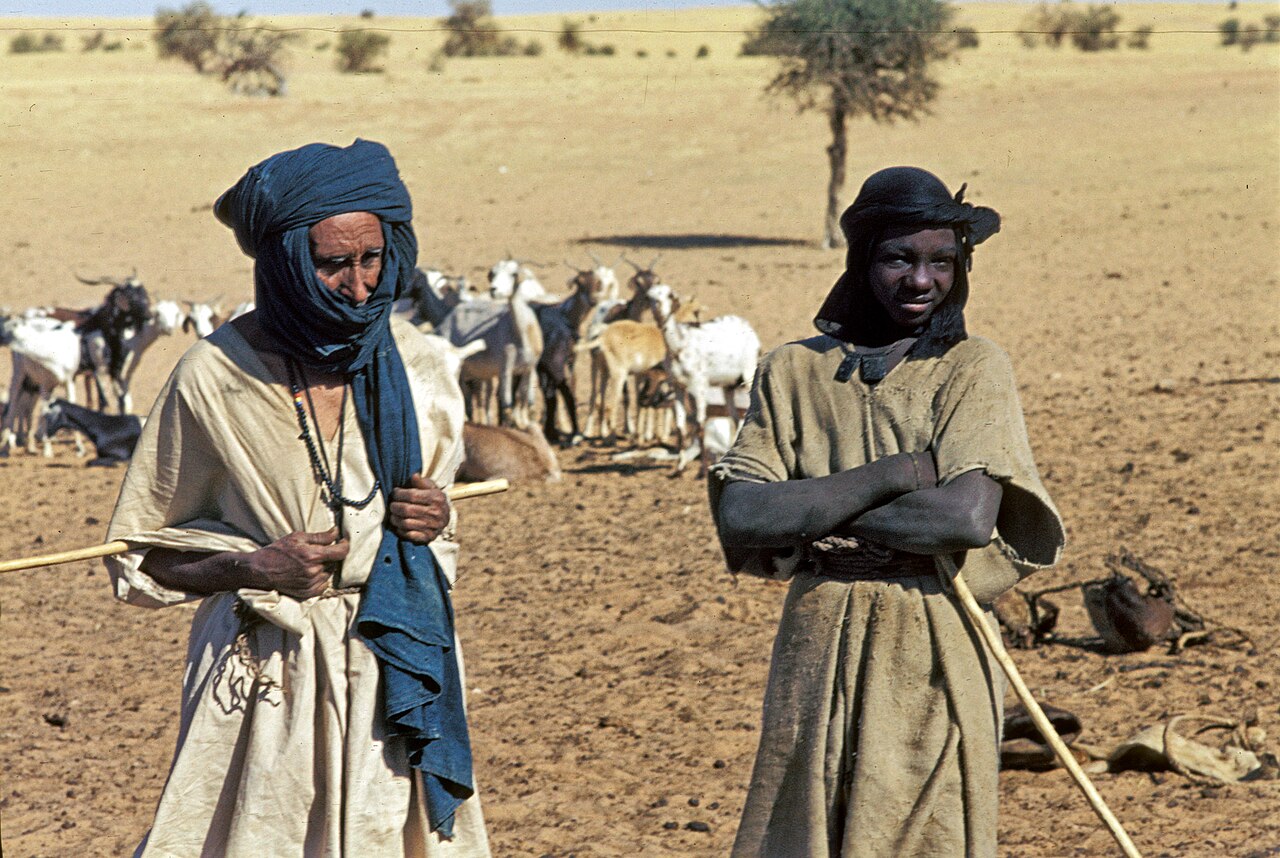
According to a 2003 report by Human Rights Watch, an estimated 15 million children in debt bondage in India work in slavery-like conditions to pay off their family's debts.[310][311]
Slavoj Žižek asserts that new forms of contemporary slavery have been created in the post-Cold War era of global capitalism, including migrant workers deprived of basic civil rights on the Arabian Peninsula, the total control of workers in Asian sweatshops and the use of forced labor in the exploitation of natural resources in Central Africa.[312]
Distribution
In June 2013, U.S. State Department released a report on slavery. It placed Russia, China, and Uzbekistan in the worst offenders category. Cuba, Iran, North Korea, Sudan, Syria, and Zimbabwe were at the lowest level. The list also included Algeria, Libya, Saudi Arabia and Kuwait among a total of 21 countries.[313][314]
In Kuwait, there are more than 600,000 migrant domestic workers who are vulnerable to forced labor and legally tied to their employers, who often illegally take their passports.[315] In 2019, online slave markets on apps such as Instagram were uncovered.[316]
In the preparations for the 2022 World Cup in Qatar, thousands of Nepalese, the largest group of labourers, faced slavery in the form of denial of wages, confiscation of documents, and inability to leave the workplace.[317] In 2016, the United Nations gave Qatar 12 months to end migrant worker slavery or face investigation.[318]
The Walk Free Foundation reported in 2018 that slavery in wealthy Western societies is much more prevalent than previously known, in particular the United States and Great Britain, which have 403,000 (one in 800) and 136,000 slaves respectively. Andrew Forrest, founder of the organization, said that "The United States is one of the most advanced countries in the world yet has more than 400,000 modern slaves working under forced labour conditions."[319] An estimated 40.3 million are enslaved globally, with North Korea having the most slaves at 2.6 million (one in 10). Of the estimated 40.3 million people in contemporary slavery, 71% are women and 29% are men. The report found of the 40.3 million in modern slavery, 15.4 million are in forced marriages and 24.9 million are in forced labor.[320] The foundation defines contemporary slavery as "situations of exploitation that a person cannot refuse or leave because of threats, violence, coercion, abuse of power, or deception."[321]
China
In March 2020, the Chinese government was found to be using the Uyghur minority for forced labour, inside sweat shops. According to a report published then by the Australian Strategic Policy Institute (ASPI), no fewer than around 80,000 Uyghurs were forcibly removed from the region of Xinjiang and used for forced labour in at least twenty-seven corporate factories.[322] According to the Business and Human Rights resource center, corporations such as Abercrombie & Fitch, Adidas, Amazon, Apple, BMW, Fila, Gap, H&M, Inditex, Marks & Spencer, Nike, North Face, Puma, PVH, Samsung, and UNIQLO have each sourced products from these factories prior to the publication of the ASPI report.[323]
Libya
During the Second Libyan Civil War, Libyans started capturing Sub-Saharan African migrants trying to get to Europe through Libya and selling them on slave markets or holding them hostage for ransom[324] Women are often raped, used as sex slaves, or sold to brothels.[325][326][327] Child migrants suffer from abuse and child rape in Libya.[328][329]
Mauritania
In Mauritania, the last country to abolish slavery (in 1981), it is estimated that 20% of its population of 3 million people are enslaved as bonded labourers.[330][331][332] Slavery in Mauritania was criminalized in August 2007.[333] However, although slavery, as a practice, was legally banned in 1981, it was not a crime to own a slave until 2007.[334] Although many slaves have escaped or have been freed since 2007, as of 2012[update], only one slave owner had been sentenced to serve time in prison.[335]
North Korea
North Korea's human rights record is often considered to be the worst in the world and has been globally condemned, with the United Nations, the European Union and groups such as Human Rights Watch all critical of the country's record. Forms of torture, forced labour, and abuses are all widespread. Most international human rights organizations consider North Korea to have no contemporary parallel[336] with respect to violations of liberty.[337][338][339][340]
Taiwan
Taiwan's migrant worker population—estimated in 2018 to be up to 660,000 in number—have reportedly faced slavery-like conditions involving sexual abuse in the domestic work sector[341] and forced labor in fishing sectors.[342][343] Taiwan is among a minority of places in the world that legally allows labor brokers to charge migrant workers for services which elsewhere are covered by employers as human resource costs.[344] A few Taiwanese universities have reportedly tricked students from Eswatini,[345] Uganda and Sri Lanka into forced labour at factories as payment for the university programs.[346] Some charity groups in 2007 also insisted that foreign women—mostly from China and Southeast Asia—were being forced into prostitution, although local police in Tainan disagreed and said they deliberately came to Taiwan "to sell sex".[347]
Economics
While American slaves in 1809 were sold for around $40,000 (in inflation adjusted dollars), a slave nowadays can be bought for just $90, making replacement more economical than providing long-term care.[348] Slavery is a multibillion-dollar industry with estimates of up to $35 billion generated annually.[349]
Trafficking
Victims of human trafficking are typically recruited through deceit or trickery (such as a false job offer, false migration offer, or false marriage offer), sale by family members, recruitment by former slaves, or outright abduction. Victims are forced into a "debt slavery" situation by coercion, deception, fraud, intimidation, isolation, threat, physical force, debt bondage or even force-feeding with drugs to control their victims.[350] "Annually, according to U.S. government-sponsored research completed in 2006, approximately 800,000 people are trafficked across national borders, which does not include millions trafficked within their own countries. Approximately 80% of transnational victims are women and girls, and up to 50% are minors, reports the U.S. State Department in a 2008 study.[351]
While the majority of trafficking victims are women who are forced into prostitution (in which case the practice is called sex trafficking), victims also include men, women and children who are forced into manual labour.[352] Because of the illegal nature of human trafficking, its extent is unknown. A U.S. government report, published in 2005, estimates that about 700,000 people worldwide are trafficked across borders each year. This figure does not include those who are trafficked internally.[352] Another research effort revealed that roughly 1.5 million individuals are trafficked either internally or internationally each year, of which about 500,000 are sex trafficking victims.[70]
Abolitionism

Slavery has existed, in one form or another, throughout recorded human history – as have, in various periods, movements to free large or distinct groups of slaves.[citation needed]
In antiquity

Emperor Ashoka, who ruled the Maurya Empire in the Indian subcontinent from 269 to 232 BCE, abolished the slave trade but not slavery.[354] The Qin dynasty, which ruled China from 221 to 206 BC, abolished slavery and discouraged serfdom. However, many of its laws were overturned when the dynasty was overthrown.[355] Slavery was again abolished by Wang Mang in China in 17 CE but was reinstituted after his assassination.[356]
Americas
The Spanish colonization of the Americas sparked a discussion about the right to enslave Native Americans. A prominent critic of slavery in the Spanish New World colonies was the Spanish missionary and bishop, Bartolomé de las Casas, who was "the first to expose the oppression of indigenous peoples by Europeans in the Americas and to call for the abolition of slavery there."[357]
In the United States, all of the northern states had abolished slavery by 1804, with New Jersey being the last to act.[358] Abolitionist pressure produced a series of small steps towards emancipation. After the Act Prohibiting Importation of Slaves went into effect on January 1, 1808, the importation of slaves into the United States was prohibited,[359] but not the internal slave trade, nor involvement in the international slave trade externally. Legal slavery persisted outside the northern states; most of those slaves already in the U.S. were legally emancipated only in 1863. Many American abolitionists took an active role in opposing slavery by supporting the Underground Railroad. Violent clashes between anti-slavery and pro-slavery Americans included Bleeding Kansas, a series of political and armed disputes in 1854–1858 as to whether Kansas would join the United States as a slave or free state. By 1860, the total number of slaves reached almost four million, and the American Civil War, beginning in 1861, led to the end of slavery in the United States.[360] In 1863, Lincoln issued the Emancipation Proclamation, which freed slaves held in the Confederate States; the 13th Amendment to the U.S. Constitution prohibited most forms of slavery throughout the country.
Many of the freed slaves became sharecroppers and indentured servants. In this manner, some became tied to the very parcel of land into which they had been born a slave having little freedom or economic opportunity because of Jim Crow laws which perpetuated discrimination, limited education, promoted persecution without due process and resulted in continued poverty. Fear of reprisals such as unjust incarcerations and lynchings deterred upward mobility further.


Europe
France abolished slavery in 1794 during the Revolution,[361] but it was restored in 1802 under Napoleon.[362] It has been asserted that, before the Revolution, slavery was illegal in metropolitan France (as opposed to its colonies),[363] but this has been refuted.[364]
One of the most significant milestones in the campaign to abolish slavery throughout the world occurred in England in 1772, with British Judge Lord Mansfield, whose opinion in Somersett's Case was widely taken to have held that slavery was illegal in England. This judgement also laid down the principle that slavery contracted in other jurisdictions could not be enforced in England.[365]
Sons of Africa was a late 18th-century British group that campaigned to end slavery. Its members were Africans in London, freed slaves who included Ottobah Cugoano, Olaudah Equiano and other leading members of London's black community. It was closely connected to the Society for Effecting the Abolition of the Slave Trade, a non-denominational group founded in 1787, whose members included Thomas Clarkson. British Member of Parliament William Wilberforce led the anti-slavery movement in the United Kingdom, although the groundwork was an anti-slavery essay by Clarkson. Wilberforce was urged by his close friend, Prime Minister William Pitt the Younger, to make the issue his own and was also given support by reformed Evangelical John Newton. The Slave Trade Act was passed by the British Parliament on March 25, 1807, making the slave trade illegal throughout the British Empire,[366] Wilberforce also campaigned for abolition of slavery in the British Empire, which he lived to see in the Slavery Abolition Act 1833.
After the 1807 act abolishing the slave trade was passed, these campaigners switched to encouraging other countries to follow suit, notably France and the British colonies. Between 1808 and 1860, the British West Africa Squadron seized approximately 1,600 slave ships and freed 150,000 Africans who were aboard.[367] Action was also taken against African leaders who refused to agree to British treaties to outlaw the trade, for example against "the usurping King of Lagos", deposed in 1851. Anti-slavery treaties were signed with over 50 African rulers.[368]
Worldwide
In 1839, the world's oldest international human rights organization, Anti-Slavery International, was formed in Britain by Joseph Sturge, which campaigned to outlaw slavery in other countries.[369] There were celebrations in 2007 to commemorate the 200th anniversary of the abolition of the slave trade in the United Kingdom through the work of the British Anti-Slavery Society.
In the 1860s, David Livingstone's reports of atrocities within the Arab slave trade in Africa stirred up the interest of the British public, reviving the flagging abolitionist movement. The Royal Navy throughout the 1870s attempted to suppress "this abominable Eastern trade", at Zanzibar in particular. In 1905, the French abolished indigenous slavery in most of French West Africa.[370]
On December 10, 1948, the United Nations General Assembly adopted the Universal Declaration of Human Rights, which declared freedom from slavery is an internationally recognized human right. Article 4 of the Universal Declaration of Human Rights states:
No one shall be held in slavery or servitude; slavery and the slave trade shall be prohibited in all their forms.[371]
In 2014, for the first time in history, major leaders of many religions, Buddhist, Hindu, Christian, Jewish, and Muslim met to sign a shared commitment against modern-day slavery; the declaration they signed calls for the elimination of slavery and human trafficking by 2020.[372] The signatories were: Pope Francis, Mātā Amṛtānandamayī, Bhikkhuni Thich Nu Chân Không (representing Zen Master Thích Nhất Hạnh), Datuk K Sri Dhammaratana, Chief High Priest of Malaysia, Rabbi Abraham Skorka, Rabbi David Rosen, Abbas Abdalla Abbas Soliman, Undersecretary of State of Al Azhar Alsharif (representing Mohamed Ahmed El-Tayeb, Grand Imam of Al-Azhar), Grand Ayatollah Mohammad Taqi al-Modarresi, Sheikh Naziyah Razzaq Jaafar, Special advisor of Grand Ayatollah (representing Grand Ayatollah Sheikh Basheer Hussain al Najafi), Sheikh Omar Abboud, Justin Welby, Archbishop of Canterbury, and Metropolitan Emmanuel of France (representing Ecumenical Patriarch Bartholomew.)[372]
Groups such as the American Anti-Slavery Group, Anti-Slavery International, Free the Slaves, the Anti-Slavery Society, and the Norwegian Anti-Slavery Society continue to campaign to eliminate slavery.[citation needed]
UNESCO has been working to break the silence surrounding the memory of slavery since 1994, through The Slave Route Project.[373]
Apologies
On May 21, 2001, the National Assembly of France passed the Taubira law, recognizing slavery as a crime against humanity. Apologies on behalf of African nations, for their role in trading their countrymen into slavery, remain an open issue since slavery was practiced in Africa even before the first Europeans arrived and the Atlantic slave trade was performed with a high degree of involvement of several African societies. The black slave market was supplied by well-established slave trade networks controlled by local African societies and individuals.[374]
There is adequate evidence citing case after case of African control of segments of the trade. Several African nations such as the Calabar and other southern parts of Nigeria had economies depended solely on the trade. African peoples such as the Imbangala of Angola and the Nyamwezi of Tanzania would serve as middlemen or roving bands warring with other African nations to capture Africans for Europeans.[375]
Several historians have made important contributions to the global understanding of the African side of the Atlantic slave trade. By arguing that African merchants determined the assemblage of trade goods accepted in exchange for slaves, many historians argue for African agency and ultimately a shared responsibility for the slave trade.[376]
In 1999, President Mathieu Kérékou of Benin issued a national apology for the central role Africans played in the Atlantic slave trade.[117] Luc Gnacadja, minister of environment and housing for Benin, later said: "The slave trade is a shame, and we do repent for it."[377] Researchers estimate that 3 million slaves were exported out of the Slave Coast bordering the Bight of Benin.[377] President Jerry Rawlings of Ghana also apologized for his country's involvement in the slave trade.[117]
The issue of an apology is linked to reparations for slavery and is still being pursued by entities across the world. For example, the Jamaican Reparations Movement approved its declaration and action plan. In 2007, British Prime Minister Tony Blair made a formal apology for Great Britain's involvement in slavery.[378]
On February 25, 2007, the Commonwealth of Virginia resolved to 'profoundly regret' and apologize for its role in the institution of slavery. Unique and the first of its kind in the U.S., the apology was unanimously passed in both Houses as Virginia approached the 400th anniversary of the founding of Jamestown.[379]
On August 24, 2007, Mayor of London Ken Livingstone issued a public apology for London's role in Atlantic slave trade, which took place at an event commemorating the 200th anniversary of the British slave trade's abolition. In his speech, Livingstone described the slave trade as "the racial murder of not just those who were transported but generations of enslaved African men, women and children. To justify this murder and torture black people had to be declared inferior or not human... We live with the consequences today."[380] City officials in Liverpool, which was a large slave trading port, apologized in 1999.[381]
On July 30, 2008, the United States House of Representatives passed a resolution apologizing for American slavery and subsequent discriminatory laws.[382] In June 2009, the U.S. Senate passed a resolution apologizing to African-Americans for the "fundamental injustice, cruelty, brutality, and inhumanity of slavery". The news was welcomed by President Barack Obama, the nation's first president of African descent.[383] Some of President Obama's ancestors may have been slave owners.[384]
In 2010, Libyan leader Muammar Gaddafi apologized for Arab involvement in the slave trade, saying: "I regret the behavior of the Arabs... They brought African children to North Africa, they made them slaves, they sold them like animals, and they took them as slaves and traded them in a shameful way."[385]
Reparations
There have been movements to achieve reparations for those formerly held as slaves or for their descendants. Claims for reparations for being held in slavery are handled as a civil law matter in almost every country. This is often decried as a serious problem, since former slaves' relatives lack of money means they often have limited access to a potentially expensive and futile legal process. Mandatory systems of fines and reparations paid to an as yet undetermined group of claimants from fines, paid by unspecified parties, and collected by authorities have been proposed by advocates to alleviate this "civil court problem." Since in almost all cases there are no living ex-slaves or living ex-slave owners these movements have gained little traction. In nearly all cases the judicial system has ruled that the statute of limitations on these possible claims has long since expired.
In June 2023, The Brattle Group presented a report at an event at the University of the West Indies in which reparations were estimated, for harms both during and after the period of transatlantic chattel slavery, at over 100 trillion dollars.[386][387]
Media

Film has been the most influential medium in the presentation of the history of slavery to the general public around the world.[388] The American film industry has had a complex relationship with slavery and until recent decades often avoided the topic. Films such as The Birth of a Nation (1915)[389] and Gone with the Wind (1939) became controversial because they gave a favourable depiction. In 1940 The Santa Fe Trail gave a liberal but ambiguous interpretation of John Brown's attacks on slavery.[390] Song of the South gave a favorable outlook on slavery in the United States in 1946.[citation needed]
The Civil Rights Movement in the 1950s made defiant slaves into heroes.[391] The question of slavery in American memory necessarily involves its depictions in feature films.[392]
Most Hollywood films used American settings, although Spartacus (1960), dealt with an actual revolt in the Roman Empire known as the Third Servile War. The revolt failed, and all the rebels were executed, but their spirit lived on according to the film.[393] Spartacus stays surprisingly close to the historical record.[394]
The Last Supper (La última cena in Spanish) was a 1976 film directed by Cuban Tomás Gutiérrez Alea about the teaching of Christianity to slaves in Cuba, and emphasizes the role of ritual and revolt. Burn! takes place on the imaginary Portuguese island of Queimada (where the locals speak Spanish) and it merges historical events that took place in Brazil, Cuba, Santo Domingo, Jamaica, and elsewhere.
Historians agree that films have largely shaped historical memories, but they debate issues of accuracy, plausibility, moralism, sensationalism, how facts are stretched in search of broader truths, and suitability for the classroom.[395][393] Berlin argues that critics complain if the treatment emphasizes historical brutality, or if it glosses over the harshness to highlight the emotional impact of slavery.[396]
See also
- Bodmin manumissions, the names and details of slaves freed in Medieval Bodmin
- International Day for the Abolition of Slavery
- International Slavery Museum
- Involuntary servitude
- List of slaves
- List of slave owners
- Mukataba
- Slave rebellion
- Slave-owning slaves
- Supplementary Convention on the Abolition of Slavery
- Wilberforce Institute for the Study of Slavery and Emancipation
References
- ^ Allain, Jean (2012). "The Legal Definition of Slavery into the Twenty-First Century". In Allain, Jean (ed.). The Legal Understanding of Slavery: From the Historical to the Contemporary. Oxford: Oxford University Press. pp. 199–219. ISBN 978-0-19-164535-8.
- ^ Baker-Kimmons, Leslie C. (2008). "Slavery". In Schaefer, Richard T. (ed.). Encyclopedia of Race, Ethnicity, and Society. Vol. 3. SAGE Publishing. p. 1234. ISBN 9781412926942.
- ^ a b c d e f g "Historical survey: Slave-owning societies". Encyclopædia Britannica. Archived from the original on February 23, 2007.
- ^ Bales 2004, p. 4.
- ^ White, Shelley K.; White, Jonathan M.; Korgen, Kathleen Odell (2014). Sociologists in Action on Inequalities: Race, Class, Gender, and Sexuality. SAGE Publishing. p. 43. ISBN 978-1-4833-1147-0.
- ^ a b "Slavery in the 21st century". Newint.org. Archived from the original on May 27, 2010. Retrieved August 29, 2010.
- ^ a b Okeowo, Alexis (September 8, 2014). "Freedom Fighter: A slaving society and an abolitionist's crusade". The New Yorker. Archived from the original on January 6, 2018. Retrieved October 16, 2014.
- ^ Corrigan, Terence (September 6, 2007). "Mauritania: Country Made Slavery Illegal Last Month". The East African Standard. Archived from the original on August 4, 2011. Retrieved January 21, 2008.
- ^ Hodal, Kate (May 31, 2016). "One in 200 people is a slave. Why?". The Guardian. Archived from the original on April 30, 2019.
- ^ "Religion & Ethics – Modern slavery: Modern forms of slavery". BBC. January 30, 2007. Archived from the original on January 6, 2014. Retrieved June 16, 2009.
- ^ "slave". Oxford English Dictionary (2nd ed.). 1989.
- ^ Jankowiak, Marek (February 2017). "What Does the Slave Trade in the Saqaliba Tell Us about Early Islamic Slavery?". International Journal of Middle East Studies. 49 (1): 169–172. doi:10.1017/S0020743816001240. ISSN 0020-7438.
- ^ "The international slave trade". Encyclopædia Britannica.
- ^ Lewis 1992, Chapter 1.
- ^ Kluge, Friedrich (1899). "Artikel Sklave" [Article Slave]. Etymologisches Wörterbuch Der Deutschen Sprache [Etymological dictionary of the German language] (in German) (6 ed.). Strassburg: Trübner. p. 366.
- ^ Dostoevsky, Fyodor (1981). "Самое последнее слово цивилизации". In В. Г. Базанов и др., ИРЛИ (ed.). Polnoye sobraniye sochineniy. V 30 tomakh Полное собрание сочинений. В 30 томах [Full composition of writings. In 30 volumes] (in Russian). Vol. 23. Дневник писателя за 1876 год. Май-октябрь. Leningrad: Наука. Ленингр. отд-ние. pp. 63, 382. Archived from the original on May 20, 2018.
- ^ Korth, Georg (1970). "Zur Etymologie des Wortes 'Slavus' (Sklave)" [On the etymology of the word 'Slavus' (slave)]. Glotta, Zeitschrift fur Griechische und Lateinische Sprache (in German). 48 (1/2). Göttingen: Vandenhoeck & Ruprecht (GmbH & Co. KG): 145–153. JSTOR 40266114.
- ^ Kluge, Friedrich (1989). "Artikel Sklave". In Elmar Seebold (ed.). Etymologisches Wörterbuch Der Deutschen Sprache (in German) (22 ed.). Berlin & New York: De Gruyter. p. 676. ISBN 3-11-006800-1.
- ^ Köbler, Gerhard (1995). "Sklave" [Slave]. Deutsches Etymologisches Rechtswörterbuch [German Etymological Legal Dictionary] (in German). Tübingen: Mohr. p. 371. ISBN 978-3-8252-1888-1.
- ^ Scholten, Daniel (2020). "Sklave und Slawe" [Slave and Slav]. Deutsch für Dichter und Denker: Unsere Muttersprache in neuem Licht [German for poets and thinkers: Our mother tongue in a new light] (in German). Bright Star Books. ISBN 978-3-948287-06-1. Archived from the original on October 24, 2020.
- ^ Ditten, Hans (1972). "Kritik an G. Korth". Byzantinoslavica. Vol. 33. Prague: Academia, de l'Academie Tchecoslovaque des Sciences et Lettres. pp. 183–184.
- ^ Waldman, Katy (May 19, 2015). "Slave or Enslaved Person? It's not just an academic debate for historians of American slavery". Slate. Archived from the original on May 21, 2015.
- ^ Brace, Laura (2004). The Politics of Property: Labour, Freedom and Belonging. Edinburgh University Press. p. 162. ISBN 978-0-7486-1535-3. Retrieved May 31, 2012.
- ^ Keith Bradley (March 7, 2016). "slavery, Roman". Oxford Classical Dictionary. Oxford University Press. doi:10.1093/acrefore/9780199381135.013.7311. ISBN 978-0-19-938113-5. Retrieved June 27, 2023.
chattel-slavery, whereby the slave‐owner enjoyed complete mastery (dominium) over the slave's physical being […] was evident throughout the central era of Roman history, and in Roman no less than Greek thought was regarded as both the necessary antithesis of civic freedom
- ^ Bradley, Keith (November 2, 2020). "'The Bitter Chain of Slavery': Reflections on Slavery in Ancient Rome". Harvard University. Archived from the original on April 11, 2021. Retrieved November 15, 2022.
- ^ Finley, Moses I. (1980). Ancient Slavery and Modern Ideology. Viking Press. p. 71. ISBN 9780670122776.
- ^ Alexander, J. (2001). "Islam, Archaeology and Slavery in Africa". World Archaeology. 33 (1): 51. doi:10.1080/00438240120047627. JSTOR 00438243.
Chattel-slaves were needed, especially from the ninth to thirteenth centuries, in the gold and emerald (carbuncle) mines of the Wadi Allaqi in the deserts east of the Nile's 2nd Cataract
- ^ Burkholder, Mark A.; Johnson, Lyman L. (2019). "1. America, Iberia, and Africa Before the Conquest". Colonial Latin America (10th ed.). Oxford University Press. p. 10.
Wealth rested heavily on the possession of slaves across the large empires of West Africa as well as in Benin and other kingdoms […] Slave owners in sub-Saharan Africa also employed their chattel in a variety of occupations.
- ^ Bergad, Laird W. (2007). The Comparative Histories of Slavery in Brazil, Cuba, and the United States. New York: Cambridge University Press. pp. 57, 132, 165, 166. ISBN 9780521872355.
- ^ Slavery and Social Death : A Comparative Study, Orlando (1982). Patterson. Cambridge, Mass.: Harvard University Press. pp. X. ISBN 9780674986909.
- ^ Wendy Warren (2016). New England Bound (1st. ed.). W. W. Norton & Company. pp. 110–111. ISBN 978-0-87140-672-9.
the Iroquois confederacy, people who practiced a form of captive taking that in some ways looked very like chattel slavery
- ^ "Traditional or Chattel Slavery". FSE Project. The Feminist Sexual Ethics Project. Retrieved August 31, 2014.
- ^ a b c Miers, S. (2003). Slavery in the Twentieth Century: The Evolution of a Global Problem. USA: AltaMira Press.
- ^ a b "Mauritanian MPs pass slavery law". BBC News. August 9, 2007. Retrieved May 23, 2010. Cite error: The named reference "BBC" was defined multiple times with different content (see the help page).
- ^ a b Bales 2004, pp. 15–18.
- ^ "Debt bondage remains the most prevalent form of forced labour worldwide". United Nations. September 15, 2016. Retrieved July 27, 2021.
- ^ "Nigeria's young daughters are sold as 'money wives'". Al Jazeera. September 21, 2018. Retrieved May 12, 2020.
- ^ Sleightholme; Indrani (1996). Guilty Without Trial. Rutgers University Press. pp. 11–12. ISBN 0-8135-2381-8.
- ^ Chatterjee, Indrani; Eaton, Richard (2006). Slavery and South Asian History. Indiana University Press. p. 3. ISBN 978-0-253-11671-0.
- ^ Dandamayev, M. A.; Barda; Bardadārī. Encyclopædia Iranica.
- ^ Farazmand, Ali (1998). "Persian/Iranian Administrative Tradition". In Shafritz, Jay M. (ed.). International Encyclopedia of Public Edict and Administration. Boulder, CO: Westview Press. pp. 1640–1645 (1642).
Persians never practiced mass slavery, and in many cases the situations and lives of semi-slaves (prisoners of war) were in fact better than the common citizens of Persia.
- ^ "Experts encourage action against sex trafficking". November 2, 2009. Archived from the original on December 23, 2009.
- ^ "Rights–Mexico: 16,000 Victims of Child Sexual Exploitation". ipsnews.net. August 13, 2007. Retrieved February 11, 2016.
- ^ "Campaign Page: Child Soldiers". Human Rights Watch. June 2001. Archived from the original on February 13, 2008. [verification needed]
- ^ Sullivan, Kevin (December 26, 2008). "In Togo, a 10-Year-Old's Muted Cry: 'I Couldn't Take Any More'". Archived from the original on June 12, 2018. Retrieved January 15, 2024.
- ^ "Two-year-old 'at risk' of forced marriage". BBC News. March 5, 2013.
- ^ "Honor Diaries: Child/Forced Marriage: Factsheet" (PDF). Honordiaries.com. Archived from the original (PDF) on September 24, 2015. Retrieved September 29, 2015.
- ^ Black, Debra (September 20, 2013). "Forced marriages rampant in Ontario". The Hamilton Spectator. Archived from the original on March 26, 2017. Retrieved September 20, 2013.
- ^ "Without Consent: Forced Marriage in Australia" (PDF). Archived (PDF) from the original on June 13, 2015.
- ^ "UNICEF supports fight to end marriage by abduction in Ethiopia". reliefweb.int. November 9, 2004. Retrieved August 29, 2013.
- ^ Krembs, Peter (January 20, 2003). "An Idea Not Worth Drafting: Conscription is Slavery". Capmag.com. Retrieved September 29, 2015.
- ^ Kopel, Dave. "Nationalized Slavery; A policy Italy should dump". davidkopel.com. Archived from the original on October 12, 2007.. Refers to both the military and national service requirements of Italy as slavery
- ^ Machan, Tibor R. (April 13, 2000). "Tax Slavery". Ludwig von Mises Institute. Retrieved October 9, 2006.
- ^ Valenstein, Elliot (2002). Blaming the Brain: The Truth About Drugs and Mental Health. Simon & Schuster. p. 26. ISBN 978-0-7432-3787-1.
- ^ Szasz, Thomas Stephen. Psychiatric Slavery. Retrieved September 29, 2015 – via Google Books.
- ^ Schaler, J. A. (2003). "Slavery and psychiatry". British Journal of Psychiatry. 183: 77–78. doi:10.1192/bjp.183.1.77-a. PMID 12835252.
- ^ Spiegel, Marjorie (1996). The Dreaded Comparison: Human and Animal Slavery. New York: Mirror Books.
- ^ For sources about the concept of "wage slavery" and its various interpretations, see "wage slave". dictionary.com. Retrieved March 4, 2013.
- ^ Ellerman 1992.
- ^ "wage slave". merriam-webster.com. Retrieved March 4, 2013.
- ^ "Constitution Society – Advocates and enforcers of the U.S. and State Constitutions". Archived from the original on December 21, 2020. Retrieved February 6, 2021.
...vulgar are the means of livelihood of all hired workmen whom we pay for mere manual labour, not for artistic skill; for in their case the very wage they receive is a pledge of their slavery.
- ^ North, Douglass C.; Thomas, Robert Paul (December 1971). "The Rise and Fall of the Manorial System: A Theoretical Model". The Journal of Economic History. 31 (4): 777–803. doi:10.1017/S0022050700074623. JSTOR 2117209. S2CID 154616683.
- ^ Domar, Evsey D. (March 1970). "The Causes of Slavery or Serfdom: A Hypothesis". The Journal of Economic History. 30 (1): 18–32. doi:10.1017/S0022050700078566. JSTOR 2116721. S2CID 154921369.
- ^ Lagerlöf, Nils-Petter (November 12, 2006). "Slavery and other property rights". MPRA Paper 372. Retrieved May 6, 2009.
- ^ "Technology". History.com. January 4, 2008. Archived from the original on April 23, 2008. Retrieved May 6, 2009.
- ^ Helper, Hinton Rowan (1857). The Impending Crisis of the South: How to Meet It. New York: Burdick Brothers.
- ^ McKivigan, John R.; Snay, Mitchell (1998). Religion and the Antebellum Debate Over Slavery. University of Georgia Press. p. 68. ISBN 978-0-8203-2076-2. Retrieved May 31, 2012.
- ^ Griswold, Charles L. (1999). Adam Smith and the Virtues of Enlightenment. Cambridge University Press. p. 198. ISBN 978-0-521-62891-4. Retrieved May 31, 2012.
- ^ Forbes 1998, p. 74.
- ^ a b c Kara, Siddharth (2008). Sex Trafficking – Inside the Business of Modern Slavery. Columbia University Press. ISBN 978-0-231-13960-1.
- ^ "Louis Dor (Saturday 30 April 2016) Kim Jong-un is recruiting a new 'pleasure squad' of teenage girls". April 30, 2016.
- ^ Ryall, Julian (April 2, 2015). "Kim Jong-un brings back 'pleasure troupe' entertainers". The Telegraph.
- ^ "From private to state slavery and back again". Eurozine. July 31, 2017. Retrieved August 12, 2021.
- ^ Lockhart, James; Schwartz, Stuart. Early Latin America. New York: Cambridge University Press. p. 138.
The encomienda in its early heyday granted a lifetime monopoly on the utilization of temporary Indian labor in a given area to one Spaniard, the encomendero.
- ^ "One day we will start a big war". Foreign Policy. Archived from the original on February 5, 2017. Retrieved February 13, 2017.
- ^ Stengers, Jean (1969). "The Congo Free State and the Belgian Congo before 1914". In Gann, L. H.; Duignan, Peter (eds.). Colonialism in Africa, 1870–1914. Vol. I. Cambridge: Cambridge University Press. p. 272.
- ^ Pollak, Michael (March 28, 2014). "Determining the Legal Rights of Slaves". The New York Times. ISSN 0362-4331. Retrieved February 11, 2021.
- ^ Ober, Josiah (June 26, 2018). Athenian Legacies: Essays on the Politics of Going On Together. Princeton University Press. ISBN 978-0-691-19016-7.
- ^ Cobb, Thomas (1999) [1858]. An Inquiry into the Law of Negro Slavery in the United States of America. University of Georgia Press. pp. 268–269.
- ^ a b Hellie, Richard (May 6, 2023). "Slavery". Encyclopædia Britannica.
- ^ Harris, W. V. (February 3, 2011). Demography, Geography, and the Sources of Roman Slaves. Oxford University Press. pp. 88–110. doi:10.1093/acprof:osobl/9780199595167.003.0005. ISBN 978-0-19-959516-7.
{{cite book}}:|work=ignored (help) - ^ Perbi, Akosua (April 5, 2001). "Slavery and the Slave Trade in Pre-colonial Africa" (PDF). latinamericanstudies.org. Retrieved August 11, 2016.
- ^ "Welcome to Encyclopædia Britannica's Guide to Black History". Britannica.com. Archived from the original on December 30, 2007. Retrieved March 19, 2018.
- ^ Bindman, David; Gates (Jr.), Henry Louis; Dalton, Karen C. C., eds. (2010). The Image of the Black in Western Art. Vol. 2. Belknap Press of Harvard University Press. p. 27. ISBN 978-0-674-05271-0.
- ^ Mohaiemen, Naeem (July 27, 2004). "Slaves in Saudi". The Daily Star. Vol. 5, no. 61. Retrieved February 7, 2021.
- ^ Ochiengʼ, William Robert (1975). Eastern Kenya and Its Invaders. East African Literature Bureau. p. 76. Retrieved May 15, 2015 – via Google Books.
- ^ a b Ogot, Bethwell A. (April 1970). "Zamani: a survey of East African history". African Affairs: 104. doi:10.1093/oxfordjournals.afraf.a096007. ISSN 1468-2621.
- ^ a b Lodhi, Abdulaziz (2000). Oriental influences in Swahili: a study in language and culture contacts. Acta Universitatis Gothoburgensis. p. 17. ISBN 978-91-7346-377-5.
- ^ "Focus on the slave trade". BBC. September 3, 2001. Archived from the original on May 25, 2017.
- ^ Fage, John Donnelly; Tordoff, William (2001). A History of Africa (4 ed.). Budapest: Routledge. p. 258. ISBN 978-0-415-25248-5.
- ^ Tannenbaum, Edward R.; Dudley, Guilford (1973). A History of World Civilizations. Wiley. p. 615. ISBN 978-0-471-84480-8.
- ^ Campbell 2004, p. ix.
- ^ Shillington, Kevin (July 4, 2013). Encyclopedia of African History 3-Volume Set. Routledge. p. 1401. ISBN 978-1-135-45670-2.
- ^ "Slow Death for Slavery: The Course of Abolition in Northern Nigeria, 1897–1936 (review)". Journal of World History. Archived from the original on April 11, 2016. Retrieved December 31, 2021.
- ^ ""Freedom is a good thing but it means a dearth of slaves": Twentieth Century Solutions to the Abolition of Slavery" (PDF). Archived from the original (PDF) on May 15, 2011. Retrieved August 29, 2010.
- ^ Bagley, H. R. C. (August 1, 1997). The Last Great Muslim Empires. BRILL. ISBN 978-90-04-02104-4.
- ^ Rodriguez 2007a, p. 585.
- ^ Asquith, Christina. "Revisiting the Zanj and Re-Visioning Revolt: Complexities of the Zanj Conflict – 868–883 AD – slave revolt in Iraq". Archived from the original on March 6, 2016.
- ^ "Islam, From Arab To Islamic Empire: The Early Abbasid Era". History-world.org. Archived from the original on September 24, 2018. Retrieved March 23, 2016.
- ^ Kissling, H. J.; Spuler, Bertold; Barbour, N.; Trimingham, J. S.; Braun, H.; Hartel, H. (August 1, 1997). The Last Great Muslim Empires. BRILL. ISBN 978-90-04-02104-4.
- ^ Syed, Muzaffar Husain (2011). A Concise History of Islam. New Delhi: VIJ Books (India) Pty Ltd. p. 453. ISBN 978-93-81411-09-4.
According to Robert Davis, from the 16th to 19th century, pirates captured 1 million to 1.25 million Europeans as slaves.
- ^ Davis, R. (September 16, 2003). Christian Slaves, Muslim Masters: White Slavery in the Mediterranean, The Barbary Coast, and Italy, 1500–1800. Palgrave Macmillan UK. ISBN 978-1-4039-4551-8 – via Google Books.
- ^ "When Europeans Were Slaves: Research Suggests White Slavery Was Much More Common Than Previously Believed". Research News. Archived from the original on July 25, 2011. Retrieved October 10, 2007.
- ^ a b Carroll, Rory (March 11, 2004). "New book reopens old arguments about slave raids on Europe". The Guardian. ISSN 0261-3077. Retrieved December 11, 2017.
- ^ Wright, John (2007). "Trans-Saharan Slave Trade". Routledge.
- ^ Baepler, B. (January 1999). "White Slaves, African Masters: An Anthology of American Barbary Captivity Narratives". The SHAFR Guide Online. University of Chicago Press: 5. doi:10.1163/2468-1733_shafr_sim030170256.
- ^ "History – British History in depth: British Slaves on the Barbary Coast". BBC. Retrieved March 12, 2013.
- ^ "Swahili Coast". National Geographic. October 17, 2002. Archived from the original on December 30, 2007. Retrieved September 30, 2015.
- ^ "Remembering East African slave raids". BBC News. March 30, 2007. Retrieved February 6, 2021.
- ^ "Focus on the slave trade". BBC News. September 3, 2001. Retrieved February 6, 2021.
- ^ Campbell 2007, p. 173.
- ^ Veenhoven, Willem A. (1977). Case Studies on Human Rights And Fundamental Freedoms: A World Survey. Martinus Nijhoff Publishers. p. 440. ISBN 978-90-247-1956-3. Retrieved May 31, 2012.
- ^ a b Snell, Daniel C. (2011). "Slavery in the Ancient Near East". In Keith Bradley and Paul Cartledge (ed.). The Cambridge World History of Slavery. New York: Cambridge University Press. pp. 4–21.
- ^ Lovejoy, Paul E. (1989). "The Impact of the Atlantic Slave Trade on Africa: A Review of the Literature". Journal of African History: 30.
- ^ Foner, Eric (2012). Give Me Liberty: An American History. New York: W. W. Norton & Company. p. 18.
- ^ M'bokolo, Elikia (April 1, 1998). "The impact of the slave trade on Africa". Le Monde diplomatique. Retrieved February 7, 2021.
- ^ a b c Gates, Henry Louis Jr. (April 22, 2010). "Opinion | Ending the Slavery Blame-Game". The New York Times. ISSN 0362-4331. Retrieved February 13, 2021.
- ^ Bortolot, Alexander Ives. "The Transatlantic Slave Trade]". metmuseum.org. Retrieved February 6, 2021.
- ^ "Nigeria – The Slave Trade". countrystudies.us. U.S. Library of Congress. Archived from the original on February 7, 2021. Retrieved February 6, 2021.
- ^ Rubinstein, W. D. (2004). Genocide: a history. Pearson Education. pp. 76–78. ISBN 978-0-582-50601-5.
- ^ Mancke, Elizabeth; Shammas, Carole (May 31, 2005). The Creation of the British Atlantic World. Johns Hopkins University Press. pp. 30–31. ISBN 978-0-8018-8039-1.
- ^ "Aztec Social Structure". University of Texas at Austin. Archived from the original on February 23, 2011.
- ^ Lawson, Russell M.; Lawson, Benjamin A. (October 11, 2019). Race and Ethnicity in America: From Pre-contact to the Present [4 volumes]. ABC-CLIO. p. 16. ISBN 978-1-4408-5097-4.
- ^ "Slavery in the New World". Encyclopædia Britannica. Retrieved February 25, 2011.
- ^ Ames, Kenneth M. (June 2001). "Slaves, Chiefs and Labour on the Northern Northwest Coast". World Archaeology. 33 (The Archaeology of Slavery) (1): 1–17. doi:10.1080/00438240120047591. JSTOR 827885. S2CID 162278526.
- ^ Donald, Leland (1997). "Aboriginal Slavery on the Northwest Coast of North America". University of California Press. ISBN 978-0-520-91811-5. Retrieved December 25, 2019 – via Google Books.
- ^ "The World Factbook". CIA. Archived from the original on June 29, 2011. Retrieved August 8, 2010.
- ^ "Sicut Dudem -Against the Enslavement of Black Natives of the Canary Islands". papalencyclicals.net. January 13, 1435.
- ^ "Sublimus Dei – On the Enslavement and Evangelization of Indians". papalencyclicals.net. May 29, 1537.
- ^ Hanke, Lewis (1974). All Mankind Is One: A Study of the Disputation Between Bartolomé de Las Casas and Juan Ginés de Sepúlveda on the Religious and Intellectual Capacity of the American Indians. Northern Illinois University Press. p. xi. ISBN 0-87580-043-2."For the first time, and probably for the last, a colonizing nation organized a formal enquiry into the justice of the methods used to extend its empire. For the first time, too, in the modern world, we see an attempt to stigmatize an entire race as inferior, as born slaves according to the theory elaborated centuries before by Aristotle."
- ^ "Health In Slavery". Archived from the original on October 3, 2006.
- ^ Panzer, Joel S. (1996). The Popes and Slavery. Alba House. p. 3. ISBN 0-8189-0764-9."The earlier forms of servitude were varied, complex, and very often of a different sociological category than those which were prevalent after the 14th century. While all forms of servitude are certainly unacceptable to most people today, this has not always been the case. Formerly, the rules of war and society were such that servitude was often imposed as a penalty on criminals and prisoners of war, and was even freely chosen by many workers for economic reasons. Children born of those held in servitude were also at times considered to be in the same state as that of their parents. These types of servitude were the most common among those generally considered to establish the so-called 'just titles' of servitude."
- ^ Galenson, David W. (March 1984). "The Rise and Fall of Indentured Servitude in the Americas: An Economic Analysis". The Journal of Economic History. XLIV (1): 1–26. doi:10.1017/S002205070003134X. JSTOR 2120553. S2CID 154682898.
- ^ Bavis; Donoghue (2010), pp. 943–974; Higginbotham (1978), p. 7
- ^ "Slave Laws". Virtual Jamestown. Retrieved November 4, 2013.
- ^ Billings, Warren M. (2009). The Old Dominion in the Seventeenth Century: A Documentary History of Virginia, 1606–1700: Easyread Super Large 18pt Edition. ReadHowYouWant.com. pp. 286–87. ISBN 978-1-4429-6090-9.
- ^ Federal Writers' Project (1954). Virginia: A Guide to the Old Dominion. US History Publishers. p. 76. ISBN 978-1-60354-045-2.
- ^ Danver (2010), p. 322; Kozlowski (2010), p. 78; Conway (2008), p. 5; Toppin (2010), p. 46; Foner (1980); Burnham (1993)
- ^ a b Agurilar-Moreno, Manuel (2006). Handbook to Life in the Aztec World. California State University, Los Angeles.
- ^ "Jamaican History I". Discover Jamaica. Archived from the original on August 5, 2013. Retrieved August 23, 2013.
- ^ Childs, Matt D. (2006). 1812 Aponte Rebellion in Cuba and the Struggle against Atlantic Slavery. University of North Carolina Press. ISBN 978-0-8078-5772-4.
- ^ Ali, Arif (1997). Barbados: Just Beyond Your Imagination. Hansib Publishing (Caribbean) Ltd. pp. 46, 48. ISBN 978-1-870518-54-3.
- ^ Streissguth, Tom (2009). Suriname in Pictures. Twenty-First Century Books. p. 23. ISBN 978-1-57505-964-8.
- ^ Mentelle, Simon M. (1777). "Extract of the Dutch Map Representing the Colony of Surinam". wdl.org. Digital World Library via Library of Congress. Retrieved February 7, 2021.
- ^ "Domínio Público – Pesquisa Básica" [Public Domain – Basic Research]. dominiopublico.gov.br (in Brazilian Portuguese).
- ^ "Vergonha Ainda Maior: Novas informações disponíveis em um enorme banco de dados mostram que a escravidão no Brasil foi muito pior do que se sabia antes" [Even Greater Shame: New information available from a huge database shows that slavery in Brazil was far worse than previously known]. Veja (in Portuguese). Archived from the original on March 13, 2015. Retrieved March 16, 2015.
- ^ "African Heritage and Memories of Slavery in Brazil and the South Atlantic World By Ana Lucia Araujo". cambriapress.com. Archived from the original on March 22, 2023. Retrieved February 7, 2021.
- ^ Reséndez, Andrés (2016). The Other Slavery: The Uncovered Story of Indian Enslavement in America. Houghton Mifflin Harcourt. p. 17. ISBN 978-0-547-64098-3.
- ^ Farmer, Paul (April 15, 2004). "Who removed Aristide?". London Review of Books. pp. 28–31. Archived from the original on June 8, 2008. Retrieved February 19, 2010.
- ^ Kiple, Kenneth F. (2002). The Caribbean Slave: A Biological History. Cambridge University Press. p. 145. ISBN 978-0-521-52470-4.
- ^ Campbell 2008, pp. 27–53.
- ^ Moitt, Bernard (2001). Women and Slavery in the French Antilles, 1635–1848. Indiana University Press. p. 63.
- ^ Coupeau, Steeve (2008). The History of Haiti. Greenwood Publishing Group. p. 18. ISBN 978-0-313-34089-5.
- ^ Wood, Peter (2003). "The Birth of Race-Based Slavery". Slate. Archived from the original on January 20, 2023.
- ^ Smith, Julia Floyd (1973). Slavery and Plantation Growth in Antebellum Florida, 1821–1860. Gainesville: University of Florida Press. p. 44. ISBN 978-0-8130-0323-8 – via Google Books.
- ^ a b Moore, Wilbert Ellis (1980). American Negro Slavery and Abolition: A Sociological Study. Ayer Publishing.
- ^ Clinton, Catherine (1999). Scholastic Encyclopedia of the Civil War. Scholastic Reference. p. 8. ISBN 978-0-590-37228-2.
- ^ McInnis, Maurie D. (2011). Slaves Waiting for Sale: Abolitionist Art and the American Slave Trade. University of Chicago Press. p. 129. ISBN 978-0-226-55933-9.
- ^ Behrendt, Stephen (1999). "Transatlantic Slave Trade". Africana: The Encyclopedia of the African and African American Experience. New York: Basic Civitas Books. ISBN 978-0-465-00071-5. Based on "records for 27,233 voyages that set out to obtain slaves for the Americas".
- ^ "Social Aspects of the Civil War". National Park Service. Archived from the original on July 14, 2007.
- ^ "Why Did So Many Christians Support Slavery?". christianitytoday.com. January 1992. Retrieved August 28, 2017.
- ^ "1860 Census Results". Archived from the original on June 4, 2004.
- ^ Coates, Ta-Nehisi (August 9, 2010). "Small Truth Papering Over a Big Lie". The Atlantic. Retrieved September 29, 2015.
- ^ Lowe, Jaime (July 27, 2021). "What Does California Owe Its Incarcerated Firefighters?". The Atlantic. Retrieved August 29, 2023.
- ^ Pargas, Damian Alan; Roşu, Felicia (December 7, 2017). Critical Readings on Global Slavery (4 vols.). BRILL. ISBN 978-90-04-34661-1.
- ^ "Slavery and forced labour in Ancient China and the Ancient Mediterranean". University of Edinburgh. Archived from the original on March 6, 2019. Retrieved March 6, 2019.
- ^ Ober, Josiah; Scheidel, Walter; Shaw, Brent D.; Sanclemente, Donna (April 18, 2007). "Toward Open Access in Ancient Studies: The Princeton-Stanford Working Papers in Classics". Hesperia. 76 (1): 229–242. doi:10.2972/hesp.76.1.229. ISSN 0018-098X. S2CID 145709968.
- ^ "Outline of the Senmin system during the Ritsuryo period" (PDF). June 14, 2024.
- ^ a b c Rodriguez 1997, pp. 146–147.
- ^ 杉山正明《忽必烈的挑战》,社会科学文献出版社,2013年,第44–46頁
- ^ 船田善之《色目人与元代制度、社会 – 重新探讨蒙古、色目、汉人、南人划分的位置》,〈蒙古学信息〉2003年第2期
- ^ Williams, R. Owen (November 2006). Encyclopedia of Antislavery and Abolition [Two Volumes]. Greenwood Press. ISBN 978-0-313-01524-3.
- ^ Zhao, Gang (1986). Man and Land in Chinese History: An Economic Analysis. Stanford University Press. ISBN 978-0-8047-1271-2.
- ^ Huang, Philip C. (2001). Code, Custom, and Legal Practice in China: The Qing and the Republic Compared. Stanford University Press. ISBN 978-0-8047-4111-8.
- ^ "Kao-li maid-servant". Memoirs of the Research Department of the Tōyō Bunko (2). Tokyo: Tōyō Bunko: 63. 1928. ISSN 0082-562X.
- ^ Lee (1997), p. 49; Davis (1988), p. 51; Salisbury (2004), p. 316
- ^ Schafer, Edward H. (1963). The Golden Peaches of Samarkand: A Study of Tʻang Exotics. University of California Press. pp. 45–46. ISBN 978-0-520-05462-2.
- ^ Granet, Marcel (2013) [1930], "The History of Civilization", Chinese Civilization, London: Routledge, pp. 500–503, doi:10.4324/9781315005508-24, ISBN 978-1-315-00550-8
- ^ Lipman, Jonathan Neaman (2004). Familiar strangers: a history of Muslims in Northwest China. Seattle: University of Washington Press. p. 69. ISBN 978-0-295-97644-0. Retrieved November 28, 2010.
- ^ Brook, Timothy; Wakabayashi, Bob Tadashi (2000). Opium regimes: China, Britain, and Japan, 1839–1952. University of California Press. p. 148. ISBN 978-0-520-22236-6. Retrieved November 28, 2010.
- ^ Millward 1998, p. 145.
- ^ Millward 1998, p. 206.
- ^ a b c d e f g h i Rodriguez 1997, pp. 392–393.
- ^ a b c Klein, Martin A. (2014). Historical Dictionary of Slavery and Abolition. Rowman & Littlefield Publishers. p. 13. ISBN 978-0-8108-7528-9.
- ^ Rhee, Young-hoon; Yang, Donghyu. "Korean Nobi in American Mirror: Yi Dynasty Coerced Labor in Comparison to the Slavery in the Antebellum Southern United States". Working Paper Series. Institute of Economic Research, Seoul National University. Archived from the original on November 6, 2018. Retrieved February 14, 2017.
- ^ Campbell 2004, pp. 153–157.
- ^ Palais, James B. (1998). Views on Korean social history. Institute for Modern Korean Studies, Yonsei University. p. 50. ISBN 978-89-7141-441-5. Retrieved February 15, 2017.
Another target of his critique is the insistence that slaves (nobi) in Korea, especially in Choson dynasty, were closer to serfs (nongno) than true slaves (noye) in Europe and America, enjoying more freedom and independence than what a slave would normally be allowed.
- ^ Kim, Youngmin; Pettid, Michael J. (2011). Women and Confucianism in Choson Korea: New Perspectives. SUNY Press. p. 141. ISBN 978-1-4384-3777-4. Retrieved February 14, 2017.
- ^ a b c Campbell 2004, pp. 162–163.
- ^ Campbell 2004, p. 157.
- ^ a b Kim, Youngmin; Pettid, Michael J. (2011). Women and Confucianism in Choson Korea: New Perspectives. SUNY Press. pp. 140–41. ISBN 978-1-4384-3777-4. Retrieved February 14, 2017.
- ^ Korean National Commission for UNESCO (2004). Korean History: Discovery of Its Characteristics and Developments. Hollym. p. 14. ISBN 978-1-56591-177-2.
- ^ a b Tierney, Helen (1999). Women's Studies Encyclopedia. Greenwood Publishing Group. p. 277. ISBN 978-0-313-31071-3.
- ^ Hoffman, Michael (May 26, 2013). "The rarely, if ever, told story of Japanese sold as slaves by Portuguese traders". The Japan Times. Archived from the original on May 5, 2019. Retrieved March 2, 2014.
- ^ "Europeans had Japanese slaves, in case you didn't know…". Japan Probe. May 10, 2007. Archived from the original on March 4, 2016. Retrieved January 7, 2018.
- ^ Hertel, Ralf; Keevak, Michael (2017). Early Encounters between East Asia and Europe: Telling Failures. Routledge. ISBN 978-1-317-14718-3.
- ^ Michael Weiner, ed. (2004). Race, Ethnicity and Migration in Modern Japan: Imagined and imaginary minorities (illustrated ed.). Taylor & Francis. p. 408. ISBN 978-0-415-20857-4. Retrieved February 2, 2014.
- ^ Appiah, Kwame Anthony; Gates, Henry Louis Jr., eds. (2005). Africana: The Encyclopedia of the African and African American Experience. Vol. 3. Oxford: Oxford University Press. p. 479. ISBN 978-0-19-517055-9. Retrieved February 13, 2021.
- ^ Appiah, Kwame Anthony; Gates, Henry Louis Jr., eds. (2010). Encyclopedia of Africa. Vol. 1. Oxford: Oxford University Press. p. 187. ISBN 978-0-19-533770-9. Retrieved February 13, 2021.
- ^ Robert Gellately; Ben Kiernan, eds. (2003). The Specter of Genocide: Mass Murder in Historical Perspective (reprint ed.). Cambridge University Press. p. 277. ISBN 978-0-521-52750-7. Retrieved February 2, 2014.
Hideyoshi korean slaves guns silk.
- ^ McCormack, Gavan (2001). Reflections on Modern Japanese History in the Context of the Concept of "genocide". Edwin O. Reischauer Institute of Japanese Studies. Harvard University, Edwin O. Reischauer Institute of Japanese Studies. p. 18.
- ^ Lidin, Olof G. (2002). Tanegashima – The Arrival of Europe in Japan. Routledge. p. 170. ISBN 978-1-135-78871-1. Retrieved February 2, 2014.
- ^ Stanley, Amy (2012). Selling Women: Prostitution, Markets, and the Household in Early Modern Japan. Vol. 21 of Asia: Local Studies / Global Themes. Matthew H. Sommer. University of California Press. ISBN 978-0-520-95238-6. Retrieved February 2, 2014.
- ^ Spence, Jonathan D. (1985). The memory palace of Matteo Ricci (illustrated, reprint ed.). Penguin Books. p. 208. ISBN 978-0-14-008098-8. Retrieved May 5, 2012.
countryside.16 Slaves were everywhere in Lisbon, according to the Florentine merchant Filippo Sassetti, who was also living in the city during 1578. Black slaves were the most numerous, but there were also a scattering of Chinese
- ^ Leite, José Roberto Teixeira (1999). A China no Brasil: influências, marcas, ecos e sobrevivências chinesas na sociedade e na arte brasileiras (in Portuguese). UNICAMP. Universidade Estadual de Campinas. p. 19. ISBN 978-85-268-0436-4.
Idéias e costumes da China podem ter-nos chegado também através de escravos chineses, de uns poucos dos quais sabe-se da presença no Brasil de começos do Setecentos.17 Mas não deve ter sido através desses raros infelizes que a influência chinesa nos atingiu, mesmo porque escravos chineses (e também japoneses) já existiam aos montes em Lisboa por volta de 1578, quando Filippo Sassetti visitou a cidade,18 apenas suplantados em número pelos africanos. Parece aliás que aos últimos cabia o trabalho pesado, ficando reservadas aos chins tarefas e funções mais amenas, inclusive a de em certos casos secretariar autoridades civis, religiosas e militares.
- ^ a b Pinto, Jeanette (1992). Slavery in Portuguese India, 1510–1842. Bombay: Himalaya Pub. House. p. 18. ISBN 978-81-7040-587-0.
ing Chinese as slaves, since they are found to be very loyal, intelligent and hard working' ... their culinary bent was also evidently appreciated. The Florentine traveller Fillippo Sassetti, recording his impressions of Lisbon's enormous slave population circa 1580, states that the majority of the Chinese there were employed as cooks.
- ^ Boxer (1968), p. 225: "be very loyal, intelligent, and hard-working. Their culinary bent (not for nothing is Chinese cooking regarded as the Asiatic equivalent to French cooking in Europe) was evidently appreciated. The Florentine traveller Filipe Sassetti recording his impressions of Lisbon's enormous slave population circa 1580, states that the majority of the Chinese there were employed as cooks. Dr. John Fryer, who gives us an interesting ...".
- ^ Leite, José Roberto Teixeira (1999). A China No Brasil: Influencias, Marcas, Ecos E Sobrevivencias Chinesas Na Sociedade E Na Arte Brasileiras [China in Brazil: Influences, Marks, Echoes and Chinese Survivals in Brazilian Society and Art] (in Portuguese). UNICAMP. Universidade Estadual de Campinas. p. 19. ISBN 978-85-268-0436-4.
- ^ Finkelman, Paul; Miller, Joseph Calder (1998). Macmillan encyclopedia of world slavery. Vol. 2. Macmillan Reference US. p. 737. ISBN 978-0-02-864781-4. OCLC 39655102.
- ^ de Sande (2012); Saunders (1982), p. 168; Boxer (1968), p. 225: "be very loyal, intelligent, and hard-working. Their culinary bent (not for nothing is Chinese cooking regarded as the Asiatic equivalent to French cooking in Europe) was evidently appreciated. The Florentine traveller Filipe Sassetti recording his impressions of Lisbon's enormous slave population circa 1580, states that the majority of the Chinese there were employed as cooks. Dr. John Fryer, who gives us an interesting ...".
- ^ Nelson, Thomas (Winter 2004). "Slavery in Medieval Japan". Monumenta Nipponica. 59 (4): 463–492. JSTOR 25066328.
- ^ Daigaku, Jōchi (2004). Monumenta Nipponica. Sophia University. p. 465.
- ^ Kitagawa, Joseph Mitsuo (2013). Religion in Japanese History (illustrated, reprint ed.). Columbia University Press. p. 144. ISBN 978-0-231-51509-2. Retrieved February 2, 2014.
- ^ Calman, Donald (2013). Nature and Origins of Japanese Imperialism. Routledge. p. 37. ISBN 978-1-134-91843-0. Retrieved February 2, 2014.
- ^ Kshetry, Gopal (2008). Foreigners in Japan: A Historical Perspective. Xlibris Corporation. ISBN 978-1-4691-0244-3.[self-published source]
- ^ Moran, J.F. (2012). Japanese and the Jesuits. Routledge. ISBN 978-1-134-88112-3. Retrieved February 2, 2014.
- ^ Dias, Maria Suzette Fernandes (2007). Legacies of slavery: comparative perspectives. Cambridge Scholars Publishing. p. 71. ISBN 978-1-84718-111-4.
- ^ footnote 2: (...) While it is likely that the institution of slavery existed in India during the Vedic period, the association of the Vedic 'Dasa' with 'slaves' is problematic and likely to have been a later development.
- ^ Levi, Scott C. (November 2002). "Hindus Beyond the Hindu Kush: Indians in the Central Asian Slave Trade". Journal of the Royal Asiatic Society. 12 (3): 277–288. doi:10.1017/S1356186302000329. JSTOR 25188289. S2CID 155047611.
Sources such as the Arthasastra, the Manusmriti and the Mahabharata demonstrate that institutionalized slavery was well established in India by beginning of the common era
- ^ "Windows – Slice of history". The Tribune.
- ^ Subrahmanyam (1997), pp. 201–253; Prakash (1998), p. 5; Prakash (1985); Richards (2012); Raychaudhuri & Habib (1982); Arasaratnam (1995); Vink (1998); Arasaratnam (1996); Love (1913)
- ^ V.B. Lieberman, Burmese Administrative Cycles: Anarchy and Conquest, c. 1580–1760 (Princeton, N.J., 1984); G.D. Winius, "The 'Shadow Empire' of Goa in the Bay of Bengal," Itinerario 7, no. 2 (1983); D.G.E. Hall, "Studies in Dutch relations with Arakan," Journal of the Burma Research Society 26, no. 1 (1936):; D.G.E. Hall, "The Daghregister of Batavia and Dutch Trade with Burma in the Seventeenth Century," Journal of the Burma Research Society 29, no. 2 (1939)
- ^ VOC 1479, OBP 1691, fls. 611r–627v, Specificatie van Allerhande Koopmansz. tot Tuticurin, Manaapar en Alvatt.rij Ingekocht, 1670/71–1689/90; W. Ph. Coolhaas and J.van Goor, eds, Generale Missiven van Gouverneurs-Generaal en Raden van Indiaan Heren Zeventien der Verenigde Oostindische Compagnie (The Hague, 1960–present), passim; T. Raychaudhuri, Jan Company in Coromandel, 1605–1690: A Study on the Interrelations of European Commerce and Traditional Economies (The Hague, 1962)
- ^ For exports of Malabar slaves to Ceylon, Batavia, see Generale Missiven VI; H.K. s'Jacob ed., De Nederlanders in Kerala, 1663–1701: De Memories en Instructies Betreffende het Commandement Malabar van de Verenigde Oostindische Compagnie, Rijks Geschiedkundige Publication, Kleine serie 43 (The Hague, 1976); R. Barendse, "Slaving on the Malagasy Coast, 1640–1700," in S. Evers and M. Spindler, eds, Cultures of Madagascar: Ebb and Flow of Influences (Leiden, 1995). See also M.O. Koshy, The Dutch Power in Kerala (New Delhi, 1989); K.K. Kusuman, Slavery in Travancore (Trivandrum, 1973); M.A.P. Meilink-Roelofsz, De Vestiging der Nederlanders ter Kuste Malabar (The Hague, 1943); H. Terpstra, De Opkomst der Westerkwartieren van de Oostindische Compagnie (The Hague, 1918).
- ^ Of 2,467 slaves traded on 12 slave voyages from Batavia, India, and Madagascar between 1677 and 1701 to the Cape, 1,617 were landed with a loss of 850 slaves, or 34.45%. On 19 voyages between 1677 and 1732, the mortality rate was somewhat lower (22.7%). See Shell, "Slavery at the Cape of Good Hope, 1680–1731," p. 332. Filliot estimated the average mortality rate among slaves shipped from India and West Africa to the Mascarene Islands at 20–25% and 25–30%, respectively. Average mortality rates among slaves arriving from closer catchment areas were lower: 12% from Madagascar and 21% from Southeast Africa. See Filliot, La Traite des Esclaves, p. 228; A. Toussaint, La Route des Îles: Contribution à l'Histoire Maritime des Mascareignes (Paris, 1967); Allen, "The Madagascar Slave Trade and Labor Migration."
- ^ a b Bowie, Katherine A. (1996). "Slavery in Nineteenth-Century Northern Thailand: Archival Anecdotes and Village Voices". Kyoto Review of Southeast Asia. 44. Yale University Southeast Asia Studies Monograph Series: 16–33.
- ^ a b c d Clarence-Smith, W. G. (2006). Islam and the Abolition of Slavery. Oxford University Press. p. 13. ISBN 978-0-19-522151-0.
- ^ Klein, Martin A. (2014). "Maori". Historical Dictionary of Slavery and Abolition. Historical Dictionaries of Religions, Philosophies, and Movements Series (2 ed.). Lanham, Maryland: Rowman & Littlefield. p. 253. ISBN 978-0-8108-7528-9. Retrieved February 23, 2019.
Slaves called mokai were an important part of pre-colonial Maori society.
- ^ Lauffer, Siegfried (August 1, 1957). Berneker, Erich (ed.). "Die Bergwerkssklaven von Laureion, I. Teil" [The Mine Slaves of Laureion, Part I]. Zeitschrift der Savigny-Stiftung für Rechtsgeschichte: Romanistische Abteilung (in German). 74 (1): 916. doi:10.7767/zrgra.1957.74.1.403. ISSN 2304-4934. S2CID 179216974.
- ^ "Slavery in Ancient Rome". Dl.ket.org. Archived from the original on February 22, 2010. Retrieved August 29, 2010.
- ^ Harper, Kyle (2011). Slavery in the Late Roman World, AD 275–425. Cambridge University Press. pp. 59–60. ISBN 978-1-139-50406-5. Retrieved August 11, 2016.
- ^ "Resisting Slavery in Ancient Rome". BBC News. November 5, 2009. Retrieved August 29, 2010.
- ^ a b c Scheidel, Walter. "The Roman slave supply" (PDF). Stanford University.
- ^ Joshel, Sandra R. (August 6, 2010). Slavery in the Roman World. Cambridge University Press. ISBN 978-0-521-53501-4.
- ^ Santosuosso, Antonio (2001). Storming the Heavens. Westview Press. pp. 43–44. ISBN 978-0-8133-3523-0.
- ^ Noy, David (2000). Foreigners at Rome: Citizens and Strangers. Duckworth with the Classical Press of Wales. ISBN 978-0-7156-2952-9.
- ^ Harper, James (April 1972). "Slaves and Freedmen in Imperial Rome". The American Journal of Philology. 93 (2). Johns Hopkins University Press: 341–342. doi:10.2307/293259. JSTOR 293259.
- ^ Thomas, Hugh (2006). The Slave Trade: History of the Atlantic Slave Trade, 1440–1870. Weidenfeld & Nicolson. p. 35. ISBN 978-0-7538-2056-8.
- ^ Hayes, Diana (2003). "Reflections on Slavery". In Curran, Charles E. (ed.). Change in Official Catholic Moral Teachings. Paulist Press. ISBN 978-0-8091-4134-0.
- ^ "Slave trade". Encyclopedia Britannica. May 14, 2020. Retrieved February 13, 2021.
- ^ Singer, Isido Singer; Jacobs, Joseph. "Slave-trade". Jewishencyclopedia.com. Retrieved August 29, 2010.
- ^ "Slavery Encyclopedia of Ukraine". Encyclopediaofukraine.com. Retrieved August 29, 2010.
- ^ Postan, Michael Moïssey; Miller, Edward (1987). The Cambridge Economic History of Europe: Trade and industry in the Middle Ages. Cambridge University Press. p. 417. ISBN 978-0-521-08709-4. Retrieved May 31, 2012.
- ^ Boyce Davies, Carole Elizabeth (2008). Encyclopedia of the African Diaspora: Origins, Experiences, and Culture. ABC-CLIO. p. 1002. ISBN 978-1-85109-705-0. Retrieved May 31, 2012.
- ^ Jurasinski, S. (2015). The Old English Penitentials and Anglo-Saxon Law. Studies in Legal History. Cambridge University Press. p. 96. ISBN 978-1-107-08341-7. Retrieved May 11, 2023 – via Google Books.
- ^ Foot, S. (2011). AEthelstan: The First King of England. The English Monarchs Series. Yale University Press. p. 139. ISBN 978-0-300-12535-1. Retrieved May 11, 2023 – via Google Books.
- ^ Goose, Nigel (October 18, 2007). "Victoria county history: a history of the county of Chester, vol. V, 2, The city of Chester: culture, buildings and institutions – Edited by Christopher P. Lewis and Alan T. Thacker Victoria county history: a history of the county of Durham, vol. IV, Darlington – Edited by Gillian Cookson Victoria county history: a history of the County of Oxford, vol. XV, Carterton, Minster Lovell, and environs (Bampton Hundred part three) – Edited by S. Townley". The Economic History Review. 60 (4): 830–832. doi:10.1111/j.1468-0289.2007.00401_3.x. ISSN 0013-0117.
- ^ Clapham, John H. A Concise Economic History of Britain from the Earliest Times. CUP Archive. p. 63. GGKEY:HYPAY3GPAA5.
- ^ "Medieval English society". University of Wisconsin. Archived from the original on February 14, 2005. Retrieved September 5, 2009.
- ^ Hudson, John (2012). The Oxford History of the Laws of England. Vol. II (871–1216) (First ed.). Oxford: Oxford University Press. pp. 424–425. ISBN 978-0-19-163003-3.
- ^ Gillingham, John (Summer 2014), "French chivalry in twelfth-century Britain?", The Historian, pp. 8–9
- ^ "The Saxon Slave-Market in Bristol". Building History. July 2006. Retrieved February 6, 2021.
- ^ a b "Erskine May on Slavery in Britain (Vol. III, Chapter XI)". Retrieved November 2, 2017.
- ^ Barrowman, James (September 14, 1897). "Slavery In The Coal-Mines Of Scotland". Scottish Mining Website. Retrieved November 2, 2017.
- ^ Phillips, William D. Jr. (1985). Slavery from Roman times to the Early Transatlantic Trade. Manchester: Manchester University Press. p. 37. ISBN 978-0-7190-1825-1.
- ^ Nicolle, David (1995). "The Janissaries". Osprey Publishing. Retrieved February 7, 2021.
- ^ "Famous Battles in History The Turks and Christians at Lepanto". Trivia-library.com. Archived from the original on November 19, 2017. Retrieved August 29, 2010.
- ^ a b Kizilov, Mikhail (2007). "Slave Trade in the Early Modern Crimea From the Perspective of Christian, Muslim, and Jewish Sources". Journal of Early Modern History. 11 (1): 1–31. doi:10.1163/157006507780385125.
- ^ Davies, Brian (2007). Warfare, State and Society on the Black Sea Steppe, 1500–1700. Routledge. p. 17. ISBN 978-0-415-23986-8.
- ^ Brodman, James William. "Ransoming Captives in Crusader Spain: The Order of Merced on the Christian-Islamic Frontier". Libro.uca.edu. Retrieved August 29, 2010.
- ^ "British Slaves on the Barbary Coast". Archived from the original on March 10, 2008.
- ^ Goodman, Joan E.; McNeely, Tom (2001). A Long and Uncertain Journey: The 27,000 Mile Voyage of Vasco Da Gama. Mikaya Press. ISBN 978-0-9650493-7-5. Retrieved May 31, 2012.
- ^ a b c Marques, António Henrique R. de Oliveira (1972). History of Portugal: From Lusitania to empire. Columbia University Press. pp. 158–160, 362–370. ISBN 978-0-231-03159-2.
- ^ Lowe, K. J. P. (2005). Black Africans In Renaissance Europe. Cambridge University Press. p. 156. ISBN 978-0-521-81582-6. Retrieved May 31, 2012.
- ^ Northrup, David (2002). Africa's Discovery of Europe: 1450 to 1850. Oxford University Press. p. 8. ISBN 978-0-19-514084-2. Retrieved May 31, 2012.
- ^ Klein, Herbert S. (2010). The Atlantic Slave Trade. Cambridge University Press. ISBN 978-1-139-48911-9.
- ^ Subtelny, Orest (2000). Ukraine: A History. University of Toronto Press. p. 106. ISBN 978-0-8020-8390-6. Retrieved May 31, 2012.
- ^ Inalcik, Halil (1979). "Servile Labor in the Ottoman Empire". In Ascher, Abraham; Halasi-Kun, Tibor; Kiràly, Béla K. (eds.). The Mutual Effects of the Islamic and Judeo-Christian Worlds: The East European Pattern. New York: Columbia University Press. pp. 25–43. Archived from the original on September 11, 2009.
- ^ Darjusz Kołodziejczyk, as reported by Kizilov, Mikhail (2007). "Slaves, Money Lenders, and Prisoner Guards:The Jews and the Trade in Slaves and Captivesin the Crimean Khanate". The Journal of Jewish Studies. 58 (2): 189–210. doi:10.18647/2730/JJS-2007.
- ^ Matsuki, Eizo. "The Crimean Tatars and their Russian-Captive Slaves" (PDF). Archived from the original (PDF) on June 5, 2013.
- ^ Glyn Williams, Brian (2013). "The Sultan's Raiders: The Military Role of the Crimean Tatars in the Ottoman Empire" (PDF). The Jamestown Foundation. p. 27. Archived from the original (PDF) on October 21, 2013.
- ^ Forsythe, David P. (August 27, 2009). Encyclopedia of Human Rights. OUP USA. ISBN 978-0-19-533402-9.
- ^ "Historical survey: Ways of ending slavery". Encyclopædia Britannica. Archived from the original on October 16, 2014.
- ^ "Träldom". Nordisk familjebok (in Swedish). 1920. pp. 159–160. Retrieved February 6, 2021 – via Project Runeberg.
- ^ "Nazi slave fund passes final hurdle". May 30, 2001. Retrieved February 6, 2021.
- ^ Beyer, John; Schneider, Stephan. "Forced Labour under Third Reich" (PDF). Archived from the original (PDF) on April 3, 2017. Retrieved February 1, 2023.
- ^ Steinert, Johannes-Dieter. Kleine Ostarbeiter: Child Forced Labor in Nazi Germany and German Occupied Eastern Europe. 127th Annual Meeting American Historical Association.
...apart from Jewish forced labourers – workers from Belarus, Ukraine and Russia had to endure the worst working and living conditions. Moreover, German occupation policies in the Soviet Union were far more brutal than in any other country, and German deportation practices the most inhuman.
- ^ "The Holocaust in Belarus". Facing History and Ourselves. May 12, 2020. Retrieved December 29, 2020.
The non-Jewish population was subjected to Nazi terror, too. Hundreds of thousands were deported to Germany as slave laborers, thousands of villages and towns were burned or destroyed, and millions were starved to death as the Germans plundered the entire region. Timothy Snyder estimates that 'half of the population of Soviet Belarus was either killed or forcibly displaced during World War II: nothing of the kind can be said of any other European country.'
- ^ For sources about forced slave labor in GULAG camps, see Applebaum (2003), p. xv, Introduction: "Gulag is the word an acronym for Glavnoe Upravlenie Lagerei or Central Administration of Camps. Over time, it has also indicated not only the administration of concentration camps, but also the very system of Soviet slave labor, in all its forms and varieties"; Gregory & Lazarev (2003), p. 112: "From the perspective of the Kremlin, Magadan existed as the center of a domestic colony based on slave labor."; Barnes (2011), pp. 7, 36, 262; Dobson (2012), pp. 735–743
- ^ Gregory & Lazarev (2003), p. vii: "Much has been written, and much is still to be written, about the Gulag. We all know of its status as an "archipelago" (in Solzhenitsyn's words) of penal slavery, inflicted on millions and held as a threat over the rest of the population."
- ^ Applebaum 2003.
- ^ For sources about life in the Gulag camps, please see: Conquest (1978); Lester & Krysinska (2008), pp. 170–179; Anderson & Tollison (1985), p. 295: "This is the fact that the forced labor system of the Gulag is an example of slavery in the absence of well-defined and enforced property rights in slaves."; Meltzer (1993)
- ^ Alexopoulos, Golfo (2017). Illness and Inhumanity in Stalin's Gulag. New Haven, CT: Yale University/The Hoover Institution. p. 5.
{{cite book}}:|newspaper=ignored (help) - ^ Applebaum, Anne (2007). "Introduction". Gulag: A History. Anchor. Archived from the original on September 5, 2017.
- ^ "Wilson Bell". Academia.edu.
- ^ Barenberg, Alan; Bell, Wilson T.; Kinnear, Sean; Maddox, Steven; Viola, Lynne (November 14, 2017). "New directions in Gulag studies: a roundtable discussion". Canadian Slavonic Papers. 59 (3–4): 2. doi:10.1080/00085006.2017.1384665. S2CID 165354205.
- ^ "Mesopotamia: The Code of Hammurabi". #7. Archived from the original on May 14, 2011.
... the shepherd of the oppressed and of the slaves ... If any one buy from the son or the slave of another man
- ^ Shaw, Garry J. (October 26, 2012). "Slavery, Pharaonic Egypt". The Encyclopedia of Ancient History. Hoboken, New Jersey, USA: John Wiley & Sons, Inc. doi:10.1002/9781444338386.wbeah15006. ISBN 978-1-4443-3838-6.
- ^ "Ancient Egypt: Slavery, its causes and practice". reshafim.org.il. Retrieved March 6, 2019.
- ^ David, Rosalie (April 1, 1998). The Ancient Egyptians (Beliefs & Practices). Sussex Academic Press. p. 91.
- ^ Everett, Susanne (October 24, 2011). History of Slavery. Chartwell Books. pp. 10–11.
- ^ Dunn, Jimmy (October 24, 2011). "Slaves and Slavery in Ancient Egypt". Retrieved April 9, 2016.
- ^ Lewis 1992, p. 53.
- ^ "Horrible Traffic in Circassian Women – Infanticide in Turkey". New York Daily Times. August 6, 1856. Retrieved August 29, 2010 – via The Lost Museum Archive.
- ^ "Soldier Khan". Avalanche Press. Retrieved August 29, 2010.
- ^ Kizilov, Mikhail (2007). "Slave Trade in the Early Modern Crimea From the Perspective of Christian, Muslim, and Jewish Sources". Journal of Early Modern History. 11 (1): 1–31. doi:10.1163/157006507780385125.
- ^ "Sexual slavery – the harem". BBC – Religion & Ethics. Archived from the original on May 21, 2009.
- ^ Dalman, Gustaf (2020). Abdulhadi-Sukhtian, Nadia (ed.). Work and Customs in Palestine, volume II. Vol. 2 (Agriculture). Translated by Schick, Robert. Ramallah: Dar Al Nasher. pp. 176–177. ISBN 978-9950-385-84-9.
- ^ "The Freeing of the Slaves". Khiva.info. Retrieved August 29, 2010.
- ^ a b c Miers, S. (2003). Slavery in the Twentieth Century: The Evolution of a Global Problem. Storbritannien: AltaMira Press. p.16
- ^ a b c Miers, S. (2003). Slavery in the Twentieth Century: The Evolution of a Global Problem. Storbritannien: AltaMira Press. p. 17
- ^ Veenhoven, Willem Adriaan; Ewing, Winifred Crum; Samenlevingen, Stichting Plurale (1975). Case Studies on Human Rights and Fundamental Freedoms: A World Survey. BRILL. p. 452. ISBN 978-90-247-1779-8. Retrieved May 31, 2012.
- ^ "Religion & Ethics – Islam and slavery: Abolition". BBC. Archived from the original on May 21, 2009. Retrieved May 1, 2010.
- ^ "A Mauritanian Abolitionist's Crusade Against Slavery". The New Yorker. September 8, 2014. Retrieved September 29, 2015.
- ^ "Forced labour – Themes". International Labour Organization. Archived from the original on February 9, 2010. Retrieved March 14, 2010.
- ^ "Inaugural Global Slavery Index Reveals More Than 29 Million People Living In Slavery". Global Slavery Index 2013. October 4, 2013. Archived from the original on April 7, 2016. Retrieved October 17, 2013.
- ^ Bales 1999, p. 9, Chapter 1.
- ^ A Global Alliance Against Forced Labour. International Labour Organisation. 2005. ISBN 978-92-2-115360-3.
- ^ Fortin, Jacey (January 16, 2013). "Mali's Other Crisis: Slavery Still Plagues Mali, And Insurgency Could Make It Worse". International Business Times.
- ^ Coursen-Neff, Zama; Tribune, International Herald (January 30, 2003). "For 15 million in India, a childhood of slavery". The New York Times. ISSN 0362-4331. Retrieved February 11, 2021.
- ^ "Child Slaves Abandoned to India's Silk Industry". Human Rights Watch. January 23, 2003. Retrieved February 11, 2021.
- ^ Žižek, Slavoj (2018). The Courage of Hopelessness: A Year of Acting Dangerously. Melville House. p. 29. ISBN 978-1-61219-003-7. Archived from the original on July 27, 2020. Retrieved July 11, 2018 – via Google Books.
- ^ "27 Million People Said to Live in 'Modern Slavery'". The New York Times. June 20, 2013.
- ^ DeLuca, Matthew (June 19, 2013). "'Modern-day slavery': State Dept. says millions of human trafficking victims go unidentified". NBC News. Archived from the original on June 23, 2013. Retrieved February 12, 2021.
- ^ Sebastian, Clare (July 30, 2018). "She escaped domestic slavery, now she helps other survivors". CNN. Retrieved February 7, 2021.
- ^ Pinnell, Owen; Kelly, Jess (November 1, 2019). "Kuwait moves on Instagram slave traders after BBC investigation". BBC News. Retrieved February 7, 2021.
- ^ Pattisson, Pete (September 25, 2013). "Qatar's World Cup 'slaves'". Archived from the original on September 26, 2013. Retrieved January 16, 2024.
- ^ Booth, Robert (March 24, 2016). "UN gives Qatar a year to end forced labour of migrant workers". The Guardian. Retrieved February 7, 2021.
- ^ Helmore, Edward (July 19, 2018). "Over 400,000 people living in 'modern slavery' in U.S., report finds". The Guardian. Retrieved July 21, 2018.
- ^ "Global Slavery Index". globalslaveryindex.org. Retrieved June 20, 2022.
- ^ Tutton, Mark (July 19, 2018). "Modern slavery in developed countries more common than thought". CNN. Retrieved July 21, 2018.
- ^ Xu, Vicky Xiuzhong; Cave, Danielle; Leiboid, James; Munro, Kelsey; Ruser, Nathan (February 2020). "Uyghurs for Sale". Australian Strategic Policy Institute. Archived from the original on August 24, 2020. Retrieved January 20, 2021.
- ^ "China: 83 major brands implicated in report on forced labour of ethnic minorities from Xinjiang assigned to factories across provinces; Includes company responses – Business & Human Rights Resource Centre". business-humanrights.org.
- ^ Quackenbush, Casey (December 1, 2017). "The Libyan Slave Trade Has Shocked the World. Here's What You Should Know". Time.
- ^ "African migrants 'sold in slave markets'". BBC News. April 11, 2017.
- ^ "African migrants sold as 'slaves' for $200 in Libya". Nation Media Group. Agence France-Presse. April 12, 2017. Archived from the original on April 12, 2017.
- ^ Doctorow, Cory (April 11, 2017). "West African migrants are kidnapped and sold in Libyan slave markets". Boing Boing.
- ^ Adams, Paul (February 28, 2017). "Libya exposed as child migrant abuse hub". BBC News.
- ^ "Immigrant Women, Children Raped, Starved in Libya's Hellholes: Unicef". February 28, 2017. Archived from the original on March 30, 2019. Retrieved November 19, 2017.
- ^ "Mauritanian MPs pass slavery law". BBC News. August 9, 2007. Retrieved January 8, 2011.
- ^ "The Abolition season on BBC World Service". BBC News. Retrieved August 29, 2010.
- ^ Sutter, John D. (March 2012). "Slavery's last stronghold". CNN. Retrieved May 28, 2012.
- ^ "Mauritanian MPs pass slavery law". BBC News. August 9, 2007. Retrieved August 29, 2010.
- ^ "UN: There is hope for Mauritania's slaves". CNN. March 17, 2012. Archived from the original on March 23, 2022. Retrieved January 3, 2014.
- ^ "Anti-slavery law still tough to enforce". The New Humanitarian. December 11, 2012. Retrieved February 6, 2021.
- ^ "Issues North Korea". Amnesty International UK. Archived from the original on July 2, 2014. Retrieved July 1, 2014.
- ^ "VII. Conclusions and Recommendations". Report of the Commission of Inquiry on Human Rights in the Democratic People's Republic of Korea. United Nations Office of the High Commissioner for Human Rights. February 17, 2014. p. 365. Archived from the original on February 27, 2014. Retrieved July 1, 2014.
- ^ World Report 2014: North Korea. January 21, 2014. Archived from the original on July 7, 2014. Retrieved July 1, 2014.
{{cite book}}:|work=ignored (help) - ^ "North Korea". Christian Solidarity Worldwide. Archived from the original on July 14, 2014. Retrieved July 1, 2014.
- ^ "ICNK welcomes UN inquiry on North Korea report, calls for action". International Coalition to Stop Crimes Against Humanity in North Korea. February 20, 2014. Archived from the original on October 6, 2014. Retrieved July 1, 2014.
- ^ "Modern day slavery". Missionary Society of St. Columban. January 25, 2018. Retrieved May 19, 2024.
Many of them are locked in the house of their Taiwanese employers, never allowed to have a day off, and virtually under the control of their employer," Fr O'Neill said. "Some are also victims of sexual abuse – raped by the husband who is their employer. They run away and become undocumented workers, then they are lured by the illegal brokers to find work. Some of them end up in brothels and become victims of sex trafficking.
- ^ Death By Fishing: How Taiwan's Seafood Got Tainted With Blood | CNA Correspondent (Television production). CNA. March 3, 2022. Retrieved May 19, 2024 – via YouTube.
- ^ "Greenpeace Condemns Biden Administration's Top Tier Ranking of Taiwan in latest Trafficking in Persons Report". Greenpeace. June 15, 2023. Retrieved May 19, 2024.
- ^ Peter Bengtsen (October 31, 2023). "Debt Bondage in Space, and Taiwan". The Diplomat.
- ^ "Swaziland: Students in Taiwan Forced to Work 'Like Slaves' in Frozen Chicken Factory". AllAfrica. November 20, 2018. Archived from the original on November 20, 2018.
- ^ Huang Rongwen (February 10, 2022). "Exploitation cases of Sri Lankan students in Taiwan expose education sector flaws". The Morning (Sri Lanka). National Changhua University of Education. Archived from the original on May 22, 2024. Retrieved May 20, 2024.
- ^ Max Hirsch (May 23, 2007). "Officials divided on sex slave issue". Taipei Times. Retrieved May 22, 2024.
- ^ "Economics and Slavery" (PDF). Du.edu. Retrieved August 18, 2013.
- ^ Bradford, Laurence (July 23, 2013). "Modern day slavery in Southeast Asia: Thailand and Cambodia". Inside Investor. Archived from the original on March 23, 2015. Retrieved July 24, 2013.
- ^ "Trafficking FAQs – Amnesty International USA". Amnesty International. March 30, 2007. Archived from the original on July 8, 2009. Retrieved August 29, 2010.
- ^ "Lost Daughters – An ongoing tragedy in Nepal". Women News Network. December 5, 2008. Archived from the original on June 12, 2018. Retrieved February 6, 2021.
- ^ a b "US State Department Trafficking report". State.gov. Retrieved August 29, 2010.
- ^ Haydon, Benjamin Robert (1841). "The Anti-Slavery Society Convention, 1840 – National Portrait Gallery". London: NPR. Retrieved February 11, 2021. Donated by British and Foreign Anti-Slavery Society in 1880
- ^ Clarence-Smith, William. "Religions and the abolition of slavery – a comparative approach" (PDF). Archived from the original (PDF) on March 29, 2017. Retrieved August 28, 2013.
- ^ The Earth and Its Peoples: A Global History. Cengage Learning. 2009. p. 165. ISBN 978-0-618-99238-6.
- ^ Encyclopedia of Antislavery and Abolition. Greenwood Publishing Group. 2011. p. 155. ISBN 978-0-313-33143-5.
- ^ Dussel, Enrique (January 4, 2021). "Bartolomé de Las Casas". Encyclopedia Britannica. Retrieved February 13, 2021.
- ^ Green, Howard L. (1995). Words that Make New Jersey History: A Primary Source Reader. Rutgers University Press. p. 84. ISBN 978-0-8135-2113-8.
1804: With passage of the law excerpted here, New Jersey became the last state in the North to abolish slavery.
- ^ Foner, Eric (December 30, 2007). "Opinion | Forgotten Step Toward Freedom (Published 2007)". The New York Times. ISSN 0362-4331. Retrieved February 6, 2021.
- ^ "Soldiers and Sailors Database – The Civil War (U.S. National Park Service)". Itd.nps.gov. September 19, 2015. Archived from the original on July 14, 2007. Retrieved September 29, 2015.
- ^ Dorigny, Marcel, ed. (2003). The Abolitions of Slavery: From L. F. Sonthonax to Victor Schoelcher, 1793, 1794, 1848. Paris: UNESCO Publishing. p. vi. ISBN 978-1-57181-432-6. Retrieved August 16, 2022 – via Google Books.
- ^ Dwyer, Philip (2008). "Remembering and Forgetting in Contemporary France: Napoleon, Slavery, and the French History Wars". French Politics, Culture & Society. 26 (3). Berghahn Books: 110–122. doi:10.3167/fpcs.2008.260306. JSTOR 42843569.
- ^ Peabody, Sue (1984). "Race, Slavery, and the Law in Early Modern France". The Historian. 56 (3). Taylor & Francis: 501–510. doi:10.1111/j.1540-6563.1994.tb01322.x. JSTOR 24448702.
- ^ Chatman, Samuel L. (2000). "'There are no Slaves in France': A Re-Examination of Slave Laws in Eighteenth Century France". The Journal of Negro History. 85 (3). University of Chicago Press on behalf of the Association for the Study of African American Life and History: 144–153. doi:10.2307/2649071. JSTOR 2649071. S2CID 141017958.
- ^ Wise, Steven M. (2006). Though the Heavens May Fall: The Landmark Trial that Led to the End of Human Slavery. Pimlico. ISBN 978-1-84413-430-4.
- ^ "Royal Navy and the Slave Trade : Battles: History: Royal Navy". Archived from the original on January 28, 2009. Retrieved September 29, 2015.
- ^ "Devon – Abolition – Sailing against slavery". BBC. February 28, 2007. Retrieved September 29, 2015.
- ^ "The West African Squadron and slave trade". Pdavis.nl. Retrieved August 29, 2010.
- ^ "Anti-Slavery International: UNESCO Education". UNESCO. November 13, 2002. Retrieved September 29, 2015.
- ^ "Home Page | Agrarian Studies" (PDF). Yale University. Archived from the original (PDF) on May 2, 2013. Retrieved September 30, 2015.
- ^ "The law against slavery". BBC. Retrieved October 5, 2008.
- ^ a b Belardelli, Giulia (December 2, 2014). "Pope Francis And Other Religious Leaders Sign Declaration Against Modern Slavery". HuffPost.
- ^ "Routes of Enslaved Peoples". UNESCO. Retrieved July 13, 2023.
- ^ Boahen, A. Adu.; Ajayi, J. F. Ade.; Tidy, Michael (1986). Topics in West African history (2 ed.). Burnt Mill, Harlow, Essex, England: Longman Group. ISBN 0-582-58504-X. OCLC 15580435.
- ^ Person-Lynn, Kwaku. "Afrikan Involvement In Atlantic Slave Trade". Africawithin.com. Archived from the original on April 18, 2008. Retrieved August 29, 2010.
- ^ Ball, Jeremy R. (November 2003), "Alcohol and Slaves", H-Net Reviews (Review), archived from the original on January 22, 2005, retrieved February 6, 2021
- ^ a b Services, Tribune News. "Benin Officials Apologize for Role in U.S. Slave Trade". Chicago Tribune. Retrieved February 6, 2021.
- ^ "Blair 'sorry' for UK slavery role". BBC News. March 14, 2007. Retrieved February 6, 2021.
- ^ "Virginia 'sorry' for slavery role". BBC News. February 25, 2007. Retrieved August 29, 2010.
- ^ Muir, Hugh (August 24, 2007). "Livingstone weeps as he apologises for slavery". The Guardian. London. Archived from the original on January 7, 2020. Retrieved January 7, 2020.
- ^ Coslett, Paul (September 24, 2014). "Liverpool's slavery apology". BBC News. Retrieved January 7, 2020.
- ^ "Congress Apologizes for Slavery, Jim Crow". NPR. Retrieved February 6, 2021.
- ^ "Obama praises 'historic' Senate slavery apology". Agence France-Presse. June 19, 2009. Archived from the original on February 25, 2014. Retrieved July 22, 2009 – via Google News.
- ^ Nitkin, David; Merritt, Harry (March 2, 2007). "A New Twist to an Intriguing Family History". The Baltimore Sun. Archived from the original on September 30, 2007.
- ^ Akhalbey, Francis (November 15, 2019). "Watch Gaddafi apologize on behalf of Arabs for their cruel treatment of Africans during the Arab slave trade". Face2Face Africa. Retrieved February 27, 2022.
- ^ Brown, Kim (July 10, 2023). "Brattle Consultants Quantify Reparations for Transatlantic Chattel Slavery in Pro Bono Paper". Brattle. Retrieved July 29, 2023.
- ^ Mahon, Leah (August 2023). "£18 Trillion What Britain owes in reparation". The Voice. pp. 6–7.
- ^ Martin, Michael T.; Wall, David C. (February 19, 2013). The Politics of Cine-Memory. Oxford, UK: Blackwell Publishing Ltd. pp. 445–467. doi:10.1002/9781118322673.ch22. ISBN 978-1-118-32267-3.
{{cite book}}:|work=ignored (help) - ^ Stokes, Melvyn (January 15, 2008). D.W. Griffith's The Birth of a Nation: A History of the Most Controversial Motion Picture of All Time. Oxford University Press. ISBN 978-0-19-804436-9.
- ^ Morsberger, Robert E. (1977). "Slavery and 'The Santa Fe Trail,' or, John Brown on Hollywood's Sour Apple Tree". American Studies. 18 (2): 87–98. Archived from the original on November 6, 2018. Retrieved May 16, 2013.
- ^ Vera, Hernán; Gordon, Andrew M. (2003). Screen saviors: Hollywood fictions of whiteness. Rowman & Littlefield. pp. 54–56. ISBN 978-0-8476-9947-6.
- ^ Worthington-Smith, Hammet; Deburg, William L. Van (1984). "Slavery & Race in American Popular Culture". Black American Literature Forum. 18 (4): 181. doi:10.2307/2904301. ISSN 0148-6179. JSTOR 2904301.
- ^ a b Davis 2002, Chapter 2.
- ^ Davis 2002, Chapter 3.
- ^ Mintz, Steven (1998). "Spielberg's Amistad and the History Classroom". The History Teacher. 31 (3): 370–73. doi:10.2307/494885. JSTOR 494885.
- ^ Berlin, Ira (2004). "American Slavery in History and Memory and the Search for Social Justice". Journal of American History. 90 (4): 1251–1268. doi:10.2307/3660347. JSTOR 3660347.
- ^ "Films about Slavery and the transAtlantic Slave Trade". Ama. africatoday.com. Retrieved June 3, 2011.
Bibliography
- Anderson, Gary M.; Tollison, Robert D. (1985). "Life in the Gulag: A Property Rights Perspective". Cato Journal. 5. Retrieved December 30, 2020.
- Applebaum, Anne (2003). Gulag: A History. New York: Knopf Doubleday Publishing.
- Arasaratnam, Sinnappah (1995). "Slave Trade in the Indian Ocean in the Seventeenth Century". In Mathew, Kuzhippalli S. (ed.). Mariners, Merchants and Oceans: Studies on Maritime History. New Delhi: Manohar. ISBN 978-81-7304-075-7.
- Arasaratnam, Sinnappah (1996). Ceylon and the Dutch: 1600-1800: External Influences and Internal Change in Early Modern Sri Lanka. Brookfield, VT: Variorum. ISBN 978-0-86078-579-8.
- Bales, Kevin (1999). Disposable People: New Slavery in the Global Economy. Berkeley: University of California Press. ISBN 978-0-520-21797-3.
- Bales, Kevin (2004). New slavery: a reference handbook (2nd ed.). Santa Barbara, Calif.: ABC-CLIO. ISBN 1-85109-816-X. OCLC 61363605.
- Barnes, Steven A. (April 4, 2011). Death and Redemption: The Gulag and the Shaping of Soviet Society. Princeton, NJ: Princeton University Press.
- Bavis, Barbara. "Research Guides: American Women: Resources from the Law Library: Introduction". guides.loc.gov. Law Library of Congress. Retrieved February 11, 2021.
- Boxer, C. R. (1968) [1948]. Fidalgos in the Far East 1550–1770 (2nd revised ed.). Hong Kong: Oxford University Press. ISBN 978-0-19-638074-2.
- Burnham, Philip (1993). "Selling Poor Steven". American Heritage Magazine. Archived from the original on May 7, 2006.
- Campbell, Gwyn (2004). The Structure of Slavery in Indian Ocean Africa and Asia. London: Frank Cass. ISBN 978-1-135-75917-9.
- Campbell, Gwyn; Miers, Suzanne; Miller, Joseph Calder, eds. (2007). Women and Slavery: Africa, the Indian Ocean world, and the medieval north Atlantic. Vol. 1. Athens: Ohio University Press. ISBN 978-0-8214-1723-2.
- Campbell, Gwyn; Miers, Suzanne; Miller, Joseph Calder, eds. (2008). Women and Slavery: The Modern Atlantic. Vol. 2. Athens: Ohio University Press. ISBN 978-0-8214-1725-6.
- Conquest, Robert (1978). Kolyma: The Arctic Death Camps. New York: Viking Press.
- Conway, John (2008). A Look at the Thirteenth and Fourteenth Amendments: Slavery Abolished, Equal Protection Established. Enslow Publishers. ISBN 978-1-59845-070-5.
- Danver, Steven (2010). Popular Controversies in World History. ABC-CLIO. ISBN 978-1-59884-078-0.
- Davis, Natalie Zemon (2002). Slaves on Screen: Film and Historical Vision. Cambridge, MA: Harvard University Press. ISBN 978-0-674-00821-2.
- Dobson, Miriam (October 2012). "Stalin's Gulag: Death, Redemption and Memory". The Slavonic and East European Review. 90 (4): 735–743. doi:10.5699/slaveasteurorev2.90.4.0735. S2CID 148284255.
- Donoghue, John (2010). "Out of the Land of Bondage": The English Revolution and the Atlantic Origins of Abolition". The American Historical Review. 115 (4): 943–974. doi:10.1086/ahr.115.4.943.
- Ellerman, David Patterson (1992). Property and Contract in Economics: The Case for Economic Democracy. Cambridge, Mass: Blackwell Publishing. ISBN 978-1-55786-309-6.
- Foner, Philip S. (1980). History of Black Americans: From Africa to the emergence of the cotton kingdom. Oxford University Press. Archived from the original on October 14, 2013.
- Forbes, Robert P. (1998). "Slavery and the Evangelical Movement". In McKivigan, John R.; Snay, Mitchell (eds.). Religion and the Antebellum Debate Over Slavery. Athens, GA: University of Georgia Press. pp. 68–106. ISBN 978-0-8203-2076-2.
- Gregory, Paul R.; Lazarev, Valery (October 1, 2003). The Economics of Forced Labor: The Soviet Gulag. Stanford, CA: Hoover Press.
- Higginbotham, A. Leon Jr. (1978). In the Matter of Color: Race and the American Legal Process: The Colonial Period. New York: Oxford University Press. p. 7. ISBN 978-0-19-502745-7.
- Kozlowski, Darrell (2010). Colonialism: Key Concepts in American History. Infobase Publishing. ISBN 978-1-60413-217-5.
- Lee, Kenneth B. (1997). Korea and East Asia: the story of a Phoenix. Greenwood Publishing Group. p. 49. ISBN 978-0-275-95823-7. Retrieved July 4, 2010.
- Lester, David; Krysinska, Karolina (2008). "Suicide in the Soviet Gulag Camps" (pdf). Archives of Suicide Research. 12 (2): 170–179. doi:10.1080/13811110701857541. PMID 18340600. S2CID 205804782. Retrieved December 30, 2020.
- Lewis, Bernard (1992). Race and Slavery in the Middle East: An Historical Enquiry. New York: Oxford University Press. ISBN 978-0-19-505326-5.
- Love, Henry Davison (1913). Vestiges of Old Madras, 1640-1800. London: Government of India. OL 1773373W.
- Meltzer, Milton (1993). "Slavery: A World History". Personal Research Collection.
- Millward, James A. (1998). Beyond the Pass: Economy, Ethnieitya and Empire in Qing Central Asia, 1759-1564. Stanford: Stanford University Press. ISBN 978-0-8047-2933-8.
- Prakash, Om (January 1, 1985). The Dutch East India Company and the Economy of Bengal, 1630-1720. Princeton University Press. doi:10.1515/9781400857760. ISBN 978-1-4008-5776-0.
- Prakash, Om (June 28, 1998). European Commercial Enterprise in Pre-Colonial India. Vol. II. New York: Cambridge University Press. p. 5. ISBN 978-0-521-25758-9.
- Raychaudhuri, Tapan; Habib, Irfan, eds. (1982). The Cambridge Economic History of India I. Cambridge: Cambridge University Press.
- Richards, John F. (2012). The Mughal Empire. The New Cambridge History of India, Part I. Vol. 5. Cambridge: Cambridge University Press. ISBN 978-0-511-58406-0.
- Rodriguez, Junius P. (1997). The Historical Encyclopedia of World Slavery. Vol. 1. Santa Barbara, Calif: ABC-CLIO. ISBN 978-0-87436-885-7.
- Rodriguez, Junius P. (2007a). Slavery in the United States: A Social, Political, and Historical Encyclopedia. Santa Barbara, Calif: ABC-CLIO. ISBN 978-1-85109-544-5.
- Salisbury, Joyce E. (2004). The Greenwood Encyclopedia of Daily Life: The medieval world. Greenwood Press. p. 316. ISBN 978-0-313-32543-4. Retrieved January 9, 2011.
- de Sande, Duarte (2012). Massarella, Derek (ed.). Japanese Travellers in Sixteenth-century Europe: A Dialogue Concerning the Mission of the Japanese Ambassadors to the Roman Curia (1590). Third Series. Vol. 25 of 3: Works, Hakluyt Society. Ashgate Publishing, Ltd. ISBN 978-1-4094-7223-0. ISSN 0072-9396.
{{cite book}}:|journal=ignored (help) - Saunders, A.C. de C.M. (1982). A Social History of Black Slaves and Freedmen in Portugal, 1441–1555 (illustrated ed.). Cambridge University Press. p. 168. ISBN 978-0-521-23150-3. Retrieved February 2, 2014.
- Subrahmanyam, Sanjay (1997). "Slaves and Tyrants: Dutch Tribulations in Seventeenth-Century Mrauk-U". Journal of Early Modern History. 1 (3): 201–253. doi:10.1163/157006597x00028. ISSN 1385-3783.
- Toppin, Edgar (2010). The Black American in United States History. Allyn & Bacon. ISBN 978-1-4759-6172-0.
- Vink, Markus P. M. (June 1998). Encounters on the Opposite Coast: Cross-Cultural Contacts between the Dutch East India Company and the Nayaka State of Madurai in the Seventeenth Century (PhD). Vol. 1. University of Minnesota. ISBN 978-0-591-92325-4. ProQuest 304436379. Retrieved February 14, 2021.
Further reading
Surveys and reference
- Books
- Beckert, Sven (2014). Empire of Cotton: A Global History. Knopf Doubleday. ISBN 978-0-385-35325-0.
- Davies, Stephen (2008). "Slavery, World". In Hamowy, Ronald (ed.). The Encyclopedia of Libertarianism. Thousand Oaks, CA: Sage; Cato Institute. pp. 464–469. doi:10.4135/9781412965811.n285. ISBN 978-1-4129-6580-4. LCCN 2008009151. OCLC 750831024.
- Davis, David Brion (1988) [1966]. The Problem of Slavery in Western Culture. Oxford: Oxford University Press. ISBN 978-0-19-505639-6.
- Davis, David Brion (1999). The Problem of Slavery in the Age of Revolution, 1770–1823. Oxford University Press. ISBN 978-0-19-988083-6.
- Drescher, Seymour (2009). Abolition: A History of Slavery and Antislavery. Cambridge University Press. p. 281. ISBN 978-1-139-48296-7.
- Eden, Jeff (2018). Slavery and Empire in Central Asia. Cambridge University Press. ISBN 978-1-108-63732-9.
- Gordon, Murray (1989). Slavery in the Arab World. Rowman & Littlefield. ISBN 978-0-941533-30-0.
- Greene, Jacqueline Dembar (2001). Slavery in Ancient Egypt and Mesopotamia. Turtleback Books. ISBN 978-0-613-34472-2.
- Heuman, Gad J. (2003). The Slavery Reader. Psychology Press. ISBN 978-0-415-21304-2.
- Hogendorn, Jan; Johnson, Marion (2003). The Shell Money of the Slave Trade. Cambridge University Press. ISBN 978-0-521-54110-7.
- Lal, K.S. (1994). Muslim Slave System in Medieval India. Aditya Prakashan. ISBN 978-81-85689-67-8. Archived from the original on May 12, 2008.
- Miers, Suzanne; Kopytoff, Igor (1979). Slavery in Africa: Historical and Anthropological Perspectives. Madison: University of Wisconsin Press. ISBN 978-0-299-07334-3.
- Montejo, Esteban (2016). Barnet, Miguel (ed.). Biography of a Runaway Slave: Fiftieth Anniversary Edition. Northwestern University Press. ISBN 978-0-8101-3342-6.[permanent dead link]
- Morgan, Kenneth (2007). Slavery and the British Empire: From Africa to America. Oxford University Press. ISBN 978-0-19-156627-1.
- Postma, Johannes (2005). The Atlantic Slave Trade. University Press of Florida. ISBN 978-0-8130-2906-1.
- Reséndez, Andrés (2016). The Other Slavery: The Uncovered Story of Indian Enslavement in America. Houghton Mifflin Harcourt. ISBN 978-0-547-64098-3.
- Rodriguez, Junius P. (2007). Encyclopedia of Slave Resistance and Rebellion. Vol. 2. Westport, Conn: Greenwood Press. ISBN 978-0-313-33273-9.
- Shell, Robert Carl-Heinz (1994). Children of Bondage: A Social History of the Slave Society at the Cape of Good Hope, 1652–1838. Hanover, NH: University Press of New England [for] Wesleyan University Press. ISBN 978-0-8195-5273-0.
- Westermann, William Linn (1955). The Slave Systems of Greek and Roman Antiquity. American Philosophical Society. ISBN 978-0-87169-040-1.
- Journal articles and reviews
- Bartlett, Will (May 1994). "Review: Property and Contract in Economics". Economic and Industrial Democracy. 15 (2): 296–298. doi:10.1177/0143831x94152010. S2CID 220850066.
- Burczak, Theodore (June 2001). "Ellerman's Labor Theory of Property and the Injustice of Capitalist Exploitation". Review of Social Economy. 59 (2): 161–183. doi:10.1080/00346760110035572. JSTOR 29770104. S2CID 144866813.
- Devine, Pat (November 1, 1993). "Review: Property and Contract in Economics". Economic Journal. 103 (421): 1560–1561. doi:10.2307/2234490. JSTOR 2234490.
- Lawson, Colin (1993). "Review: Property and Contract in Economics". The Slavonic and East European Review. 71 (4): 792–793. JSTOR 4211433.
- Lutz, Mark A. (1995). "Book Reviews: Property and Contract in Economics". Review of Social Economy. 53 (1): 141–147. doi:10.1080/00346769500000007.
- Pole, J. R. (June 1977). "Review: Slavery and Revolution: The Conscience of the Rich". The Historical Journal. 20 (2): 503–513. doi:10.1017/S0018246X00011171. JSTOR 2638543. S2CID 162624457.
- Smith, Stephen C. (December 1994). "Property and Contract in Economics". Journal of Comparative Economics. 19 (3): 463–466. doi:10.1006/jcec.1994.1115.
- Woltjer, Geert (March 1996). "Book review: Property and Contract in Economics". European Journal of Law and Economics. 3 (1): 109–112. doi:10.1007/bf00149085. S2CID 195243866.
United States
- Baptist, Edward (2016). The Half Has Never Been Told: Slavery and the Making of American Capitalism. Basic Books. ISBN 978-0-465-09768-5.
- Beckert, Sven; Rockman, Seth, eds. (2016). Slavery's Capitalism: A New History of American Economic Development. University of Pennsylvania Press. ISBN 978-0-8122-2417-7.
- Berlin, Ira (2009). Many Thousands Gone: The First Two Centuries of Slavery in North America. Harvard University Press. ISBN 978-0-674-02082-5.
- Berlin, Ira; Favreau, Marc; Miller, Steven (2011). Remembering Slavery: African Americans Talk About Their Personal Experiences of Slavery and Freedom. New Press. ISBN 978-1-59558-763-3.
- Blackmon, Douglas A. (2012). Slavery by Another Name: The re-enslavement of black americans from the civil war to World War Two. Icon Books Limited. ISBN 978-1-84831-413-9.
- Boles, John B. (2015). Black Southerners, 1619–1869. University Press of Kentucky. p. 3. ISBN 978-0-8131-5786-3.
- Engerman, Stanley Lewis (1999). Terms of Labor: Slavery, Serfdom, and Free Labor. Stanford, CA: Stanford University Press. ISBN 978-0-8047-3521-6.
- Genovese, Eugene D. (2011). Roll, Jordan, Roll: The World the Slaves Made. Knopf Doubleday Publishing Group. ISBN 978-0-307-77272-5.
- King, Richard H.; Genovese, Eugene (1977). "Marxism and the Slave South". American Quarterly. 29 (1): 117. doi:10.2307/2712264. ISSN 0003-0678. JSTOR 2712264.
- Mintz, S. "Slavery Facts & Myths". Digital History. Archived from the original on November 6, 2006.
- Morgan, Edmund Sears (1975). American Slavery, American Freedom: The Ordeal of Colonial Virginia. New York: Norton. ISBN 978-0-393-05554-2.; online review
- Parish, Peter J. (1989). Slavery: History and Historians. New York: Westview Press. ISBN 978-0-06-437001-1.
- Parish, Peter J. (2018). Slavery: History And Historians. Routledge. ISBN 978-0-429-97694-0.
- Phillips, Ulrich Bonnell (1918). American Negro Slavery: A Survey of the Supply, Employment and Control of Negro Labor as Determined by the Plantation Régime. D. Appleton. p. 1.
- Phillips, Ulrich Bonnell (2007). Life and Labor in the Old South. University of South Carolina Press. ISBN 978-1-57003-678-1.
- Resendez, Andres (2016). The Other Slavery: The Uncovered Story of Indian Enslavement in America. Houghton Mifflin Harcourt. p. 448. ISBN 978-0-544-60267-0 – via Google Books.
- Sellers, James Benson (1994). Slavery in Alabama. University of Alabama Press. ISBN 978-0-8173-0594-9.
- Stampp, Kenneth Milton (1969). The Peculiar Institution: Slavery in the Antebellum South. A.A. Knopf.
- Trenchard, David (2008). "Slavery in America". In Hamowy, Ronald (ed.). The Encyclopedia of Libertarianism. Thousand Oaks, CA: Sage; Cato Institute. pp. 469–70. doi:10.4135/9781412965811.n286. ISBN 978-1-4129-6580-4. LCCN 2008009151. OCLC 750831024.
- Vorenberg, Michael (May 21, 2001). Final Freedom: The Civil War, the Abolition of Slavery, and the Thirteenth Amendment. Cambridge University Press. ISBN 978-0-521-65267-4.
- Weinstein, Allen; Gatell, Frank Otto; Sarasohn, David, eds. (1979). American Negro Slavery: A Modern Reader. Oxford University Press. ISBN 978-0-19-502470-8.
Slavery in the modern era
- Brass, Tom; van der Linden, Marcel (1997). Free and unfree labour: the debate continues. Peter Lang. ISBN 978-3-906756-87-5.
- Brass, Tom (2015). Towards a Comparative Political Economy of Unfree Labour: Case Studies and Debates. Taylor & Francis. ISBN 978-1-317-82735-1.
- Bales, Kevin, ed. (2005). Understanding Global Slavery: A Reader. University of California Press. ISBN 978-0-520-93207-4.
- Bales, Kevin (2007). Ending Slavery: How We Free Today's Slaves. University of California Press. ISBN 978-0-520-25470-1.
- Craig, Gary (2007). Contemporary Slavery in the UK: Overview and Key Issues (PDF). York: Joseph Rowntree Foundation. ISBN 978-1-85935-573-2. Archived from the original (PDF) on June 14, 2007. Retrieved December 17, 2007.
- Hawk, David R. (2012). The Hidden Gulag: The Lives and Voices of "those Who Are Sent to the Mountains" (PDF). Washington, DC: U.S. Committee for Human Rights in North Korea. ISBN 978-0-615-62367-2. Archived from the original (PDF) on March 13, 2015. Retrieved September 21, 2012.
- Nazer, Mende; Lewis, Damien (2009). Slave: My True Story. PublicAffairs. ISBN 978-0-7867-3897-7.
- Sage, Jesse (2015). Enslaved: True Stories of Modern Day Slavery. St. Martin's Press. ISBN 978-1-250-08310-4.
- Sowell, Thomas (2010). "The Real History of Slavery". Black Rednecks and White Liberals. ReadHowYouWant.com. ISBN 978-1-4596-0221-2.
External links


Historical
- Slavery in America: A Resource Guide at the Library of Congress
- The Bibliography of Slavery and World Slaving, University of Virginia: a searchable database of 25,000 scholarly works on slavery and the slave trade
- Digital Library on American Slavery at University of North Carolina at Greensboro
- "Slavery Fact Sheets". Digital History. University of Houston. Archived from the original on February 9, 2014.
- The West African Squadron and slave trade, history of the Victorian Royal Navy
- Slavery and the Making of America at WNET
- "Understanding Slavery". Discovery Education. Archived from the original on March 26, 2010.
- Slavery archival sources, University of London, Senate House Library
- Mémoire St Barth (archives & history of slavery, slave trade and their abolition), Comité de Liaison et d'Application des Sources Historiques 2010
- Archives of the Middelburgsche Commercie Compagnie (MCC), 1720–1889 'Trade Company of Middelburg', Inventory of the archives of the Dutch slave trade across the Atlantic (in Dutch)
- Slave Ships and the Middle Passage at Encyclopedia Virginia
- The Trans-Atlantic and Intra-American slave trade databases at Emory University
Modern
- 2018 Global Slavery Index at the Walk Free Foundation
- What is Modern Slavery?; Office To Monitor And Combat Trafficking In Persons, U.S. Department of State.